
Are Imported Kitchen Cabinets Safe? What to Check Before You Buy
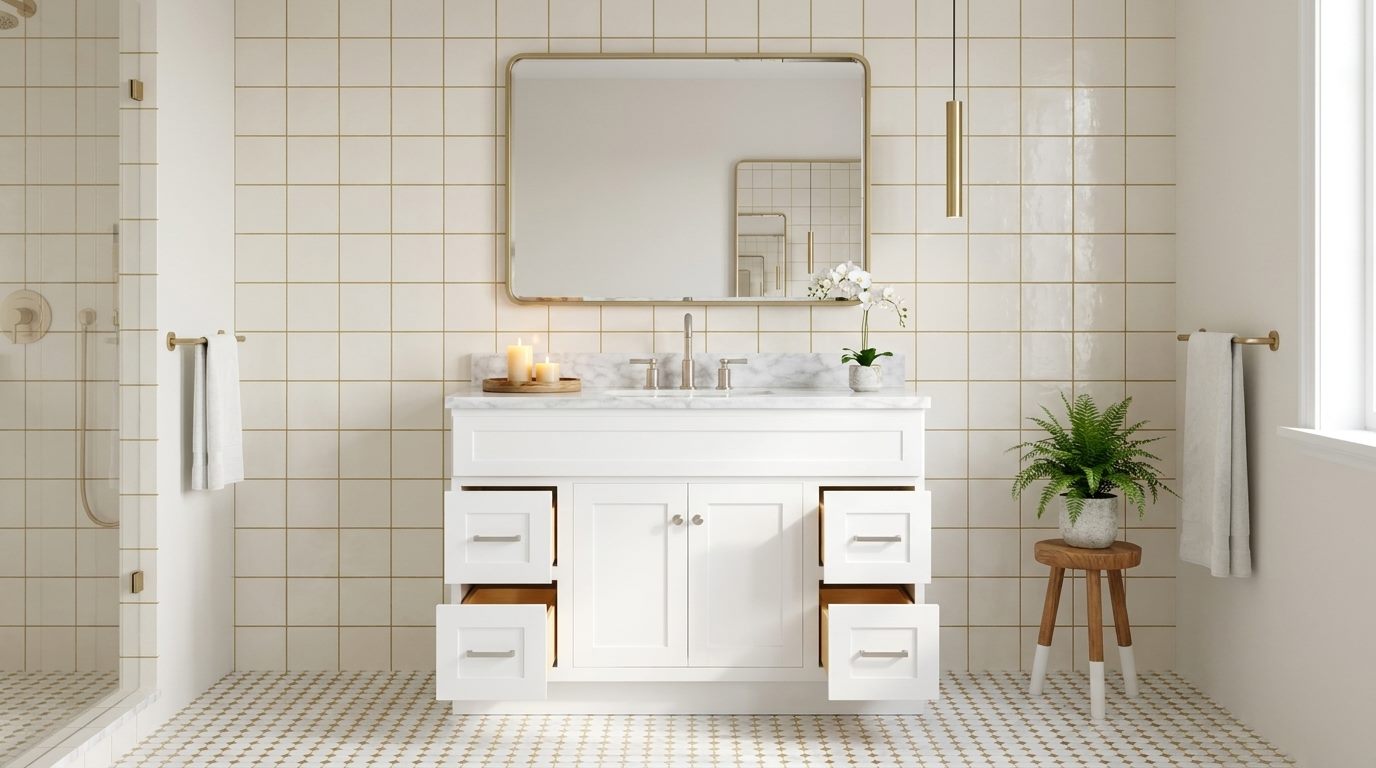
Are imported kitchen cabinets safe? The honest answer is that safety has almost nothing to do with the country stamped on the carton and almost everything to do with the standards the cabinet was built to. A cabinet made overseas to CARB Phase 2 formaldehyde limits, with an all-plywood box and quality-checked hardware, is a safe cabinet — while a poorly built one is a risk no matter where it was made. This guide walks through exactly what to check before you buy: the emissions standard that matters, how to judge construction and finish quality, and the questions that separate an accountable factory from an anonymous one.
Does “imported” tell you anything about safety?
Not on its own. Imported describes where a cabinet was manufactured, not how well it was built or what it emits into your kitchen air. Plenty of well-known cabinet brands manufacture overseas and ship finished or flat-packed cabinets into the country — the label is a logistics fact, not a quality grade. What actually decides whether a cabinet is safe and durable is the specification it was built to and whether the factory behind it stands accountable for that spec.
So the useful question is not “imported or domestic?” but “built to what standard, and who answers for it?” Two cabinets can leave two different countries and arrive at opposite ends of the quality scale. Judge the box material, the emissions compliance, the hardware, and the finish — and insist the seller put those details in writing. Origin matters far less than a factory that publishes its specs and stands behind them.
The formaldehyde standard that actually matters: CARB Phase 2
The single most important safety credential for any cabinet — imported or not — is compliance with the California Air Resources Board (CARB) Phase 2 limits on formaldehyde. Composite wood products like plywood, particleboard, and MDF are held together with adhesives, and older formaldehyde-based glues can off-gas into the air for months. CARB Phase 2 sets strict ceilings on how much a finished panel may emit, and the federal EPA TSCA Title VI rule mirrors those limits as the national baseline.
The limits are specific numbers, not a slogan: 0.05 ppm for hardwood plywood, 0.09 ppm for particleboard, 0.11 ppm for MDF and 0.13 ppm for thin MDF, measured by a standard chamber test. Our explainer on what CARB P2 means for cabinets works through where those ceilings come from and what the certification does and does not promise.
This matters because a kitchen is an enclosed room your household breathes in every day. A cabinet built from CARB P2-compliant panels off-gasses far less formaldehyde than a non-compliant one — which is why compliance, not country of origin, is the real health signal. Ask any seller directly whether their panels meet CARB Phase 2 / TSCA Title VI, and treat a vague or missing answer as your answer. For how the box material and its glue work together, see our guide to plywood vs. particleboard cabinet boxes.
How do you verify an importer's compliance claims?
You verify it the same way a customs officer would: on the label and on the paperwork, not on the marketing copy. Compliance with the federal formaldehyde rule is a documented chain — a certified panel mill, an accredited certifier that audited it, a label on the product, and records the importer has to keep. Any seller genuinely inside that chain can walk you along it. A seller who cannot is telling you something.
What the label has to say
This is the most checkable thing on the list. Since March 22, 2019, composite wood products manufactured in or imported into the United States must be certified and labeled as TSCA Title VI compliant — the earlier option of labeling to the CARB standard instead was retired on that date (EPA). So a compliant cabinet arriving today should carry TSCA Title VI labeling, and a listing whose only claim is a vague "CARB compliant" with nothing behind it is quoting an older regime.
What a CARB P2 label actually promises
It promises one specific thing: that the composite wood panels emit formaldehyde at or below the published ceilings when tested by the standard method. It is an air-quality credential and nothing else. It does not mean the box is plywood rather than particleboard — a compliant particleboard box and a compliant plywood box meet the identical limit. It does not certify the hinges, the finish, the joinery, or how long the cabinet will last under a leaking sink. Anyone using a CARB P2 label to imply general "quality" is stretching it past what the standard says.
What to ask for, in writing
Emissions are invisible, so written answers are the only comparison tool you have. Ask for these, and note which ones a seller answers without hedging:
- A written statement that the cabinets meet CARB Phase 2 and TSCA Title VI — attached to your order or quote, not just said on a call.
- Which parts of the box are covered — sides, bottom, back and shelves, or only the visible panels. The rule applies whether a panel arrives loose, as a component part, or already built into a finished good, so there is no reason for a partial answer.
- The certifying body — compliant panels are certified by an accredited third-party certifier. The EPA publishes the list of recognized third-party certifiers, so a name you are given can be checked against it in about a minute.
- The compliance documentation itself, on request. You may never need to read it; a supplier's willingness to produce it is the signal.
- What the box is actually made of — ask for the word "plywood" in writing if that is what you are paying for, because compliance says nothing about it.
- A door sample before you commit — the one check that needs no paperwork at all.
TC Wholesale Cabinetry builds in its own factory to CARB P2-compliant materials on an all-plywood box, states that compliance in the specs on every product page, and will confirm it in writing for your order — which is the version of this that you can actually hold a supplier to.
How to tell if cabinets are good quality
Once emissions are covered, quality comes down to four things you can inspect or insist on in the spec: the box, the joinery, the hardware, and the finish. These are the same checks whether a cabinet is built down the street or across an ocean, and they are where corner-cutting hides.
- Box material — look for an all-plywood box (sides, bottom, back, and shelves), which resists moisture and holds screws far better than particleboard or MDF, especially around sinks and dishwashers.
- Joinery — dadoed panels drawn tight with screws or cam-locks stay square for decades; stapled butt joints loosen over time.
- Hardware — concealed soft-close hinges and undermount drawer glides rated for real cycle counts signal a cabinet built to last.
- Finish — an even, fully cured finish with no thin spots, drips, or rough edges is the mark of real finish QC, not a rushed line.
Quick physical checks
If you can inspect a cabinet or a door sample in person, three checks tell you most of what you need to know. Lift it — an all-plywood box is noticeably lighter than dense particleboard. Look at a drilled or cut edge — plywood shows clean, layered plies, while particleboard shows a sandy, speckled core. And open and close a door or drawer a dozen times — quality hardware stays soft and aligned, while cheap hardware rattles or drifts.
Why factory accountability matters more than a country label
The most reliable safety signal of all is a factory that owns its process and publishes its specs. When a manufacturer runs its own plant, it controls the materials, the glue, the hardware, and the quality checks — and it can put its name behind every claim. An anonymous supply chain that cannot tell you what the box is made of or whether it meets CARB Phase 2 is the real risk, regardless of geography.
That is the honest wedge for a buyer: favor sellers who spell out an all-plywood box, CARB P2-compliant materials, named hardware, and a written spec sheet — and who let you hold a finish sample before you commit. TC builds in its own factory to exactly that spec and ships flat-packed nationwide; you can judge the finish for yourself by ordering a door sample before buying a full kitchen.
Questions to ask before you buy
Before you place an order for any cabinet line — imported or domestic — get straight answers to a short list of questions. A confident, specific reply is itself a good sign; hedging is a red flag.
- Do the panels meet CARB Phase 2 / EPA TSCA Title VI formaldehyde limits?
- Is the box all-plywood, or is particleboard or MDF used anywhere in it?
- What hinges and drawer glides are included, and are they soft-close?
- Can I see a full spec sheet with exact dimensions, materials, and finish details?
- Can I order a finish or door sample before committing to a full kitchen?
Frequently asked questions
Are imported kitchen cabinets safe?
They can be — safety depends on the standards a cabinet is built to, not the country it ships from. An imported cabinet that meets CARB Phase 2 formaldehyde limits, uses an all-plywood box, and comes from an accountable factory is a safe, durable choice.
What are CARB compliant cabinets?
CARB compliant cabinets are made from composite wood panels that meet the California Air Resources Board's Phase 2 limits on formaldehyde emissions — the same ceilings the federal EPA TSCA Title VI rule sets nationally. They off-gas far less formaldehyde, which protects indoor air quality.
How can I tell if cabinets are good quality?
Check the box (all-plywood beats particleboard), the joinery (dadoed and screwed or cam-locked, not stapled), the hardware (soft-close hinges and undermount glides), and the finish (even and fully cured). Ask for a written spec sheet and a sample before you buy.
What materials should I avoid in a cabinet box?
Be wary of particleboard or MDF box sides, especially near water, and of any listing that will not commit the word “plywood” to writing. Vague phrases like “engineered wood” or “all-wood construction” with no mention of plywood often hide a cheaper core.
Keep reading
- Plywood vs. Particleboard Cabinets: Which Lasts Longer?
The box material decides how long a cabinet survives sink leaks, humidity, and years of door slams. Here's the honest plywood-vs-particleboard breakdown.
- Are RTA Cabinets Worth It? An Honest Buyer's Guide
Ready-to-assemble cabinets cut cost by shipping flat — but quality lives in the box material, not the assembly. An honest look at whether RTA is right for you.
- CARB P2 vs E0 vs ENF: Cabinet Emission Standards
Three acronyms police formaldehyde in cabinets: America's CARB P2, Europe's E0, Japan's ENF. Here is what each system measures, how they differ, and which question to ask any seller.
Ready to plan your kitchen?
Send us your layout for a free, no-obligation quote, or browse the full factory-direct catalog of all-plywood Shaker cabinets.