
Are RTA Cabinets Worth It? An Honest Buyer's Guide
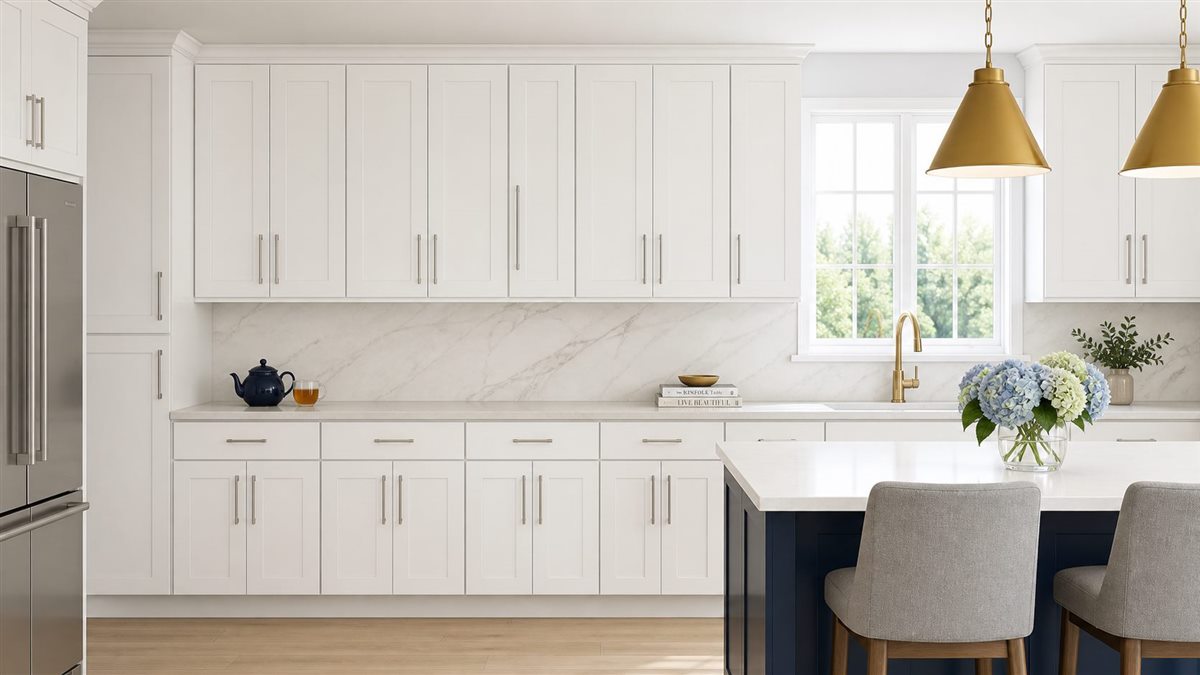
Ready-to-assemble cabinets promise a custom-looking kitchen for a fraction of the price — and that promise is largely real. The catch most ads skip is simple: the savings are guaranteed, but the quality is not. Whether RTA is worth it comes down almost entirely to what the box is made of and what hardware shows up in the carton. This honest buyer's guide separates the genuine value from the marketing, walks through real numbers, and hands you a checklist so you can decide with clear eyes instead of a sales pitch.
We will answer the questions buyers actually search before they spend: what RTA cabinets really are, whether they hold up, how much you save and why, how RTA stacks up against assembled and custom, how long assembly takes, and who should skip RTA entirely. If you remember only one idea from this page, make it this — quality lives in the box, not in the flat-pack.
What are RTA cabinets?
Ready-to-assemble (RTA) cabinets are complete, standard-size kitchen cabinets that ship flat-packed and assemble on-site, usually in well under an hour each. Every panel, shelf, hinge, and fastener arrives in one carton, and you or your installer join the pieces with basic tools. The finished cabinet is functionally identical to one that left the factory pre-built — minus the bulky freight and the assembly labor.
The category exists for one practical reason: an assembled cabinet is mostly air. Shipping a pre-built box means paying to move empty space across the country, and that cost lands squarely in the sticker price. Flat-packing collapses the volume so a whole kitchen's worth of cabinets fits on a single pallet instead of filling a truck. The parts are precision-cut and pre-drilled at the factory, so on-site assembly is alignment and fastening, not woodworking.
It helps to be precise about what "RTA" does and does not describe. It tells you how the cabinet ships and how it reaches its final form — flat in a box, built where it is installed. It tells you nothing about the material of the box, the door, or the hardware. That distinction is the whole game, because the cheapest RTA lines and the best ones can look identical in a thumbnail photo. TC cabinets ship flat nationwide as all-plywood — often called all-wood — boxes with solid-wood Shaker doors and soft-close hardware in the carton, ready to put together on the jobsite.
Are RTA cabinets good quality?
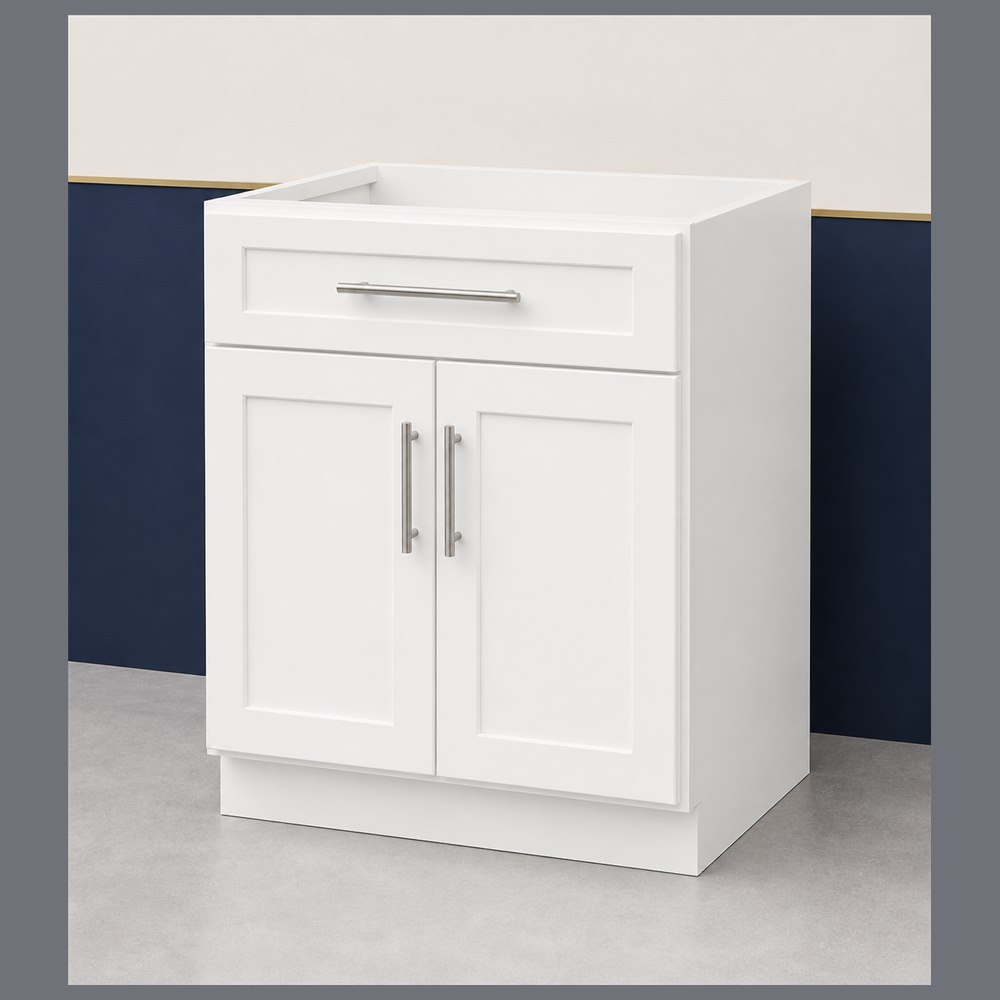
Yes — RTA cabinets can match, and often beat, the quality of pre-assembled stock cabinets, because flat-packing has nothing to do with durability. Quality lives in the box material and the joinery, not in who screws the panels together. An all-plywood RTA box will outlast a pre-assembled particleboard one in almost every realistic kitchen environment. Ready-to-assemble describes how a cabinet ships, not how well it is built.
This is where honesty matters more than enthusiasm. The cheapest RTA lines cut their cost in the one place you cannot see in a listing photo: the box. Thin particleboard sides, stapled corners, and a printed photo "wood" finish keep the price low and the lifespan short, especially around sinks and dishwashers where moisture lives. A well-built RTA cabinet uses an all-plywood box, glued and screwed or cam-locked at the joints, with a solid-wood door. Same format, completely different engineering.
What actually determines RTA quality
- Box material — all-plywood sides and bottoms resist moisture, hold screws, and carry countertop weight far better than particleboard or MDF.
- Joinery — dadoed panels drawn tight with screws or cam-locks stay square; stapled butt joints loosen over time.
- Door construction — a real five-piece solid-wood Shaker door versus a printed or thermofoil-wrapped panel that can peel.
- Hardware — concealed soft-close hinges and undermount glides rated for real cycle counts, ideally pre-installed at the factory.
If you read only one more article before buying, make it our breakdown of plywood versus particleboard cabinet boxes — the box material is the single biggest predictor of how many years your kitchen lasts. Everything else is finish and preference; the box is structure.
How much do you actually save with RTA?
RTA cabinets typically run well below the same cabinets sold pre-assembled, and dramatically below custom cabinetry — industry estimates often put the gap at 30 to 50 percent under comparable custom work. Two forces drive the discount: you skip the factory labor of building each box, and you skip the freight penalty of shipping bulky, mostly-empty cabinets. Both savings get passed straight to you.
Labor is the larger lever. Assembling cabinets is hand work, and in a pre-built supply chain you pay for that labor on every single box, marked up at every step it passes through. Flat-pack moves the 15-to-40-minute assembly task to your garage or jobsite, where it costs you time instead of money. Freight is the second lever: a flat-packed kitchen ships on one pallet instead of a truckload of air, and lower shipping cost means a lower landed price.
One cost the savings math should include honestly is your own time — or a modest amount of installer labor if you outsource assembly. Even then RTA usually comes out well ahead, because the material and freight savings dwarf an hour of work per cabinet. What we will not do is post a public dollar figure, because an honest number depends on your exact layout, cabinet count, and door style. The straightforward way to see your real figure is to request a free quote on your actual cabinet list.
RTA vs. assembled vs. custom — which fits you?
It comes down to three trade-offs: lead time, cost, and design flexibility. Custom wins on flexibility, RTA wins on cost and speed, and pre-assembled stock sits in between. Most standard-layout kitchens are served perfectly well by RTA — you trade bespoke sizing for a much lower price and a faster timeline, and you give up very little in the finished look.
- Custom cabinets — built to your exact dimensions, woods, and finishes, with the most design freedom. The catch is the longest lead time (commonly 6 to 12 weeks) and the highest price of the three.
- Pre-assembled stock cabinets — standard sizes that arrive fully built, so installation can start immediately. You pay more than RTA to cover assembly labor and bulky freight, and style choices are usually limited.
- RTA cabinets — standard sizes in popular door styles, shipped flat and assembled on-site. The lowest cost and fastest to ship of the three; quality rides entirely on the box material, not on the flat-pack format.
A useful rule of thumb: if your walls accept standard cabinet widths in three-inch increments — and most kitchens do — RTA gives you the bulk of a custom look for a fraction of the outlay. Reach for true custom only when an odd layout, a non-standard ceiling height, or a one-off design genuinely demands it. For a deeper side-by-side on lead times, cost drivers, and where each option breaks down, see our full comparison of RTA vs. assembled vs. custom cabinets. You can also preview real standard sizes and door styles in the cabinet catalog.
How long does a cabinet take to assemble?
Most RTA cabinets take 15 to 40 minutes each to assemble, depending on size and how many you have already built. A wall cabinet goes quickly; a sink base with extra bracing takes longer, and the very first cabinet is always the slowest while you learn the rhythm. You need only basic tools — a drill or screwdriver, a rubber mallet, and a square.
The process is more orderly than intimidating. Stand the sides up, slot the pre-drilled panels into their dados, draw the joints tight with screws or cam-locks, then square the box and attach the back. Doors and drawer fronts go on last and fine-tune with a turn of a screw. On a well-made line the hardware is the part you do not have to fuss with — undermount glides and concealed soft-close hinges arrive mounted and pre-aligned, so drawers and doors close softly from the first pull.
A realistic estimate for a full kitchen
For a typical mid-size kitchen of 12 to 18 cabinets, a careful first-timer can expect a focused weekend; someone who has done it before, or a two-person team, can finish in a day. Spreading the work across a few evenings is just as valid — flat-packed boxes store easily until you are ready, which is a genuine advantage over a delivery of pre-built cabinets that immediately consumes floor space.
So, Are RTA Cabinets Worth It? The Verdict
RTA is a strong fit for budget-minded remodelers, rental and flip projects, DIY-capable homeowners, and any kitchen that works in standard cabinet sizes — which is most of them. It is a weaker fit if you need nonstandard dimensions, refuse to do or hire any assembly, or are on a same-day timeline with no room to stage cartons. Know which group you are in before you order.
RTA makes sense if you…
- Want assembled-grade quality without paying for assembly labor and bulky freight.
- Have a standard-layout kitchen that fits common cabinet widths.
- Are comfortable with a drill and a free afternoon — or willing to hire a local installer to assemble.
- Are remodeling a rental, flip, or secondary kitchen where value per dollar matters most.
Think twice if you…
- Need truly custom sizes, depths, or one-off configurations that standard boxes cannot cover.
- Will not do any assembly and do not want to pay anyone else to do it.
- Have no space to stage and build cartons, or need cabinets installed the same day they arrive.
Here is the reassuring part: even if you would rather not touch a single panel, RTA still pays off. You can buy the cabinets and pay a local installer to assemble and hang them, and you keep the material and freight savings either way — you are only adding back the labor you chose to outsource. The decision is rarely all-or-nothing.
What to look for before you order
Before you order any RTA line, vet four things: the box, the door, the hardware, and the paperwork. The flat-pack format is only as good as what the manufacturer puts inside the carton, and the difference between a 10-year cabinet and a 30-year one is spelled out in the specs — if the seller publishes them at all. Use this checklist to compare brands honestly, because the cheapest sticker rarely meets any of it.
- All-plywood box — no particleboard or MDF sides, especially anywhere near water.
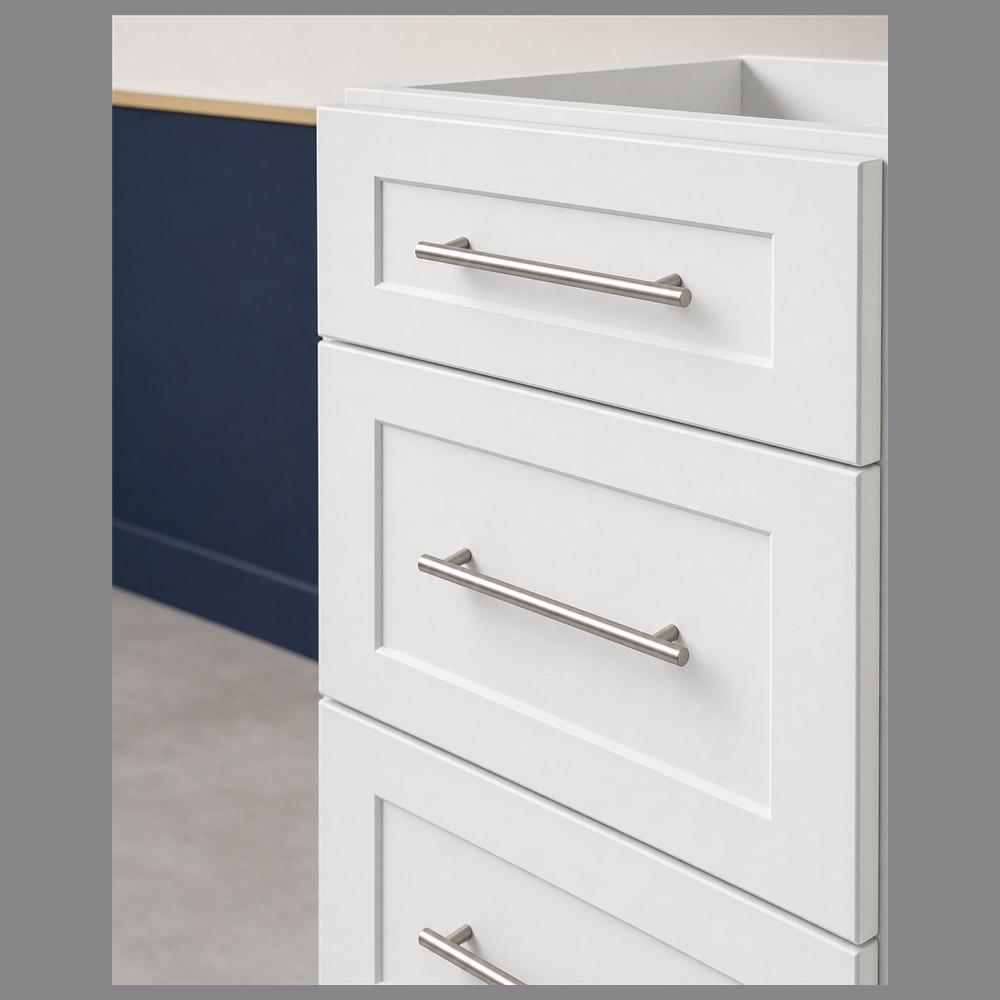
- Solid-wood doors — a real five-piece Shaker door, not a printed or thermofoil panel.
- Soft-close hardware included — undermount glides and concealed soft-close hinges, ideally pre-installed.
- CARB P2-compliant materials — low-formaldehyde panels that meet current emissions standards.
- Clear, published specs — exact dimensions, materials, and finish details you can read before buying.
- A door sample you can order — so you can judge the finish and feel in your own kitchen light before committing.
TC checks every box on that list: all-plywood construction, solid-wood Shaker doors, soft-close hardware in the carton, and CARB P2-compliant materials, shipped flat nationwide. The smartest first step is to hold the finish in your hand before you commit to a full kitchen — order a door sample and judge the color, sheen, and feel in your own light.
Keep reading
- Plywood vs. Particleboard Cabinets: Which Lasts Longer?
The box material decides how long a cabinet survives sink leaks, humidity, and years of door slams. Here's the honest plywood-vs-particleboard breakdown.
- RTA vs. Assembled vs. Custom Cabinets: Which Should You Buy?
Four ways to buy kitchen cabinets — RTA, stock pre-assembled, semi-custom, and full custom — compared honestly on cost, lead time, quality, and flexibility, with a scenario-by-scenario guide to picking yours.
- How Much Do Kitchen Cabinets Cost? RTA vs. Assembled vs. Custom
Kitchen cabinet cost comes down to three things — material, construction, and how you buy. An honest, no-sticker-shock breakdown of RTA, assembled, semi-custom, and custom pricing by the linear foot, plus the hidden costs of hardware, countertops, and installation.
Ready to plan your kitchen?
Send us your layout for a free, no-obligation quote, or browse the full factory-direct catalog of all-plywood Shaker cabinets.