
Plywood vs. Particleboard Cabinets: Which Lasts Longer?
The cabinet box — the plywood or particleboard shell hidden behind your doors and drawers — is the part nobody photographs and the part that quietly decides how long a kitchen lasts. Two cabinets can wear the same painted Shaker doors, sit side by side in a showroom, and look identical. Yet one shrugs off a decade of sink drips while the other swells, sags, and crumbles at the corners. This is the honest breakdown of plywood vs particleboard cabinets: what each material actually is, which one survives water, how long each really lasts, how to tell them apart before you order, and whether all-plywood cabinets are worth paying for.
What's the difference between plywood and particleboard cabinets?
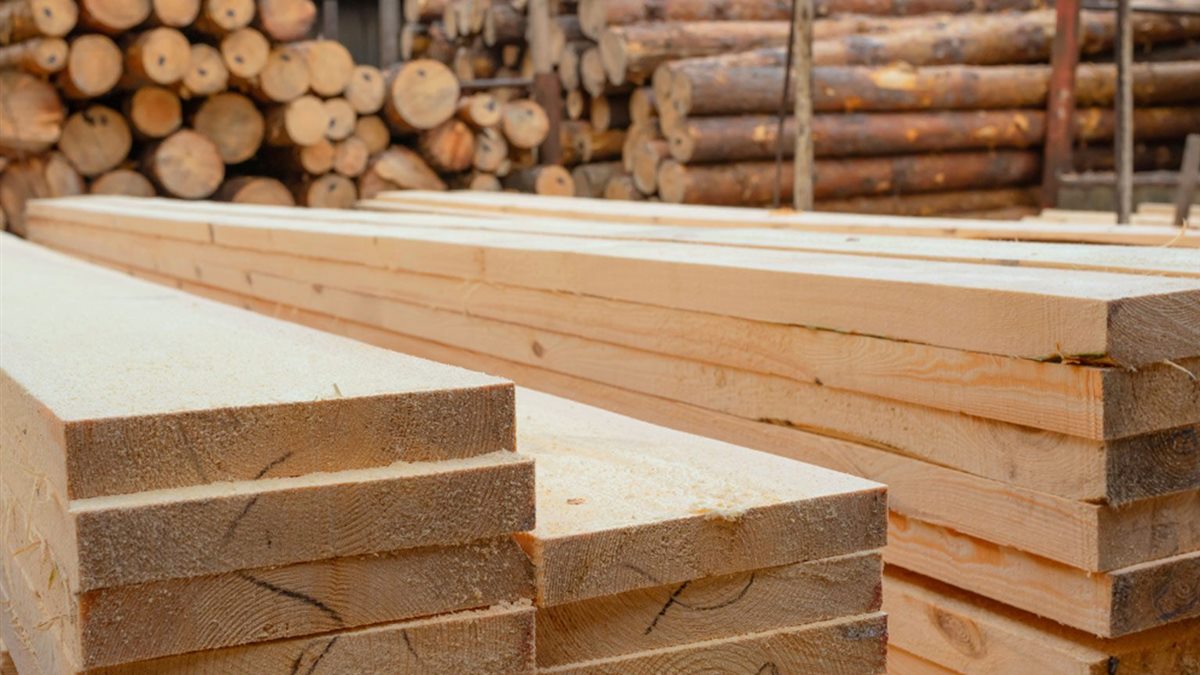
Plywood is built from thin wood veneers stacked and glued so the grain alternates direction in every layer, which makes the panel strong in both directions. Particleboard is wood chips, flakes, and sawdust bound with resin and pressed flat. Plywood is lighter for its strength, grips screws tightly, and tolerates moisture; particleboard is denser, cheaper, and far quicker to fail once water or fasteners get involved. That single structural difference is what the entire particleboard vs plywood cabinet boxes debate comes down to.
That cross-laminated structure is the whole point of plywood. Because each ply runs perpendicular to its neighbor, the panel resists bending, twisting, and splitting — and a screw driven into the edge bites into solid wood fibers rather than loose glue-bound chips. Cabinet-grade hardwood plywood (usually birch, poplar, or maple veneers over a multi-ply core) is what people mean by all-wood or all-plywood cabinets: every structural part of the box is plywood — end panels, bottoms, backs, and shelves included, not just the parts you can see.
Particleboard has its place — flat, stable, inexpensive, and fine in dry, low-stress spots. Its denser cousin MDF (medium-density fiberboard) is smoother, which makes it excellent for painted door panels but heavy and still moisture-sensitive as a box. Both are usually wrapped in melamine or thermofoil so the raw core never shows — clean-looking on day one, which is exactly why the cheaper material underneath is easy to disguise. The skin photographs beautifully; the core is where the real cabinet lives.
- Plywood: cross-laminated wood veneers — strong in both directions, light, excellent screw hold, resists moisture.
- Particleboard: resin-bound wood chips — flat and cheap, dead-heavy, weak screw hold, swells when wet.
- MDF: fine compressed wood fibers — smooth and stable, ideal for painted door panels, still moisture-sensitive as a box.
These are not loose marketing categories — each panel type is a defined product with its own American National Standard. The Composite Panel Association publishes ANSI A208.1 for particleboard and ANSI A208.2 for medium-density fiberboard, and certifies panels for compliance with the CARB formaldehyde rule. That matters when you are reading a spec sheet: "engineered wood" is a marketing phrase covering all of them, while "particleboard" and "MDF" are specific products a manufacturer can be held to. Ask which one, by name.
Why does water decide which lasts longer?
Water decides it because a kitchen is the wettest room in the house and the two materials handle moisture in opposite ways. A cross-laminated plywood box resists swelling, keeps its shape through a slow sink leak, and dries out without permanently deforming. Particleboard wicks moisture into its resin-bound core, swells like a sponge, and never recovers — the damage is structural and irreversible. That asymmetry is why plywood lasts longer.
The failure points in a kitchen are predictable, and they are all about water. The sink base lives directly under a supply line and a drain that can weep for weeks before anyone notices a soft cabinet floor. The cabinet beside the dishwasher sits in a warm, humid microclimate every time the door pops open at the end of a cycle. Add steam from the cooktop, the occasional overflowing pot, and a damp mop run along the toe-kick, and the box is being tested constantly — quietly, in the places you cannot see.
This is the heart of the question is plywood better than particleboard for cabinets: in a dry display cabinet, the gap barely matters; in a working kitchen, it is the whole ballgame. Plywood gives you a margin for error in exactly the spots that get wet first, which is why an all-plywood box is the durable default rather than an upgrade you talk yourself into.
The cheapest cabinet you can buy twice is the one that fails under the sink. The box material is where longevity is won or lost.
— TC Wholesale Cabinetry
How long do plywood vs. particleboard cabinets last?
Well-built all-plywood boxes routinely serve 20 years or more, often outliving the doors and finish on top of them, while particleboard boxes in a kitchen frequently start failing in 5 to 10 years once moisture reaches the core. There is no single guaranteed number — installation, leaks, and humidity all matter — but the gap is large and consistent enough that the box material is the strongest single predictor of lifespan.
Plywood ages gracefully. The veneers stay bonded, the corners stay square, and the screws holding your hinges and glides keep their grip through tens of thousands of open-and-close cycles. When a plywood box does finally get retired, it is usually because the homeowner wanted a new style — not because the cabinet gave out. That longevity is also why home inspectors and resale-minded buyers look for an all-plywood box: it reads as a kitchen built to last.
Particleboard tells a different story over time. In a dry pantry it can last for years, but a kitchen is neither dry nor forgiving. Once particleboard absorbs water it swells, the melamine skin blisters and peels, and the bottom of a sink base can turn to mush before you notice — and there is no sanding or drying it back to flat. The only honest fix is replacing the cabinet. That is the practical case for RTA plywood kitchen cabinets: you get the moisture margin and the 20-year lifespan where it matters most, without paying custom-shop prices.
How can you tell what a cabinet box is actually made of?
Three quick physical checks plus one paper check usually settle it. Lift the cabinet — plywood is noticeably lighter than dense particleboard of the same size. Look at a cut or drilled edge — plywood shows clean, layered plies, while particleboard shows a sandy, speckled core. Check how the hinges and glides anchor. And when you cannot inspect one in person, make the written spec sheet say it plainly.
- The weight test: lift an end panel or a wall cabinet. Plywood feels light and rigid for its size; particleboard feels dead-heavy because its resin-bound core is dense.
- The edge test: find an unfinished edge — a drilled hinge cup, a shelf-pin hole, or the back of a panel. Plywood reveals thin, even layers stacked like a sandwich; particleboard shows loose, sand-textured chips.
- The screw test: open a hinge or drawer glide and look at the fastener. Screws bite firmly into plywood and stay put; in particleboard they strip out over time and the hinge begins to sag.
On paper, the language is the tell. A trustworthy listing states all-plywood box plainly and repeats it everywhere — sides, bottom, back, and shelves. Vague phrases like furniture board, engineered wood, or simply all-wood construction (with no mention of plywood) usually mean particleboard or MDF is hiding somewhere in the box. If a spec sheet will not commit the word plywood to writing, assume it is not there. You can see exactly how each box is described on our cabinet catalog, where the construction is spelled out part by part.
What about the doors — MDF vs. solid wood?
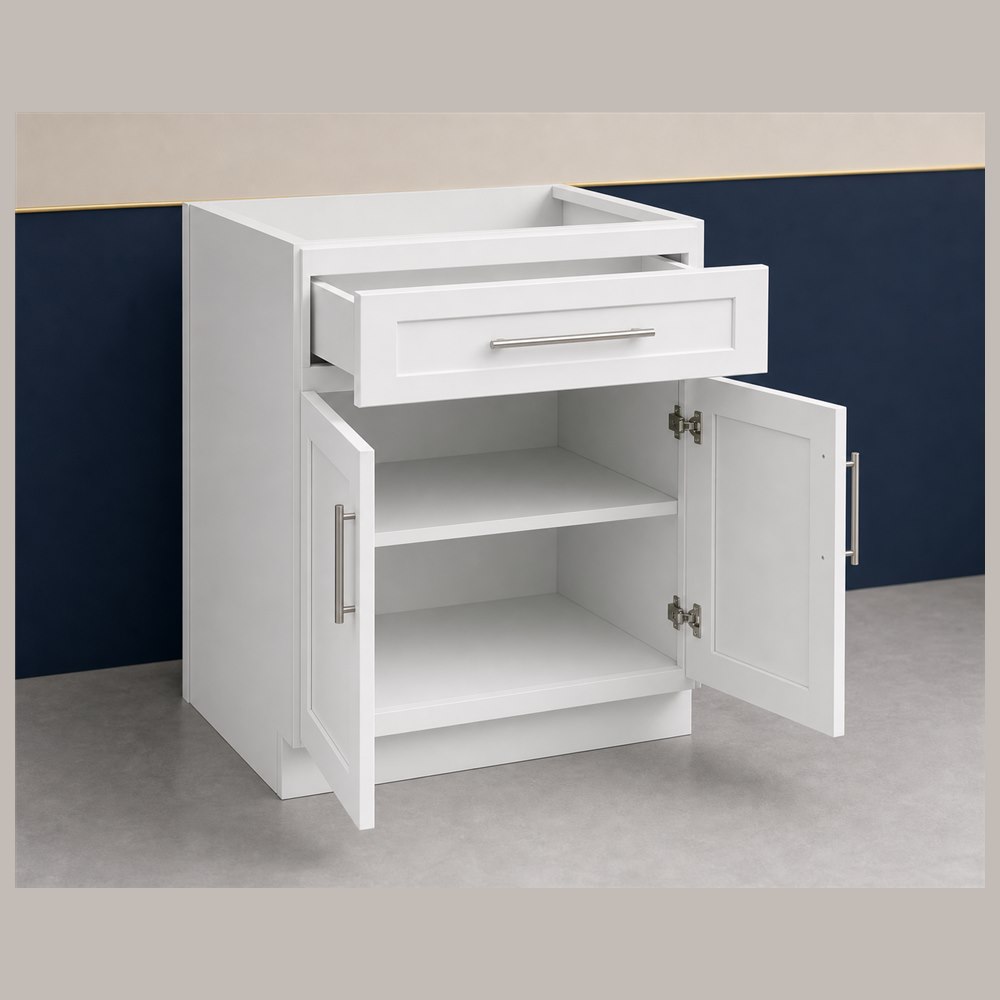
Doors play by different rules than boxes, so the right answer is not the same. MDF makes a smooth, dimensionally stable door that resists the seasonal cracking painted wood can show, which is why many painted lines use an MDF center panel by design. Solid wood gives you a true five-piece Shaker door with real grain and a surface you can sand and refinish years later. TC builds its Shaker doors from solid wood and pairs them with the all-plywood box.
In the MDF vs solid wood debate, neither is a trick — they solve different problems. MDF panels stay flat and take paint beautifully, so a high-end painted door may use them on purpose. Solid wood moves a little with humidity but reads as the real thing, repairs cleanly after a knock, and refinishes well down the road. What you do not want is a door hiding particleboard under a thin laminate skin, because that is the version that chips at the edges, swells at the bottom rail, and cannot be repaired.
TC's approach is straightforward: a solid-wood five-piece Shaker door, soft-close hinges and undermount glides as standard, on an all-plywood box. To judge the finish, the joint, and the weight for yourself, order a door sample before committing to a full kitchen — it is the single best way to feel the difference quality makes, and it costs a fraction of a wrong order.
What does CARB P2 mean for the air in your kitchen?
CARB P2 is a California Air Resources Board standard that caps formaldehyde emissions from composite wood — plywood, particleboard, and MDF alike. It has become the practical national baseline, mirrored by the federal EPA TSCA Title VI rule, which sets the limits at 0.05 ppm for hardwood plywood, 0.09 ppm for particleboard, 0.11 ppm for MDF and 0.13 ppm for thin MDF (40 CFR 770.10). Cabinets built from CARB P2-compliant panels off-gas far less formaldehyde, which matters because a kitchen is an enclosed room your household breathes in every single day, often more than any other room in the house.
Why it works comes down to glue. Composite wood products are held together with adhesives, and older formaldehyde-based glues can release gas into the air for months or even years. The CARB Phase 2 limits — and the equivalent TSCA Title VI rule — set strict ceilings on how much a finished panel may emit. The standard governs the glue and the panels, not one specific material, so a CARB P2 plywood box and a CARB P2 particleboard box are both low-emitting by that measure. It is an air-quality credential, not a durability one — the two are separate questions, and a good cabinet answers both. If you want the full picture, read what CARB P2 means for cabinets.
TC builds with CARB P2-compliant materials, so the low-emission box and the moisture-resistant all-plywood box are the same cabinet. For the room where you cook, eat, and often spend the most waking hours, low-emitting materials are a quiet upgrade you will never see but will always be breathing.
So are all-plywood cabinets worth the difference?
Yes — for most kitchens, all-plywood boxes are worth it. They outlast particleboard in the exact spots that fail first, hold hinges and glides through years of door slams, breathe cleaner when built to CARB P2, and tend to help resale because savvy buyers and inspectors look for them. The honest caveat is cost: plywood runs more up front. The trick is to keep that premium small by buying factory-direct rather than custom.
The best plywood for kitchen cabinets is cabinet-grade hardwood plywood — typically a birch, poplar, or maple veneer face over a multi-ply core — and that is the standard worth holding any listing to. Paying for it does not mean paying custom-shop markups. Factory-direct RTA cabinets ship flat and assemble on-site, which strips out the labor and freight cost that makes plywood feel expensive, and often lands 30 to 50 percent below comparable custom cabinetry as a result.
If you are weighing the trade-offs, read our honest take on whether RTA cabinets are worth it, which walks through construction, finishes, and how flat-pack shipping keeps an all-plywood kitchen affordable. The short version: choose the box material first, then the door, then the finish — because the box is the one decision you cannot redo without replacing the cabinet.
Have a layout in mind? Send us your kitchen dimensions and we will price an all-plywood kitchen for you — request a free quote and we will take it from there.
Keep reading
- Framed vs. Frameless Cabinets: Differences, Pros and Cons
Framed cabinets fasten a hardwood frame to the front of the box; frameless cabinets skip it for full-access storage. Here is how the two builds compare on strength, space, style, cost, and installation.
- What Is CARB P2 — and Why Cabinet Emissions Matter
Cabinets are mostly composite wood, and composite wood is held together with glue that can release formaldehyde. CARB P2 is the standard that limits it — here are the actual ppm ceilings and what they guarantee.
- Are RTA Cabinets Worth It? An Honest Buyer's Guide
Ready-to-assemble cabinets cut cost by shipping flat — but quality lives in the box material, not the assembly. An honest look at whether RTA is right for you.
- Cabinet Refacing vs Replacing: Cost and When Each Wins
Refacing runs $4,234 to $10,226 on average and saves 30–50% over replacing — but only when the boxes underneath are sound. Here is how to tell which side your kitchen falls on.
- How to Clean Kitchen Cabinets Without Damaging Them
Most cabinet finishes need the same gentle routine: mild dish soap, a soft well-wrung cloth, a rinse wipe, and a full dry. Here is how that changes by finish — and what to avoid.
- Why White Cabinets Turn Yellow (and How to Stop It)
Some yellowing wipes off — grease and steam film. Some never does — oil-based paint aging in dark, ammonia-exposed spots. Here is how to tell which one you have and what to do about each.
- Baltic Birch Plywood Cabinets: What Makes Them Special?
Baltic birch is a premium grade of birch plywood — an all-birch, void-free core with roughly twice the plies of standard sheets. Here is what it is, why cabinetmakers reach for it, and how to tell the real thing from a lookalike.
- How to Prevent Moisture Damage to Kitchen Cabinets
Swollen edges, bubbling paint, and soft sink bases all start the same way: small, repeated moisture that nobody dries. Here is how to shut off each source before the box itself is damaged.
Ready to plan your kitchen?
Send us your layout for a free, no-obligation quote, or browse the full factory-direct catalog of all-plywood Shaker cabinets.