
What Is CARB P2 — and Why Cabinet Emissions Matter
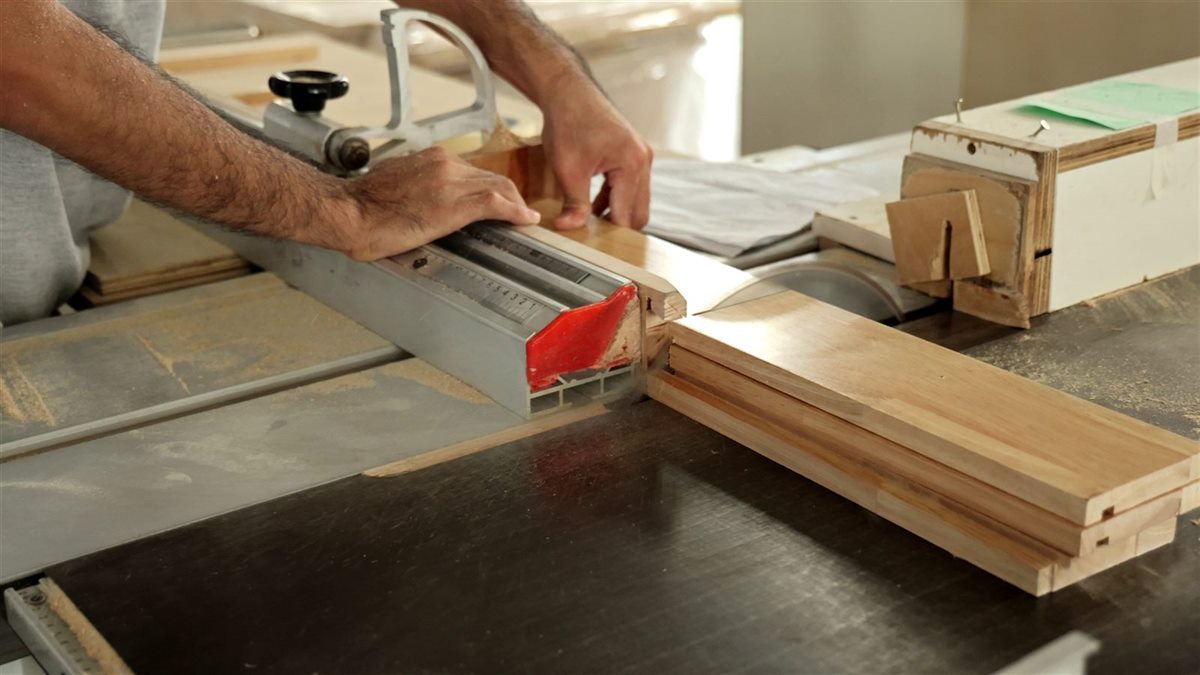
Kitchen cabinets are built largely from composite wood — hardwood plywood, particleboard, and MDF — and composite wood is held together with glue. Some of those glues quietly release formaldehyde into the air for months, sometimes years, after a cabinet is installed. CARB P2 is the standard that caps how much. If you have seen "CARB P2 cabinets" or "CARB P2-compliant" on a spec sheet and wondered what it actually guarantees, this is the plain-English answer: what the standard is, why cabinet formaldehyde matters in a room you breathe in every day, and exactly what to ask for before you buy.
We will work through it the way a careful buyer would: what is CARB P2 in the first place, how it relates to the federal TSCA Title VI rule and to the "no added formaldehyde" claims you see on listings, how to verify a cabinet really meets the standard, whether imported cabinets can be compliant, and the short list of questions that separate genuinely low-emission cabinets from marketing language. None of it requires a chemistry background — just knowing what the words on the label are promising.
What is CARB P2?
CARB P2 is the California Air Resources Board Phase 2 standard — a set of strict formaldehyde-emission limits for composite wood products: hardwood plywood, particleboard, and medium-density fiberboard (MDF). The ceilings are specific numbers, measured in parts per million: 0.05 ppm for hardwood plywood, 0.09 ppm for particleboard, 0.11 ppm for MDF, and 0.13 ppm for thin MDF. In practice, a CARB P2 cabinet is one built from panels certified to emit at or below those limits, so the glue inside the box is held to a strict, testable ceiling.
The formaldehyde limits, by panel type
Those four numbers are the whole standard, and they are worth having in front of you when you compare cabinet lines. The figures below are the federal limits in 40 CFR 770.10; the EPA states that the CARB ATCM Phase 2 and TSCA Title VI standards are "set at identical levels," so the same ceilings apply whichever name a spec sheet uses.
| Panel type | Formaldehyde emission limit | In force since | Rule |
|---|---|---|---|
| Hardwood plywood (veneer core or composite core) | 0.05 ppm | June 1, 2018 | 40 CFR 770.10(b)(1) |
| Particleboard | 0.09 ppm | June 1, 2018 | 40 CFR 770.10(b)(4) |
| Medium-density fiberboard (MDF) | 0.11 ppm | June 1, 2018 | 40 CFR 770.10(b)(2) |
| Thin medium-density fiberboard (thin MDF) | 0.13 ppm | June 1, 2018 | 40 CFR 770.10(b)(3) |
| Limits are measured by test method ASTM E1333-14 and apply to composite wood sold, supplied, offered for sale, or manufactured — including imported — in the United States on or after June 1, 2018, whether the panel arrives loose, as a component part, or already built into a finished cabinet. 40 CFR 770.10. The EPA states that the CARB ATCM Phase 2 and TSCA Title VI emission standards are “set at identical levels” — EPA, Formaldehyde Emission Standards for Composite Wood Products. | |||
Two details in that table do more work than they look like they do. The limits are tied to a specific test method — ASTM E1333-14, a large-chamber test — so "low-emitting" is a measured result rather than a marketing adjective. And they apply to composite wood "sold, supplied, offered for sale, or manufactured (including imported)" in the United States, "regardless of whether the composite wood product is in the form of a panel, a component part, or incorporated into a finished good." That last clause is why a finished cabinet, not just a raw sheet of plywood, falls under the rule. Every TC Wholesale Cabinetry box is built from panels certified to these limits.
Why the standard exists — and what it does not cover
The standard exists because composite wood is everywhere indoors and formaldehyde-based adhesives used to be the cheap default. The California Air Resources Board rolled out its airborne-toxic-control measure in two stages — Phase 1, then the tighter Phase 2 (hence "P2") — to drive panel emissions steadily downward. "Composite wood" is the key phrase: the rule governs the engineered panels and the glue that binds them, not the species of tree or whether the box is plywood or particleboard. A CARB P2 plywood box and a CARB P2 particleboard box are both held to the same emission ceiling, even though they differ enormously in durability.
That last point is worth underlining, because it is the most common misunderstanding about CARB P2 cabinets. The certification is an air-quality credential, not a durability one. It tells you a panel off-gasses very little formaldehyde; it tells you nothing about whether that panel will survive a sink leak. The two questions are separate, and a well-built cabinet answers both — a moisture-resistant box and low emissions. We cover the durability half of the story in detail in plywood vs. particleboard cabinets, and you can see both halves specified together on our CARB P2 all-plywood Shaker cabinets.
Why does formaldehyde in cabinets matter?
It matters because a kitchen is an enclosed room your household occupies and breathes in more than almost any other. Formaldehyde is a colorless gas with a strong odor, and the EPA states that it "can cause irritation of the skin, eyes, nose, and throat" and that "high levels of exposure may cause some types of cancers." Cabinets line that room from floor to ceiling, so the composite wood inside them is one of the larger sources of indoor off-gassing — which is precisely why an emission limit was written for it.
Where the formaldehyde actually comes from
The source is the glue, and it helps to picture exactly where it sits. The EPA lists "resins used in the manufacture of composite wood products (i.e., hardwood plywood, particleboard and medium-density fiberboard)" among the places formaldehyde is found — which is the same three panel types the emission limits govern. Plywood is built from thin wood veneers stacked and bonded with adhesive at every seam; particleboard and MDF are wood chips or fibers pressed together in a matrix of resin. The formaldehyde lives in those bond lines, and it migrates out of the cut edges and faces of the panel over time. The diagram below shows the layered structure of cabinet-grade plywood — every glue line you can see is a place emissions can originate, which is why the resin a manufacturer chooses changes the air in your kitchen.
Why modern cabinets emit less than old ones
Older urea-formaldehyde glues were the worst offenders: cheap, strong, and prone to releasing gas long after installation. The CARB Phase 2 limits — and the federal rule that now mirrors them — pushed the whole industry toward low-emitting resins that bind just as well without the same off-gassing. The result is that low-emission cabinets are no longer a premium specialty; they are the standard a reputable factory builds to, TC Wholesale Cabinetry included. The difference is invisible and odorless, which is exactly why it is written into a certification rather than left to your nose.
CARB P2 vs. TSCA Title VI vs. "no added formaldehyde"
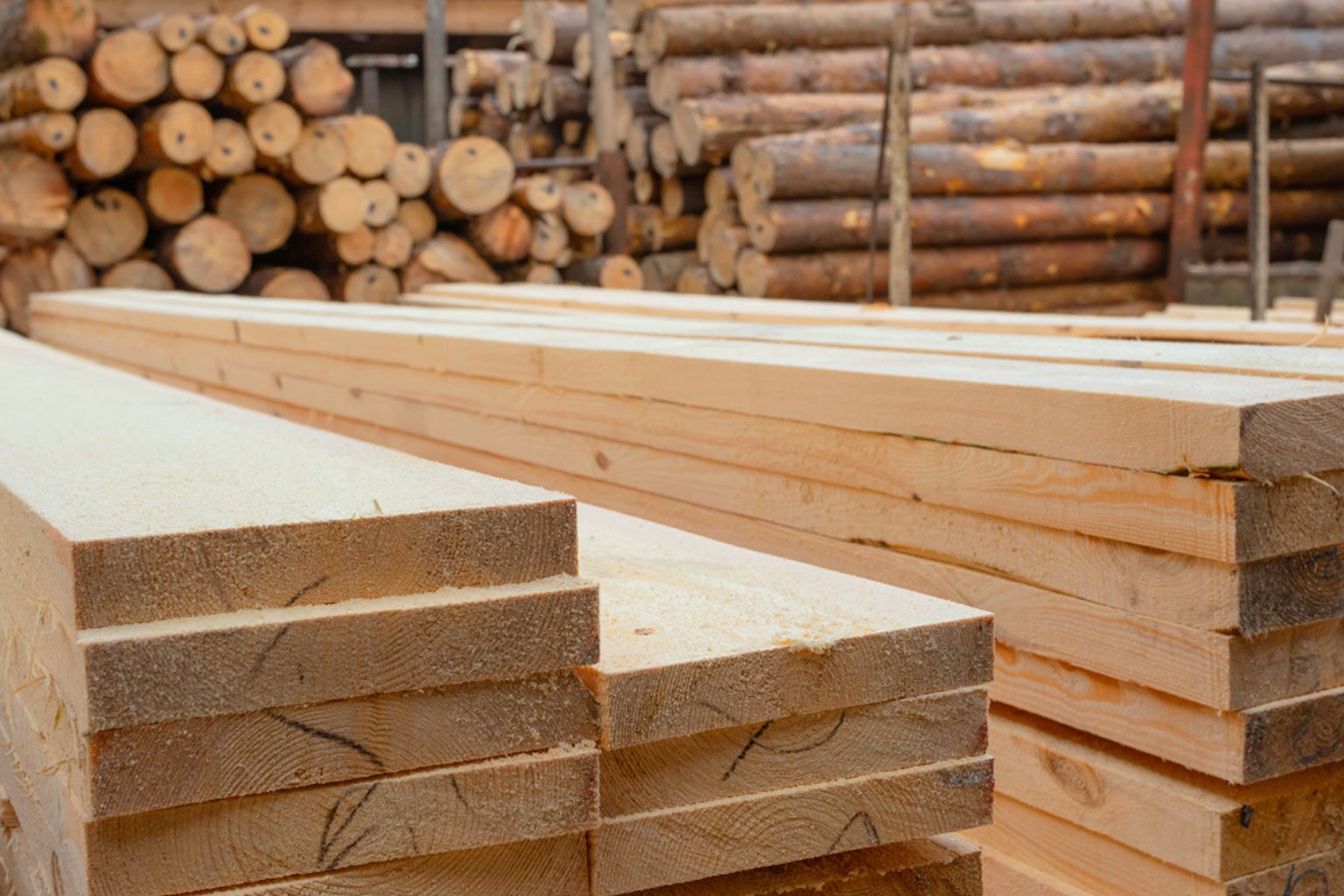
These three phrases overlap but do not mean the same thing. CARB P2 is the California state standard. TSCA Title VI is the federal EPA rule that adopted the same formaldehyde limits for the entire country, with compliance required from June 1, 2018 — so today the two ceilings are aligned nationwide. "No added formaldehyde" (NAF) is a stricter description: a panel made with adhesives that contain no formaldehyde at all. Knowing which one a listing claims tells you exactly how much it is promising.
How CARB P2 became a national rule
TSCA Title VI — Title VI of the federal Toxic Substances Control Act — is the practical reason CARB P2 became a national baseline rather than a California-only rule. The EPA's own description is unusually plain about the relationship: composite wood panels had to be certified as compliant with "either the TSCA Title VI or the California Air Resources Board (CARB) Airborne Toxic Control Measure (ATCM) Phase II emission standards, which are set at identical levels," by a third-party certifier. So when a supplier says "CARB P2 / TSCA Title VI compliant," they are naming the same emission limit twice — once by its state origin and once by the federal rule that enforces it across the country.
One date is worth carrying with you when you read old listings. Until March 22, 2019, a compliant panel could be labeled as meeting either standard; after that date, the EPA requires products manufactured in or imported into the United States to be certified and labeled as TSCA Title VI compliant specifically. A listing today that only says "CARB compliant," with nothing else behind it, is quoting the older half of that history.
What sits above the compliant floor
"No added formaldehyde" and the related "ultra-low-emitting formaldehyde" (ULEF) are categories CARB defines for panels that go beyond the baseline cap — either by using formaldehyde-free resins or by emitting far below the limit consistently enough to earn reduced testing. They are genuine upgrades, but the wording matters: "no added formaldehyde" refers to the glue, while wood itself contains trace natural formaldehyde, so even an NAF panel is "low," not literally zero. The honest hierarchy is simple — CARB P2 / TSCA Title VI is the compliant floor every cabinet sold should meet, and NAF/ULEF sit above it. TC Wholesale Cabinetry builds to the compliant floor and says so on every product page rather than implying more.
- CARB P2 — the California Air Resources Board Phase 2 limit on formaldehyde from composite wood: 0.05 ppm hardwood plywood, 0.09 particleboard, 0.11 MDF, 0.13 thin MDF.
- TSCA Title VI — the federal EPA rule, in force since June 1, 2018, set at identical levels nationwide and covering products made in or imported into the US.
- No added formaldehyde (NAF) / ULEF — stricter CARB categories for panels built with formaldehyde-free resins or emitting well below the cap; an upgrade above the compliant floor.
How do you know cabinets are CARB P2 compliant?
You confirm it on paper, not by eye — compliant composite wood is certified and labeled, never assumed. Look for a written statement that the cabinets meet CARB P2 and TSCA Title VI, backed by panels that carry a certification mark from a CARB-approved third-party certifier. A reputable supplier states the compliance plainly in its specs and can produce documentation on request. If a listing will not commit those words to writing, treat the absence as your answer.
Under the rules, the mills that make compliant panels are audited by accredited third-party certifiers and label their product with a certification number that traces back to that testing. Those certifiers are not self-appointed: the EPA maintains a public list of recognized third-party certifiers, and a panel's certification should trace back to a body on it. Cabinet makers who build with those panels can then state CARB P2 / TSCA Title VI compliance for the finished box.
As a buyer you rarely see the mill stamp yourself, so the practical test is the paperwork: does the seller publish the compliance in the product specs, and will they confirm it in writing for your order? On the TC Wholesale Cabinetry cabinet catalog the construction is spelled out part by part, including the CARB P2-compliant materials, so you are not taking the claim on faith.
Are imported cabinets CARB-compliant?
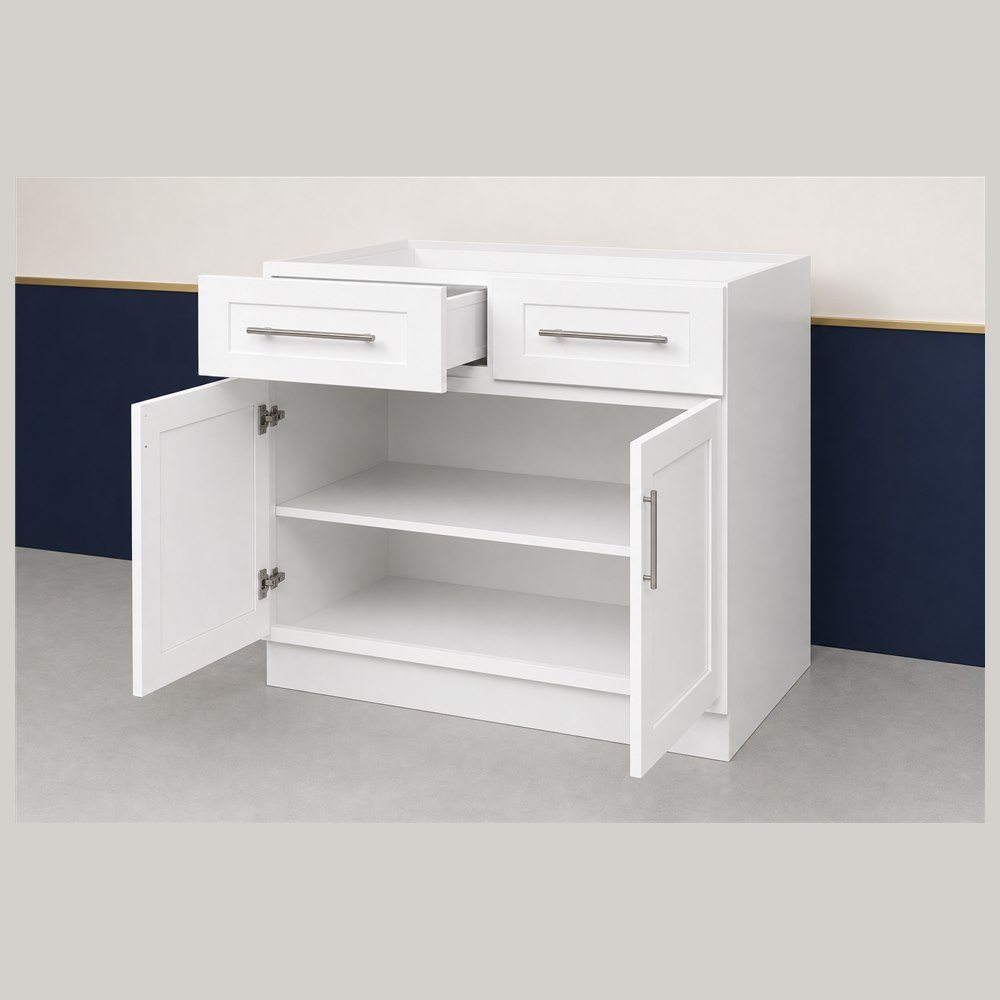
They can be, and the test is certification — not country of origin. Compliance with CARB P2 and TSCA Title VI is a matter of how a panel is made and tested, so a compliant cabinet carries the certification regardless of where it was built. The rule is written to leave no gap here: the federal limits apply to composite wood "sold, supplied, offered for sale, or manufactured (including imported)" in the United States, and compliant products are labeled to prove it (40 CFR 770.10). TC Wholesale Cabinetry ships CARB P2-compliant cabinets from its own factory, and states the compliance on every product page.
This is the part that gets muddled by marketing, so it is worth stating cleanly. "Imported" describes where a cabinet was manufactured; "CARB P2-compliant" describes how its panels test for formaldehyde. They are independent facts. The federal rule applies to product sold into the US market no matter where it originates, which is why the meaningful question is never "where was this made?" but "is it certified to the standard, and will you put that in writing?" An imported cabinet certified to TSCA Title VI and a domestic one certified to the same rule are held to the identical emission ceiling.
So the honest framing is not that one origin is cleaner than another — it is that certification is what you should be checking, on any cabinet, from any source. A supplier that builds to CARB P2 can say so plainly and stand behind it. If you have read our take on whether RTA cabinets are worth it, this is the same principle applied to air quality: judge the cabinet by its verifiable specs — the box material, the joinery, the hardware, and the emission certification — rather than by a label that tells you nothing testable.
What should you ask a cabinet supplier?
Ask the questions that have documentable answers. Emissions are invisible, so the only honest way to compare brands is to make each one commit to specifics in writing — the standard met, the materials used, and the proof behind the claim. A supplier building genuinely low-emission cabinets will answer all of these without hedging; one selling on price alone tends to get vague exactly where it counts.
- Do these cabinets meet CARB P2 and TSCA Title VI, and will you state that in writing for my order?
- Which parts of the box are covered — sides, bottom, back, and shelves, or only the visible panels?
- What is the box made of? All-plywood resists moisture and holds screws far better than particleboard or MDF.
- Are the doors solid wood, and does the cabinet ship with soft-close hinges and undermount glides?
- Can you provide the certification or compliance documentation if I request it?
- Is there a door sample I can order to judge the finish and feel before committing to a full kitchen?
Notice that these questions blend air quality and durability on purpose. A cabinet can be CARB P2-compliant and still be built from particleboard that fails under a sink, and it can be all-plywood yet vague about emissions. You want both answered, in writing, for the same box — that is what a trustworthy spec sheet looks like. The fastest way to feel the difference quality makes is to hold it: order a door sample and judge the finish, the joint, and the weight in your own kitchen light.
Have a layout in mind? Send us your kitchen dimensions and we will price an all-plywood, CARB P2-compliant kitchen for you — request a free quote and we will take it from there.
Keep reading
- Plywood vs. Particleboard Cabinets: Which Lasts Longer?
The box material decides how long a cabinet survives sink leaks, humidity, and years of door slams. Here's the honest plywood-vs-particleboard breakdown.
- Are RTA Cabinets Worth It? An Honest Buyer's Guide
Ready-to-assemble cabinets cut cost by shipping flat — but quality lives in the box material, not the assembly. An honest look at whether RTA is right for you.
- How to Clean Kitchen Cabinets Without Damaging Them
Most cabinet finishes need the same gentle routine: mild dish soap, a soft well-wrung cloth, a rinse wipe, and a full dry. Here is how that changes by finish — and what to avoid.
- Baltic Birch Plywood Cabinets: What Makes Them Special?
Baltic birch is a premium grade of birch plywood — an all-birch, void-free core with roughly twice the plies of standard sheets. Here is what it is, why cabinetmakers reach for it, and how to tell the real thing from a lookalike.
- CARB P2 vs E0 vs ENF: Cabinet Emission Standards
Three acronyms police formaldehyde in cabinets: America's CARB P2, Europe's E0, Japan's ENF. Here is what each system measures, how they differ, and which question to ask any seller.
Ready to plan your kitchen?
Send us your layout for a free, no-obligation quote, or browse the full factory-direct catalog of all-plywood Shaker cabinets.