
White vs. Gray Shaker Cabinets: How to Choose
By TC Wholesale Cabinetry · Editorial team
June 26, 2026 · 7 min read
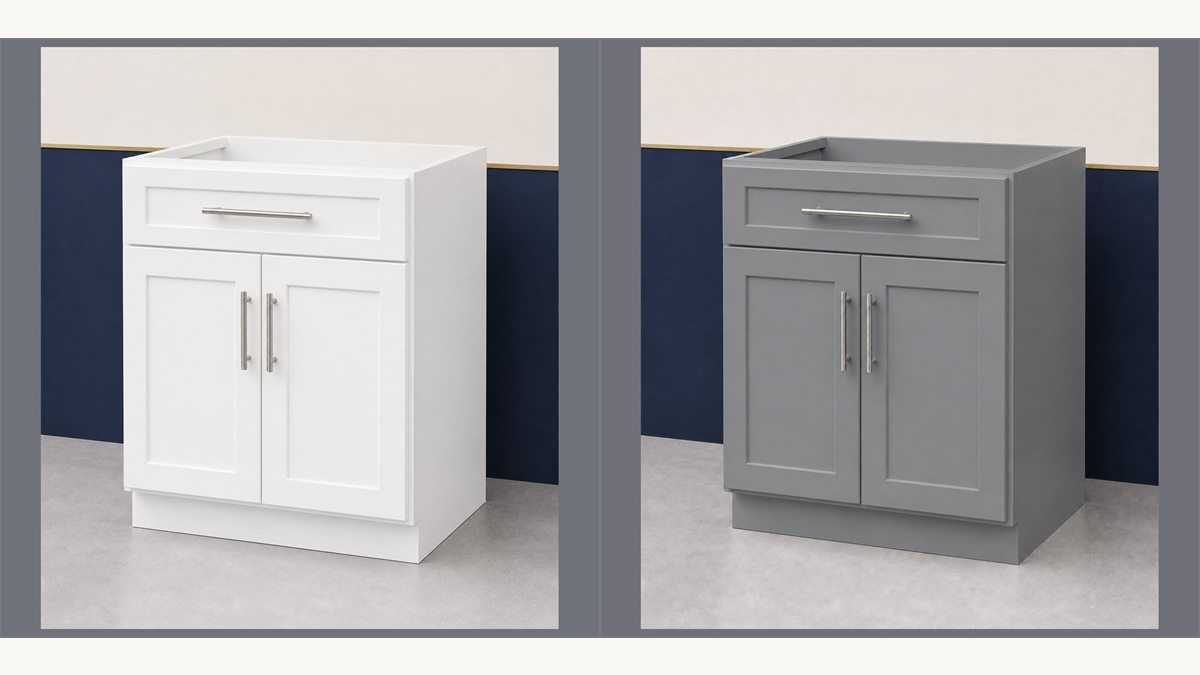
Once buyers settle on the Shaker door, one question almost always comes next: white or gray? Both are the same clean, five-piece front — the only thing that changes is the color, and yet that single choice sets the entire mood of the room. This guide compares white shaker vs gray shaker honestly: where each finish wins, how countertops and hardware shift the look, whether you can mix the two, and the one step that removes the guesswork before you commit a full kitchen to a color.
White or gray Shaker — which should you pick?
Pick white Shaker when you want a kitchen that feels bright, open, and timeless; pick gray Shaker when you want depth, a slightly warmer modern tone, and a finish that hides everyday smudges. Neither dates quickly. TC offers both in the identical solid-wood Shaker door — Purity White, a clean near-white, and Victory Gray, a soft greige mid-tone — so the decision is purely about color and mood, not quality.
It helps to remember that white and gray are not two different cabinets — they are one cabinet in two finishes. Both are the same five-piece Shaker door: two vertical stiles, two horizontal rails, and a flat recessed center panel, built from solid wood on an all-plywood box with soft-close hinges and undermount glides. The construction, the CARB P2-compliant materials, and the ready-to-assemble format are identical across the line. What you are really choosing between is how light behaves in your room and how much the color forgives daily life.
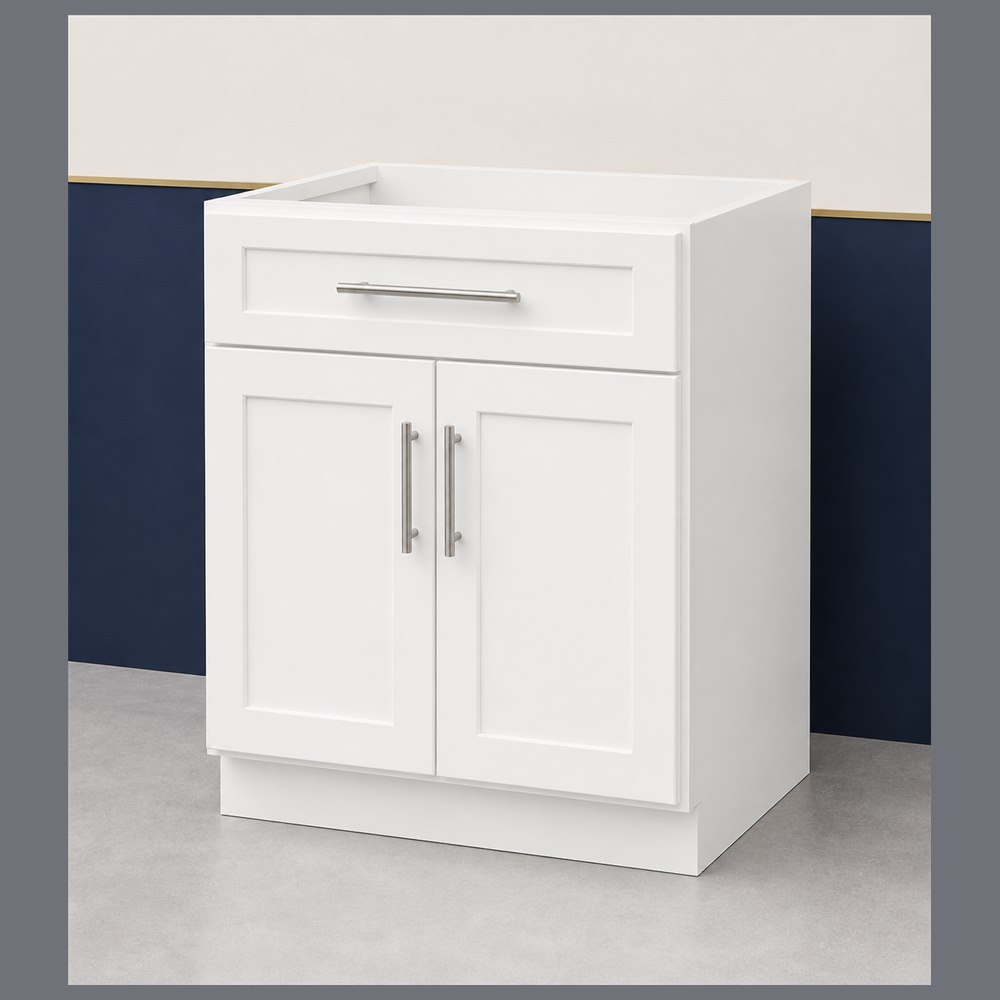
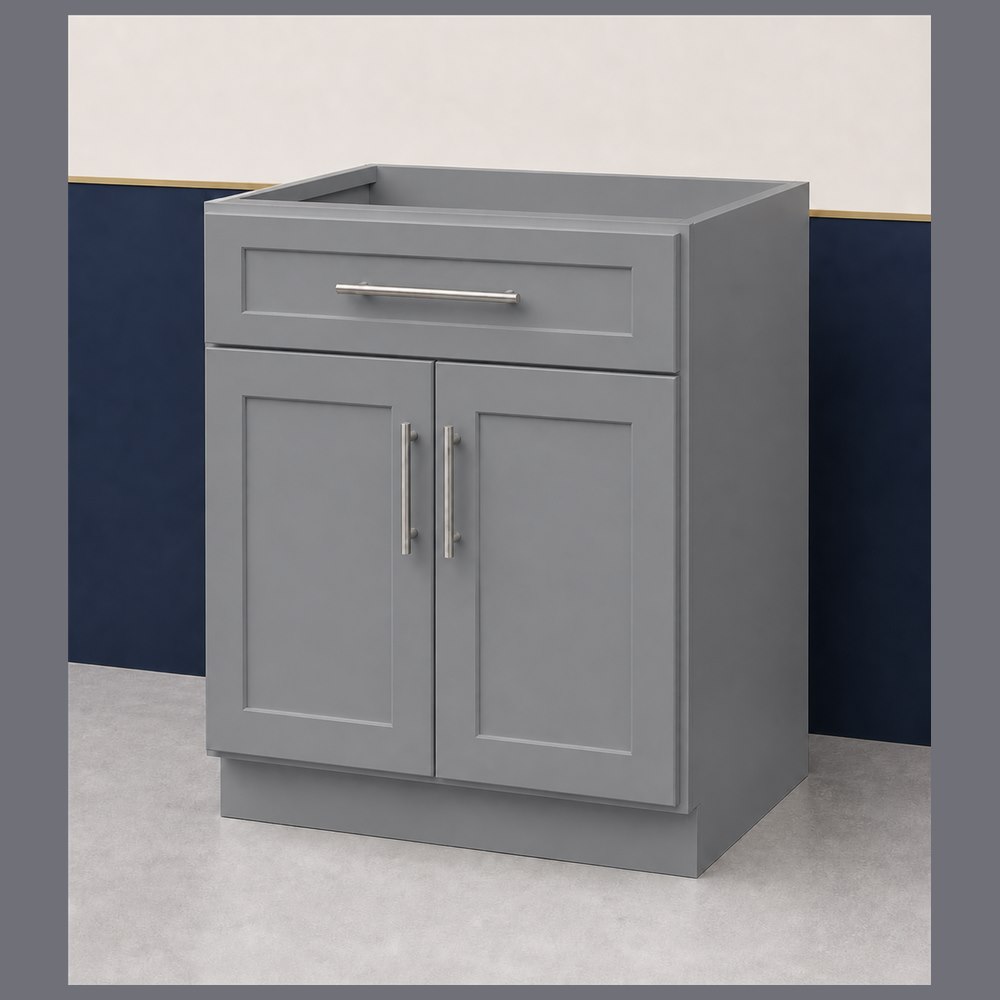
Because the door is shared, you can compare the two finishes apples-to-apples. Below, the same base cabinet appears in Purity White and Victory Gray — notice how the white version pushes the door edges and shadow lines forward, while the gray version softens them and reads a touch more grounded. That difference scales up: across a full wall of cabinets, white amplifies brightness and gray adds quiet weight.
When is white Shaker the better choice?
White Shaker is the better choice when you want maximum brightness, a small or low-light kitchen to feel larger, or a neutral backdrop that lets a bold countertop, backsplash, or floor lead. It is the most resale-safe finish — a white Shaker kitchen appeals to the widest pool of buyers and rarely reads as dated in listing photos. Purity White is a clean near-white that bounces daylight around the room and keeps sightlines open.
White earns its popularity because it is the most flexible canvas in the room. It reflects rather than absorbs light, so a galley kitchen, a north-facing room, or a space with one small window all feel more open than the square footage suggests. And because white commits to nothing, it lets every other surface do the talking: a dramatic veined quartz, a handmade tile backsplash, or a rich wood floor reads louder against white cabinets than against any colored door.
If you are gathering white shaker cabinet ideas, the most reliable directions are the ones that play to white's strengths:
- Pair Purity White doors with a warm wood floor and brass or aged-brass hardware for a bright, lived-in transitional kitchen.
- Keep it crisp and contemporary with matte-black bar pulls, a waterfall quartz island, and a quiet white-on-white backsplash.
- Let a statement countertop lead — a bold marble-look quartz or soapstone reads its strongest against a near-white door.
- Run white wall cabinets to the ceiling to stretch a low room taller and keep the whole space feeling airy.
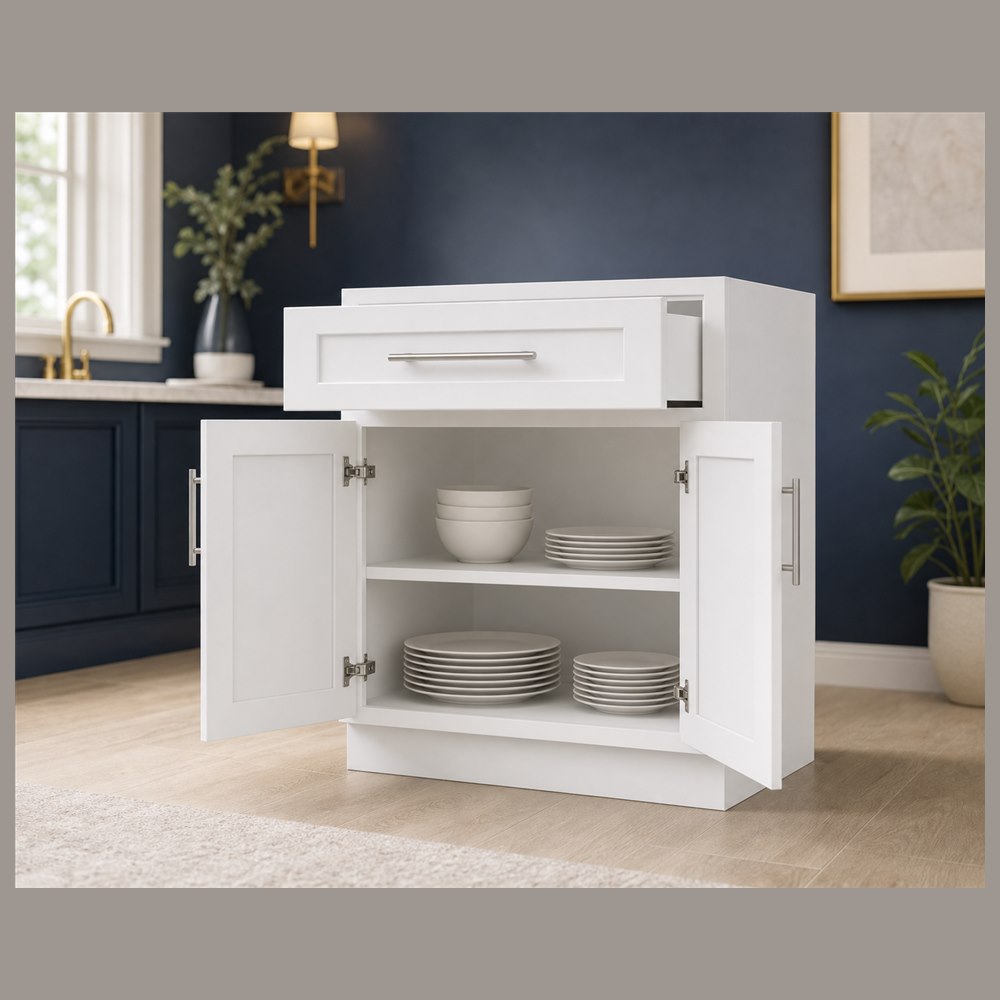
The one honest caveat: a true near-white shows crumbs, splashes, and fingerprints sooner than a mid-tone does, so a high-traffic family kitchen will need a quick wipe more often. It is rarely a deal-breaker — the flat Shaker panel cleans easily — but it is the trade-off you accept in exchange for all that brightness. You can see every configuration available in the Purity White Shaker finish, from sink bases to wall cabinets, or browse the whole line in the cabinet catalog.
When is gray Shaker the better choice?
Gray Shaker is the better choice when an all-white kitchen feels too clinical, when you want a little more depth and warmth, or when heavy family traffic makes fingerprints a daily fact of life. Victory Gray is a soft greige mid-tone that reads modern without going cold, grounds a big light-filled room, and shrugs off the smudges that show instantly on a bright white door. It is the quietly practical pick for a busy household.
Greige — gray with a whisper of warm beige underneath — is what keeps Victory Gray from feeling like a steel-gray office. In a large, sun-filled kitchen, a wall of pure white can wash out and feel flat; a mid-tone gives the eye something to land on and makes the cabinetry feel substantial. Gray also bridges styles easily: it leans modern next to black hardware and slab countertops, and turns transitional next to brass and warm wood, all without changing a single door.
Because the format is identical to the white line, RTA gray shaker cabinets give you the same all-plywood box, solid-wood door, and soft-close hardware — only the finish changes. Buyers searching for gray shaker RTA are usually after exactly this combination: a forgiving, on-trend color that still ships flat-packed and assembles on-site with a screwdriver. (Spelled "grey" outside the US, it is the same finish either way.) The practical payoff is real: on Victory Gray doors, the everyday fingerprints and light scuffs that telegraph instantly on near-white simply recede.
Gray's trade-off is the mirror image of white's. It hides wear but reflects a little less light, so in a small or dark kitchen a wall of mid-tone cabinets can feel heavier than white would. The fix is usually layout, not color: pair gray base cabinets with white walls or a light countertop, or save the full-gray look for rooms that already get good daylight. Every size available in the Victory Gray Shaker finish is listed with its exact dimensions, and if you want to see how a gray kitchen plans out at standard dimensions, our kitchen cabinet sizes guide walks through every workhorse width and height.
How do countertops and hardware change the look?
Countertops and hardware change a Shaker kitchen more than the door color does, because they decide whether white or gray reads warm or cool, modern or classic. The same Purity White door looks airy under white quartz and brass, but crisp and contemporary under dark stone and matte black. Victory Gray turns moody beside black countertops and softens beside butcher block. Choose these two elements with the cabinet color, not after it.
A few pairings that consistently work, for either finish:
- White Shaker + warm metals — brass, champagne bronze, or aged gold knobs and pulls keep a near-white kitchen from feeling cold and add a soft, lived-in glow.
- White Shaker + matte black — black bar pulls and a darker countertop pull a bright kitchen firmly contemporary, with high contrast and clean lines.
- Gray Shaker + matte black or gunmetal — tonal, modern, and low-maintenance; the dark hardware disappears into the door and lets the cabinetry read as one quiet block.
- Gray Shaker + brass or wood — warm metal or a butcher-block counter pushes greige toward transitional and farmhouse, softening the gray without lightening it.
Countertops set the temperature of the whole room. A cool, blue-white quartz makes both finishes read crisper and more modern; a warm, creamy quartz or natural wood makes them read softer and more traditional. This is exactly why a screen is a poor judge — an undertone that looks neutral on a product photo can lean warm or cool against your specific counter and lighting. The hardware and the stone are doing half the work, so plan them together with the door.
Can you mix white and gray in a two-tone kitchen?
Yes — and pairing white and gray is one of the most popular two-tone looks of the past decade. The standard formula is light on top, darker below: Purity White wall cabinets over Victory Gray base cabinets and island. It keeps the upper half of the room bright and open while grounding the lower half with depth and hiding wear exactly where hands, feet, and mops do the most damage. Because Purity White and Victory Gray are the same all-plywood box and solid-wood Shaker door in two finishes, going two-tone is purely a design decision, not a construction change.
Two-tone works because it gives you the best of both finishes in the places each does its best work. White up high reflects light at eye level and keeps the room from feeling closed in; gray down low anchors the design and shrugs off the scuffs that collect near the floor. A gray or greige island under a white perimeter is the same idea in miniature — a focal point with weight, surrounded by brightness. Because Purity White and Victory Gray are the same door in the same line, the two finishes meet cleanly at every seam, with no mismatch in profile or sheen.
If you go two-tone, keep the rest of the room calm so the cabinets stay the story: one countertop color, one hardware finish, one backsplash. For the full picture on ordering Shaker in either or both finishes — sizes, configurations, and how flat-pack shipping keeps it affordable — see our ready-to-assemble Shaker cabinets guide. You can also browse white, gray, and mixed layouts directly in the cabinet catalog.
How can you see the real finish before you commit?
Order a door sample of each finish and judge it in your own kitchen light — it is the single best way to decide, and it costs a fraction of a wrong order. No screen, swatch, or styled photo shows a finish accurately, because kitchen lighting shifts a color more than any monitor can. A near-white can read warm under incandescent bulbs and cool under daylight; a greige can lean gray in one room and beige in the next.
Hold a real Purity White and a real Victory Gray door against your actual countertop, your backsplash, your floor, and your hardware, at the times of day you actually use the kitchen — bright morning, gray afternoon, warm evening lamplight. That is the moment the choice usually makes itself. A sample also lets you feel what a photo can't: the weight of the solid-wood door, the crisp square shoulders of the five-piece frame, and the quiet pull of the soft-close hinge. Order a door sample before you commit a whole kitchen to one finish — it is the cheapest insurance in the entire project.
Have a layout in mind? Send your kitchen measurements and we will price it in either finish — request a free quote and we will take it from there.
Keep reading
- Ready-to-Assemble Shaker Cabinets: The Complete Guide
Why the five-piece Shaker door stays the safe, timeless choice — and how ready-to-assemble Shaker cabinets deliver it factory-direct, in white and gray.
- Kitchen Cabinet Sizes & Dimensions: The Complete Guide
Base, wall, and tall cabinets follow a short menu of standard sizes. Here are the widths, heights, and depths that matter — in printable tables where every row maps to a cabinet you can order.
- Shaker Cabinet Colors: Gray, Cream, Espresso-Look & Wood
White is only the starting point. Here is how gray, cream, espresso-look, and wood-tone Shaker cabinets each behave in a real kitchen — and how to confirm the color before you commit.
- Wall Colors With White Shaker Cabinets: Pairing Rules
White cabinets take almost any wall color — which is exactly why walls go wrong. Match undertones, mind the light, and test big swatches before committing.
Ready to plan your kitchen?
Send us your layout for a free, no-obligation quote, or browse the full factory-direct catalog of all-plywood Shaker cabinets.