
How Much Do Kitchen Cabinets Cost? RTA vs. Assembled vs. Custom
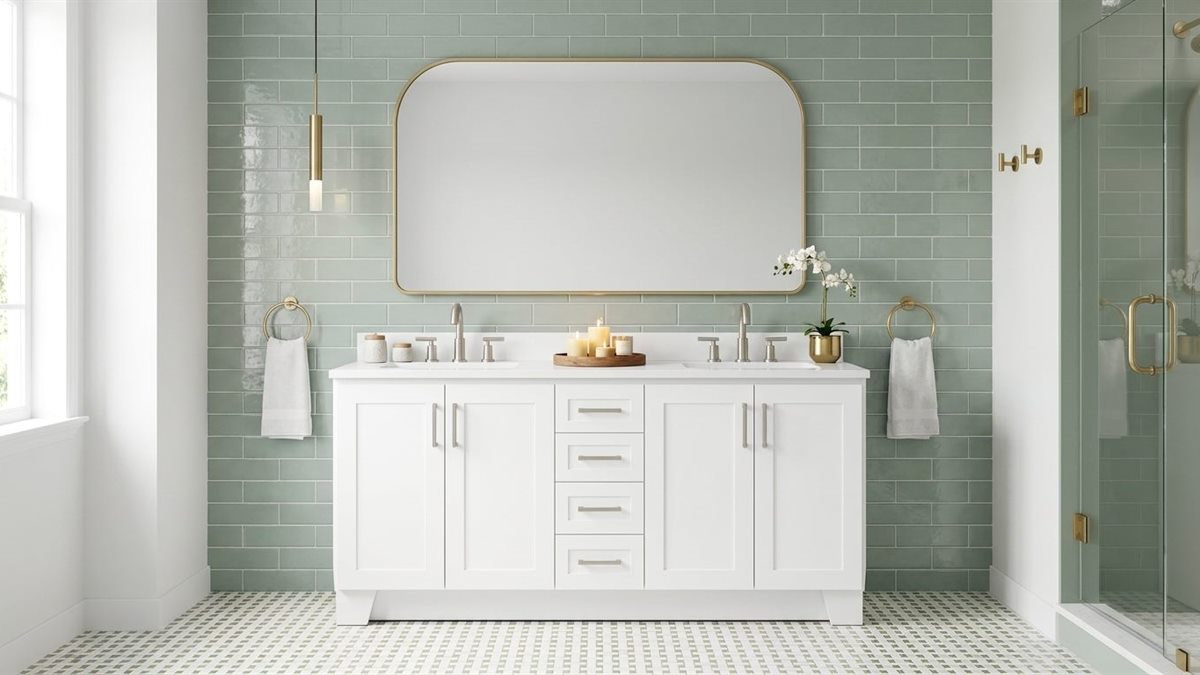
"How much do kitchen cabinets cost?" is the first question every remodel opens with — and the most frustrating to answer, because the honest reply is "it depends." Cabinets are usually the single biggest line item in a kitchen, and the price swings widely based on three things: what they are made of, how they are built, and how you choose to buy them. This guide breaks down all three so you can budget with clear eyes instead of guessing.
We will look at what actually drives kitchen cabinet cost, how the industry measures it by the linear foot, how RTA, assembled, semi-custom, and full custom compare, and the hidden costs — hardware, countertops, and installation — that catch first-time remodelers off guard. One ground rule up front: we will not post a TC price on this page, because an honest figure depends on your exact kitchen. We will show you how to get that number at the very end.
What actually drives the cost of kitchen cabinets?
Three forces drive the cost of kitchen cabinets: the material the box and door are made of, the construction quality and hardware, and how you buy them — flat-packed, pre-assembled, or built to order. Two cabinets that look identical in a listing photo can differ by hundreds of dollars per run because one hides thin particleboard and charges extra for hinges, while the other is all-plywood with soft-close hardware already included.
- Material — an all-plywood box and a solid-wood door cost more to make than a particleboard or MDF box with a printed or thermofoil-wrapped panel, and they last far longer, especially around sinks and dishwashers.
- Construction and hardware — dadoed, glued-and-screwed joints, concealed soft-close hinges, and undermount glides add cost on the spec sheet but remove it from your repair list. On budget lines these are upsells; on better lines they are standard.
- How you buy — the same box costs more pre-assembled than flat-packed, and more again when it is modified or built one-off, because you are paying for assembly labor, freight, and shop time on top of the cabinet itself.
The takeaway: a low sticker price almost always means a saving was made somewhere you cannot see in a thumbnail — usually the box. Judge cabinets by their construction first, then by format and finish. You can preview the real standard sizes, door styles, and finishes in the cabinet catalog before you weigh any of this against price.
How is kitchen cabinet cost measured (per linear foot)?
The industry estimates kitchens by the linear foot — the total running length of wall your cabinets cover. An estimator multiplies your linear footage by a per-foot figure that bundles base cabinets, wall cabinets, and standard fillers into one quick number. It is a useful shorthand for comparing very different kitchens at a glance, not a precise quote, because it averages over door styles, sizes, and options.
To rough out your own footage, measure the length of each cabinet run along the wall and add them up; base and wall cabinets are often counted together as a single per-foot rate. A compact galley might total 12 to 15 linear feet, while a large kitchen with an island can run 25 feet or more. Multiply that by a per-foot figure and you have a ballpark — emphasis on ball.
Where do the per-foot figures land? Industry estimates and national averages commonly place kitchen cabinets anywhere from roughly $100 per linear foot at the budget-stock end to $1,000 or more for high-end custom cabinetry. Treat that strictly as market context — it is a category-wide range published by remodeling sources, not a TC quote. The spread is that wide precisely because it lumps together every material and every buying method into one average.
What does a whole kitchen cost, for context?
It helps to know what the cabinets sit inside. The 2026 U.S. Houzz Kitchen Trends Study puts the median spend on a major kitchen remodel at $55,000 and a minor one at $20,000, with the median major remodel of a larger kitchen at $75,000 against $46,000 for a smaller space. Those are survey medians across the whole country, not a price list — but they are a useful reality check when a quote lands and you have nothing to compare it against. Cabinets typically take the largest single share of that total, which is why the box decision moves the budget more than any other choice in the room.
One cost driver that sits underneath every imported cabinet quote right now is duty. Builders surveyed for the NAHB/Wells Fargo Housing Market Index estimate a typical cost effect from recent tariff actions of $10,900 per home (National Association of Home Builders), and imported kitchen cabinets and vanities specifically carry a 25% Section 232 tariff that is scheduled to rise on January 1, 2027. If you are budgeting a kitchen that will be ordered near that date, our guide to cabinet tariffs in 2026–2027 works through the actual rates, links each one to the proclamation it comes from, and explains how to tell a legitimate tariff line on a quote from a padded one.
How do RTA, assembled, semi-custom, and custom compare on price?
On price the order is consistent: RTA sits at the low end, stock pre-assembled costs more, semi-custom more again, and full custom is the most expensive. The gaps come mostly from labor and freight, not necessarily from a better box. Industry estimates often put RTA at roughly 30 to 50 percent below comparable custom cabinetry — relative context, again not a TC quote — because flat-packing strips two big costs out of the chain.
- RTA (ready-to-assemble) — the lowest landed cost. The boxes ship flat and assemble on-site, so you skip factory assembly labor and the freight penalty of shipping mostly-empty cabinets across the country.
- Stock pre-assembled — the same standard sizes, but built and finished at the factory. You pay for that assembly labor and bulky freight, so the identical box costs more than its RTA twin.
- Semi-custom — catalog cabinets with paid modifications and a wider finish menu. Each tweak adds to the base price, and a few popular upgrades stack up quickly.
- Full custom — built from scratch to your exact dimensions and finishes. The most design freedom, paired with the highest price and the longest wait.
Notice that the price ladder tracks how the cabinet is bought, not how durable it is — a well-built RTA box can outlast a pre-assembled particleboard one. For a full side-by-side on lead times, quality, and flexibility, read our comparison of RTA vs. assembled vs. custom cabinets. TC sits in the RTA category but builds to a higher standard: all-plywood boxes, solid-wood Shaker doors, and soft-close hardware, shipped flat nationwide.
What drives RTA cabinet prices up or down?
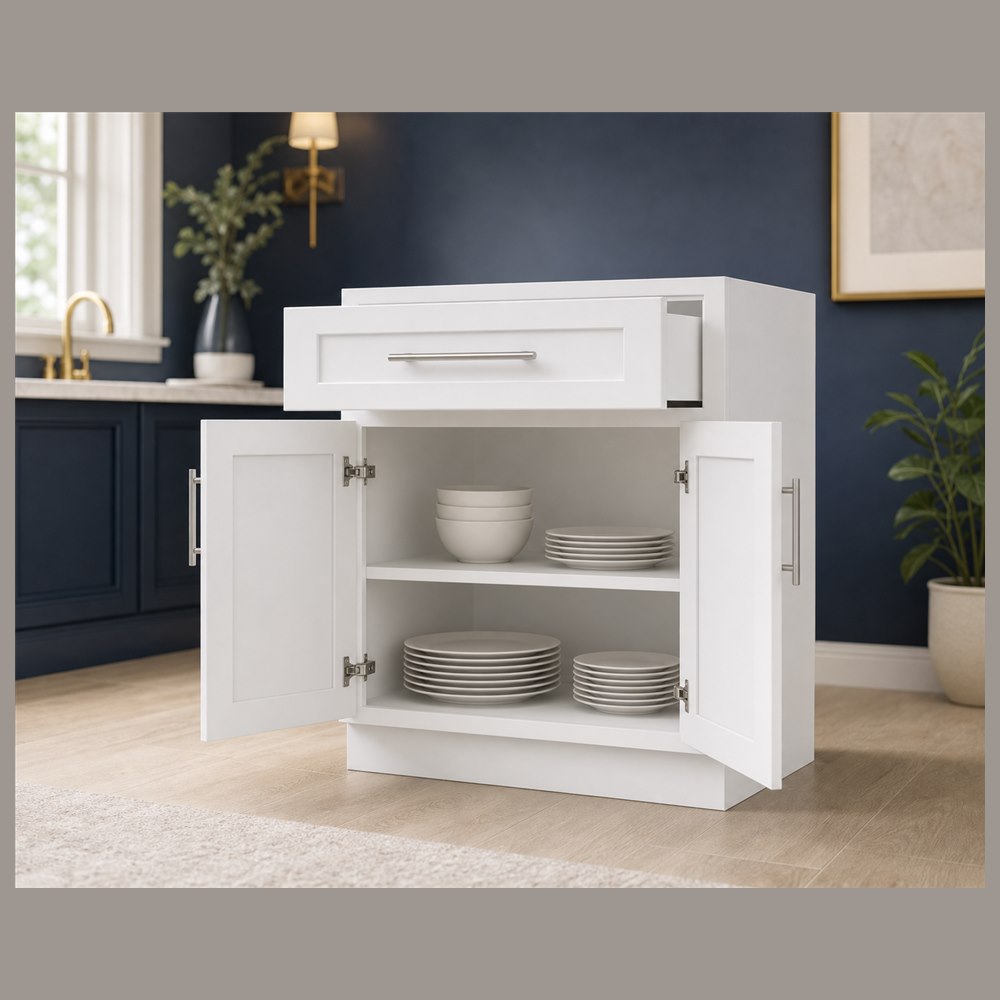
RTA cabinet prices are driven by the same factors as any cabinet — box material, door construction, and hardware — minus the assembly labor and bulky freight you would pay on a pre-built box. Within the RTA category itself, an all-plywood line with solid-wood Shaker doors and soft-close hardware costs more than a thin particleboard line, and it should: you are paying for the part of the cabinet that actually lasts.
- Pushes prices up — all-plywood construction instead of particleboard, real five-piece solid-wood doors, soft-close hinges and undermount glides included, CARB P2-compliant panels, and specialty boxes like sink bases, pantries, and lazy-susan corners.
- Pulls prices down — flat-pack shipping, standard widths in three-inch increments, and a focused door-style lineup. These are efficiencies, not corners cut, and they are exactly where the honest RTA savings come from.
- The trap to avoid — a rock-bottom RTA price usually means the box is thin particleboard with stapled corners and hardware sold separately. The cheap number gets expensive the first time a sink-base panel swells.
So when you compare RTA cabinet prices line to line, make sure you are comparing the same construction — an all-plywood, soft-close, CARB P2 cabinet against another, not against a bare particleboard carton with a lower headline. Our deeper look at whether RTA cabinets are worth it walks through exactly what to check before you let a low price decide for you.
How much does it cost to install kitchen cabinets — DIY vs. pro?
The cost to install kitchen cabinets depends entirely on who does the work. DIY costs only your time and a few basic tools; a professional installer charges by the cabinet or by the hour, and the cost of installation of kitchen cabinets is one of the largest line items first-time remodelers forget to budget. With RTA you can split the difference — assemble and hang the boxes yourself, or pay a local pro and still keep the material and freight savings.
If you go DIY, the cost to install RTA cabinets is essentially a weekend of your time plus a drill, a rubber mallet, a level, and a square. A typical mid-size kitchen of 12 to 18 cabinets is a focused weekend for a careful first-timer, less for a two-person team. Assembling each flat-packed box takes roughly 15 to 40 minutes, and hanging is the same work whether the cabinet arrived built or flat.
If you hire out, installation labor is usually quoted per cabinet or as a percentage of the cabinet cost; national averages for that labor vary widely by region and project, so treat any figure you read as industry context rather than a fixed rate. The key point is that buying RTA does not lock you into doing the work — you can outsource assembly and hanging, keep the material and freight savings, and only add back the labor you chose to pay for.
What hidden costs should you budget (hardware, countertops, install)?
Cabinets are the headline, but a kitchen budget has to cover everything that bolts to them. Beyond the boxes, plan for countertops, knobs and pulls, crown molding and trim, filler strips, delivery, and installation labor. On a budget line, some of these — soft-close hinges and glides especially — are sold as add-ons, which makes the sticker look lower than the real, finished total you will actually pay.
- Countertops — usually a separate trade and a major line item; laminate, butcher block, quartz, and stone span a huge range on their own.
- Hardware and trim — knobs, pulls, crown molding, light rail, toe-kick, and filler strips. Small per piece, but they add up across a full kitchen.
- Soft-close hinges and glides — an upgrade on cheap lines, included on better ones. Always check whether they are in the carton or extra, because it changes the real comparison.
- Delivery and installation — freight to your door plus assembly and hanging labor if you are not doing it yourself.
- The unglamorous extras — shims, screws, scribe molding, and the occasional filler to square a wall that is not perfectly plumb.
This is where included hardware quietly changes the math. Because TC cabinets ship as all-plywood boxes with solid-wood Shaker doors, soft-close hinges, undermount glides, and CARB P2-compliant materials already in the carton, several common "upgrade" surprises are simply part of the cabinet. Fewer surprise add-ons makes the budget you write at the start much closer to the one you actually spend.
How do you get an accurate cabinet cost for your kitchen?
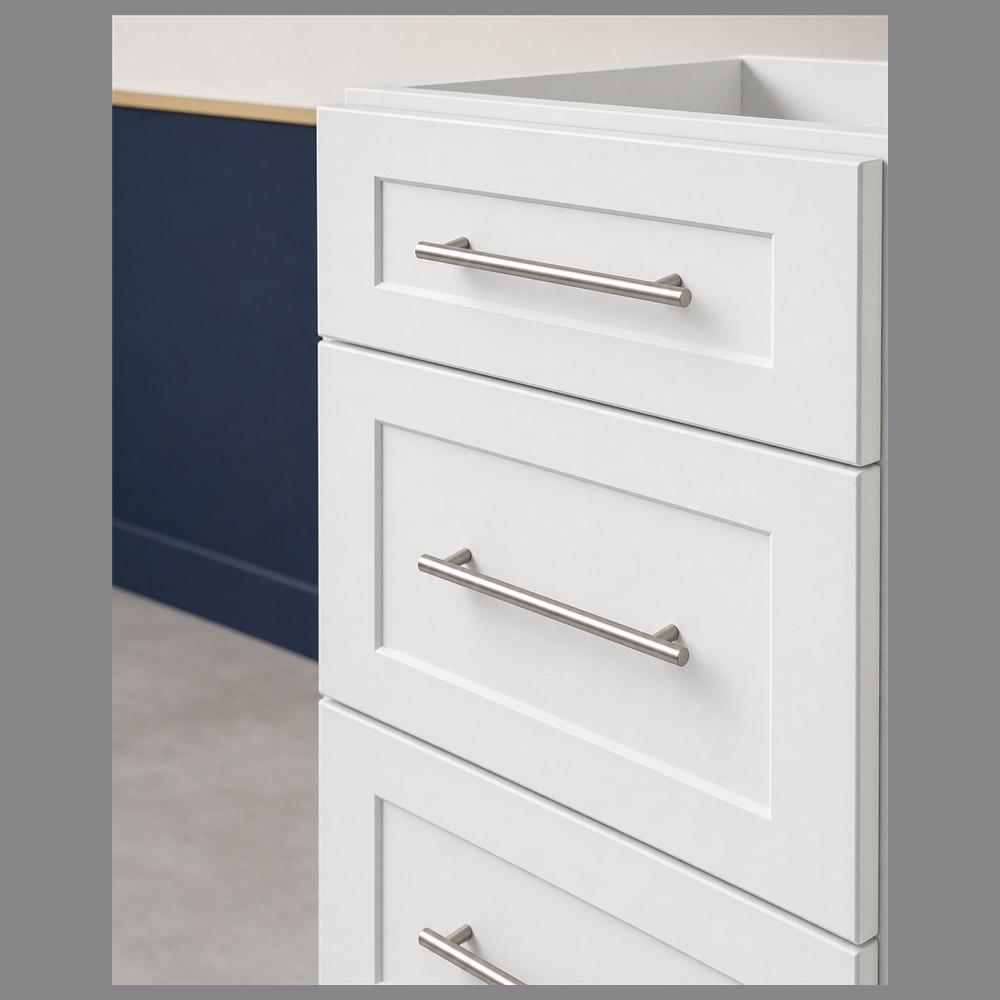
The only number that matters is the one for your actual kitchen, and you get it from a quote — not a per-foot average. Send your measurements or a rough layout, your chosen door style, and your cabinet list, and you get a real figure instead of a range. It takes a few minutes, costs nothing, and replaces every estimate on this page with the number that applies to your space.
- Rough out your layout — measure each wall run and note window, door, and appliance locations.
- Pick a door style and finish so the quote reflects what you will actually build.
- List the cabinets you think you need; you do not have to get it perfect — that is what the quote conversation is for.
- Send it in for a free quote and get a real figure for your kitchen, not a national average.
Browse the cabinet catalog to see the standard sizes and door styles, then order a door sample — a small step that protects against a costly wrong order — before you send your measurements with a free quote request to price your real layout. That is the honest way to turn the ranges in this guide into the one figure that belongs to your kitchen.
Keep reading
- RTA vs. Assembled vs. Custom Cabinets: Which Should You Buy?
Four ways to buy kitchen cabinets — RTA, stock pre-assembled, semi-custom, and full custom — compared honestly on cost, lead time, quality, and flexibility, with a scenario-by-scenario guide to picking yours.
- Cabinet Tariffs 2026–2027: 25% Now, 50% From January — What It Means for Your Quote
Imported cabinets carry a 25% Section 232 tariff today, rising to 50% on January 1, 2027 — a date already delayed once. Here's what each rule says, what it adds to a quote, and why in-stock U.S. inventory sidesteps the increase.
- Are RTA Cabinets Worth It? An Honest Buyer's Guide
Ready-to-assemble cabinets cut cost by shipping flat — but quality lives in the box material, not the assembly. An honest look at whether RTA is right for you.
- Cabinet Refacing vs Replacing: Cost and When Each Wins
Refacing runs $4,234 to $10,226 on average and saves 30–50% over replacing — but only when the boxes underneath are sound. Here is how to tell which side your kitchen falls on.
- 10x10 Kitchen Cabinet Cost: What the Quote Means
A 10×10 quote is the industry's apples-to-apples yardstick: one sample layout, cabinets only. Here is what it includes, what it leaves out, and the third-party ranges to hold any quote against.
- Kitchen Cabinet Installation Cost: Labor Explained
Install labor for a full kitchen averages $6,191 (Angi 2026 data), but quotes swing wide with pricing method and project scope. Here is how installers charge, what moves the number, and how to vet one.
- What Affects Your RTA Cabinet Quote? A Cost Guide
An RTA cabinet quote is a parts list with a price attached — boxes, doors, finish, hardware, accessories, and freight. Here is what each line means, what moves the total, and how to compare quotes fairly.
- Trade Program Benefits for Cabinet Dealers
Cabinet trade programs bundle project-based pricing, measuring and quoting help, simpler repeat orders, and one contact for your jobs — here is what each part covers and how to ask.
- Shaker Cabinet Colors: Gray, Cream, Espresso-Look & Wood
White is only the starting point. Here is how gray, cream, espresso-look, and wood-tone Shaker cabinets each behave in a real kitchen — and how to confirm the color before you commit.
- Kitchen Cabinet Cost Per Linear Foot Explained
Per-linear-foot pricing divides the cabinet total by the wall length the cabinets cover — but quotes disagree on what a foot includes. Here is how to measure, what to ask, and current third-party ranges by tier.
- Cost to Replace Kitchen Cabinets: Full 2026 Breakdown
A full cabinet replacement typically runs $4,500 to $15,000 installed — boxes plus demolition, disposal, and labor. Here is what each line of that total actually buys.
Ready to plan your kitchen?
Send us your layout for a free, no-obligation quote, or browse the full factory-direct catalog of all-plywood Shaker cabinets.