
Cabinet Tariffs 2026–2027: 25% Now, 50% From January — What It Means for Your Quote
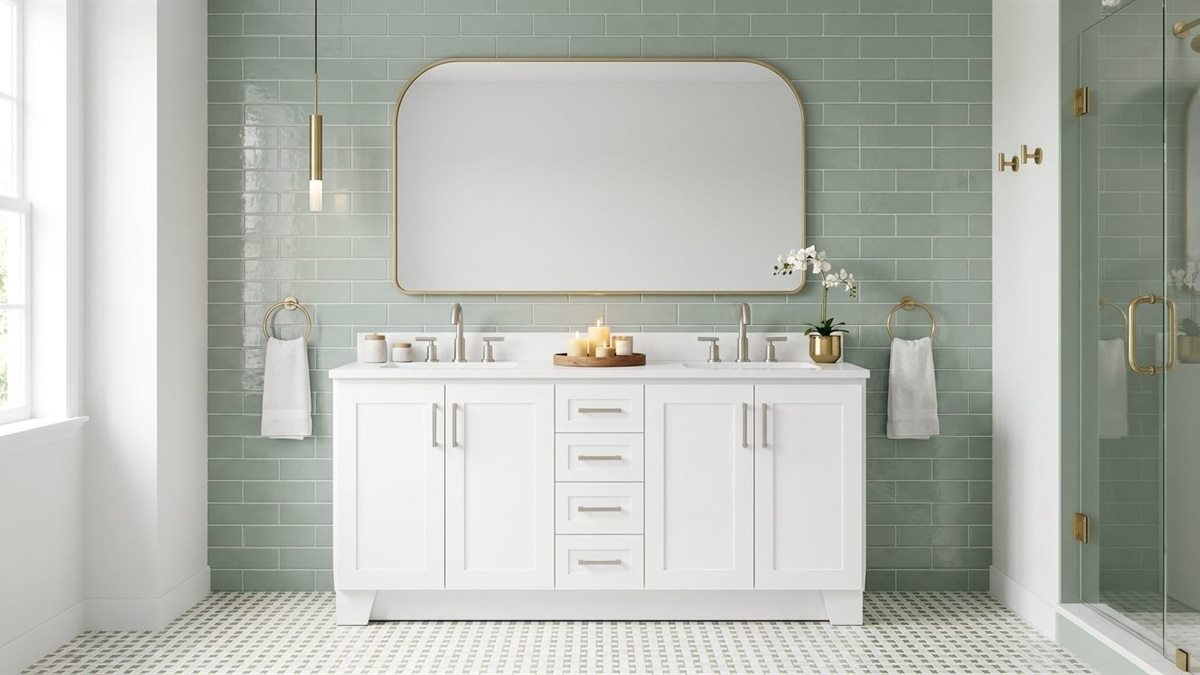
Tariffs are one of the biggest forces moving cabinet quotes in 2026. Imported kitchen cabinets and bathroom vanities carry a 25% Section 232 tariff today, and that rate is scheduled to double to 50% on January 1, 2027. This guide breaks down what each rule actually says, roughly how much it adds to an order, and the practical steps that protect your quote before the increase lands.
We import cabinets from our own factory, so we track these rules the way a captain tracks weather. Everything below reflects the rules as of July 2026 — trade policy moves fast, so treat rates and dates as current as of this writing. Every rate, date and duty figure on this page links to the proclamation, order or notice it comes from, so you can check it yourself rather than take our word for it.
What tariffs apply to imported cabinets in 2026?
As of July 2026, most imported kitchen cabinets and bathroom vanities pay a 25% Section 232 tariff, in effect since October 14, 2025 and scheduled to rise to 50% on January 1, 2027. Cabinets of Chinese origin also face separate antidumping and countervailing duties of up to 262.18% and 293.45%.
Section 232 is a national-security trade action that covers wood products, including finished kitchen cabinets, bathroom vanities, and their parts. The duty was set by Proclamation 10976, which puts a 25% rate on "kitchen cabinets and vanities" and says plainly that it applies to "completed kitchen cabinets and vanities as well as parts imported for use in kitchen cabinets and vanities." So it applies whether a cabinet arrives fully assembled or flat-packed as ready-to-assemble (RTA) — the door style and box construction don't change the duty.
A few trading partners negotiated caps in the same proclamation: wood products from the United Kingdom "shall not exceed 10 percent," and for the European Union and Japan the Section 232 duty may not push the total past 15% once the normal HTSUS duty rate is added — a combined ceiling, not a flat 15% add-on. One more helpful detail in the fine print: the proclamation states that products tariffed under it "shall not be subject to" the broader reciprocal tariffs of Executive Order 14257, so you should not see both charges on the same cabinet.
The rules at a glance
- Section 232 (wood cabinets and vanities): 25% since October 14, 2025; scheduled to rise to 50% on January 1, 2027. Covers finished cabinets, vanities, and parts from most countries. Source: Proclamation 10976, as amended by Proclamation 11000.
- Country caps: the United Kingdom is capped at 10%; for the European Union and Japan the Section 232 duty plus the standard HTSUS rate may not exceed 15% (Proclamation 10976, clause 7).
- China AD/CVD orders: antidumping duties up to 262.18% (the rate assigned to the China-wide entity) and countervailing duties up to 293.45%, in place since April 2020 and continued in September 2025 after the first sunset review. These are in addition to Section 232 for Chinese-origin cabinets.
- Vietnam and Malaysia: no separate AD/CVD case against cabinets genuinely made there as of July 2026. Cabinets from these countries pay the standard Section 232 rate.
How much do tariffs add to a cabinet quote?
Industry estimates put real money on it: builders surveyed for the NAHB/Wells Fargo Housing Market Index estimate a typical cost effect from recent tariff actions of $10,900 per home, according to the National Association of Home Builders. On a single cabinet order the arithmetic is simpler: a 25% duty on a $3,000 imported stock cabinet set is $750 of duty at the border, so the landed cost starts near $3,750 before anyone's margin is applied.
That stings because cabinets are usually the largest single line on a kitchen budget — roughly 30–40% of a remodel's total cost, by common industry rules of thumb. The 2026 U.S. Houzz Kitchen Trends Study puts the median spend on a major kitchen remodel at $55,000, so a tariff that moves cabinet prices by a quarter can swing the whole project by thousands of dollars. If you're still budgeting, our kitchen cabinet cost guide breaks down where the rest of the money goes.
Two quotes for the same cabinets can still differ a lot. What you actually pay depends on when the seller's inventory entered the country, what duty rate applied on that date, and how much of the cost the seller absorbs versus passes through. That's why a vague "tariff surcharge" line deserves questions — more on that below.
What changes on January 1, 2027?
The Section 232 rate on imported cabinets and vanities is scheduled to double from 25% to 50% on January 1, 2027. The higher rate applies to goods entering the United States on or after that date — it is not retroactive, so cabinets already cleared through customs keep the duty rate they paid on entry.
Worth knowing before you plan around it: that date has already slipped once. Proclamation 10976 originally set the increase for January 1, 2026. On December 31, 2025, Proclamation 11000 amended it to "delay for an additional year the increase in the duty rates for upholstered furniture, kitchen cabinets, and vanities" while trade negotiations continued — moving the date to January 1, 2027. The same proclamation also carves out "countries with which the United States reaches an agreement," so a deal signed in the meantime can change the picture for a specific origin. Plan for the 50% date, but don't treat it as carved in stone, and don't accept a price increase justified by a deadline that has not arrived.
Expect two ripple effects. First, importers will race to land inventory before the deadline, which can strain freight capacity and warehouse space in late 2026. Second, quotes written in 2026 but shipped in 2027 sit in a gray zone: if the seller has to import your order after the increase, someone pays the difference. Ask every seller, in writing, whether a quote holds if the order ships after January 1, 2027.
Does the country of origin matter?
Yes — enormously for China, and much less than internet rumors suggest for Vietnam. Chinese-origin cabinets face antidumping duties reaching 262.18% and countervailing duties reaching 293.45% on top of other tariffs, which has effectively priced them out of the U.S. market since the orders took effect in April 2020. Commerce continued both orders in September 2025 after the first five-year sunset review, so they are not expiring.
The reach of the China orders is wider than many buyers realize. In a final scope determination applicable July 17, 2024, Commerce determined that wooden cabinets "completed in Malaysia or the Socialist Republic of Vietnam using wooden cabinet components or constituent wooden parts manufactured in the People's Republic of China" are covered by the China orders. In plain English: moving Chinese parts through a third country does not change their origin. That determination also put importer and exporter certification requirements in place, so origin paperwork is a real, documented requirement — not a formality.
About that "46% Vietnam tariff" you may have read
Some blogs and forum posts cite a "46% tariff on Vietnamese cabinets." As of July 2026, that number has no basis for cabinets. It comes from the reciprocal tariff schedule under Executive Order 14257 — a different program entirely — and Proclamation 10976 states directly that products tariffed under the wood-products action "shall not be subject to any tariffs imposed by Executive Order 14257." There is also no separate antidumping or countervailing duty case against cabinets genuinely made in Vietnam. Cabinets from Vietnam pay the same Section 232 rate as most countries — 25% now, 50% scheduled for 2027. If a seller justifies a surcharge with a number you can't trace to a specific rule, ask them to name the rule. For a broader look at vetting imported cabinets, see our guide to imported cabinet safety.
How do you protect your quote before the 2027 increase?
The short version: buy from inventory that is already in the United States, move on RTA timelines instead of long made-to-order windows, and get itemized quotes in writing that state what happens if your order ships after January 1, 2027.
It also matters how many hands the cabinet passes through before it reaches yours. A duty is charged once, at the border, on the import value — but every distributor and showroom between that border and your kitchen marks up the tariff along with everything else. Buying at factory-direct wholesale cabinet pricing removes those layers, so the duty lands on the import cost rather than compounding through a chain of margins. That is a structural difference, not a discount, and it matters more as the rate rises.
- Favor in-stock U.S. inventory. Duties are assessed when goods enter the country. Cabinets sitting in a U.S. warehouse already cleared customs at the rate in effect on their entry date, so the 2027 increase can't touch them.
- Use RTA speed to your advantage. Industry averages put RTA orders at roughly 4–7 days to ship versus about 25 days for made-to-order lines — those are industry figures, not a commitment from any one seller, and actual lead times vary with stock. Shorter windows mean less exposure to a rate change mid-order. Our post on how RTA cabinets ship explains the freight side.
- Get the tariff treatment in writing. Ask: is the current duty already in the price? Does the quote hold if the order ships after January 1, 2027? Is any "tariff surcharge" tied to a named rule and rate?
- Ask about origin and documentation. A seller should be able to tell you where boxes and components are made and show compliance paperwork — the same paperwork that matters for formaldehyde standards like CARB P2 and TSCA Title VI.
If you build or remodel for a living, the deadline math matters twice: jobs quoted now that install in 2027 need price-validity language in the contract. Our guide to wholesale cabinets for contractors covers bulk ordering and spec sheets.
Frequently asked questions
Will cabinet prices go up in 2027?
For imported cabinets entering the country after January 1, 2027, duties double from 25% to 50%, and most of that typically flows into retail prices over time. Prices on inventory already in U.S. warehouses don't change from the tariff alone, though sellers set final prices based on replacement cost.
Is there a 46% tariff on cabinets from Vietnam?
No. As of July 2026 there is no cabinet-specific 46% rate and no separate AD/CVD case against cabinets genuinely made in Vietnam. The 46% figure comes from the separate reciprocal-tariff program under Executive Order 14257, and Proclamation 10976 expressly exempts wood products tariffed under it from that program. Vietnamese-made cabinets pay the standard Section 232 rate: 25% now, scheduled to be 50% from January 1, 2027.
Do tariffs apply to cabinets already in a U.S. warehouse?
No. Duties are collected when goods enter the United States. The proclamation applies its rates to goods "entered for consumption, or withdrawn from warehouse for consumption, on or after 12:01 a.m. eastern daylight time on October 14, 2025," and the 2027 increase works the same way — by entry date. Cabinets that cleared customs before a rate change keep the rate they paid at entry; increases are not retroactive.
Are RTA cabinets tariffed differently than assembled cabinets?
No. Proclamation 10976 applies the duty "to completed kitchen cabinets and vanities as well as parts imported for use in kitchen cabinets and vanities," so flat-packed RTA components and fully assembled boxes are treated the same. Assembly status changes your freight cost and your lead time, not the duty rate.
Which countries pay less than the standard rate?
Under caps written into Proclamation 10976, the tariff on wood products from the United Kingdom "shall not exceed 10 percent," and for the European Union and Japan the Section 232 duty may not push the total above 15% once the normal HTSUS rate is included. Those caps hold even after the standard rate rises in 2027, and further countries can be added if they reach an agreement.
How do I know if a "tariff surcharge" on my quote is legitimate?
Ask the seller to name the rule and rate behind it — Section 232 at 25%, a China AD/CVD order, or something else — and to show it as its own line item. A surcharge nobody can trace to a specific rule is a negotiation, not a tax.
Keep reading
- How Much Do Kitchen Cabinets Cost? RTA vs. Assembled vs. Custom
Kitchen cabinet cost comes down to three things — material, construction, and how you buy. An honest, no-sticker-shock breakdown of RTA, assembled, semi-custom, and custom pricing by the linear foot, plus the hidden costs of hardware, countertops, and installation.
- Are Imported Kitchen Cabinets Safe? What to Check Before You Buy
Cabinet safety has little to do with the country on the carton and everything to do with the standards it was built to — and whether you can verify them. Here's what to check before you buy.
- How RTA Cabinets Ship: Freight, Lead Times and Damage Claims
RTA cabinets ship flat-packed on freight, so a whole kitchen arrives compact and affordable. How the freight process, lead times, and damage claims really work.
Ready to plan your kitchen?
Send us your layout for a free, no-obligation quote, or browse the full factory-direct catalog of all-plywood Shaker cabinets.