
Baltic Birch Plywood Cabinets: What Makes Them Special?
By TC Wholesale Cabinetry · Editorial team
September 8, 2026 · 8 min read
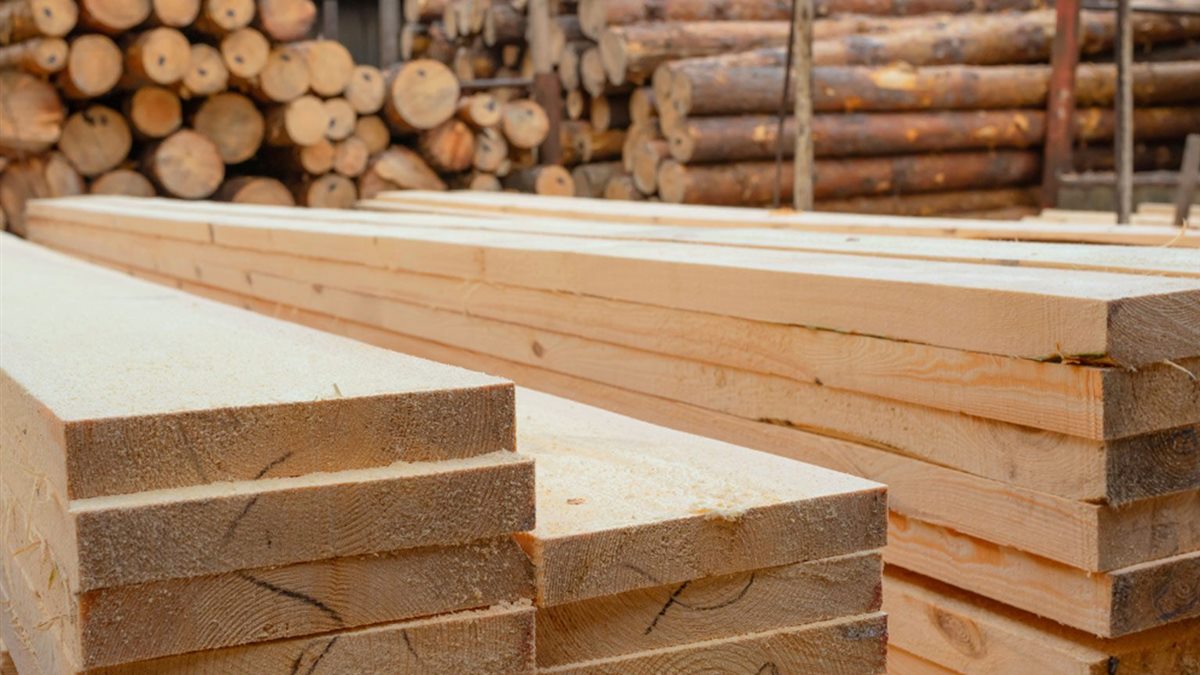
Baltic birch plywood is a premium grade of birch plywood built entirely from thin birch veneers — face, back, and every core layer — laminated into a dense, void-free panel with roughly twice as many plies as a standard sheet. Cabinet shops prize it for drawer boxes, cabinet interiors, and jigs because screws bite along their full thread, dadoes cut clean, and the exposed edges look finished with nothing more than sanding. This guide covers what Baltic birch actually is, how it differs from standard plywood, why it suits cabinet work, what the grades mean, how to spot the real thing, and where its limits are. If your question is the broader box-material decision, start with our plywood vs. particleboard comparison — this page is about one grade.
What is Baltic birch plywood?
Baltic birch is plywood native to the Baltic Sea region of northeastern Europe, originally manufactured for European cabinetmaking — which explains its odd-to-American-eyes sheet size of 5 by 5 feet (1525 mm square) rather than the usual 4 by 8. Its core is what sets it apart: inner plies of solid birch veneer, each around a millimeter thick, cross-banded and laminated with strong adhesive into a void-free core. Thickness is metric too, with the U.S. market rounding to the nearest Imperial size — so nominal 3/4-inch Baltic birch is actually 18 mm, a hair under three-quarters of an inch. Cut joinery to fit, not to the nominal number.
The key mental model: Baltic birch is a construction grade, not a separate wood species. Any birch-faced plywood can look similar from across the room; what earns the Baltic name is the all-birch multi-ply core underneath. That construction is also why the material behaves so differently under a screw, a saw blade, and a leak — the differences below all trace back to it.
How is Baltic birch different from standard plywood?
Standard cabinet-grade plywood — birch, maple, or poplar faced — typically sandwiches a softwood or mixed-species core between thin face veneers, with 5 to 7 plies in a 3/4-inch sheet and occasional voids where a core layer gaps. Baltic birch packs about 13 plies into the same thickness, every one of them birch, with essentially no voids. Four practical differences fall out of that recipe.
- Ply count: roughly twice the layers of standard plywood at the same thickness, which keeps thick sheets flatter and stiffer.
- All-birch core: every ply is hardwood, so fasteners and joinery meet solid wood everywhere instead of alternating between hardwood faces and a soft core.
- Thicker face veneers: faces survive sanding and handling that would sand through the paper-thin veneers on commodity cabinet plywood.
- Void-free core: no hidden gaps to swallow glue, starve a joint, or open up as a hollow spot along a cut edge.
The visible signature is the edge. A cut edge of Baltic birch shows fine, even birch stripes all the way through — clean enough to sand, finish, and leave exposed. A standard sheet's edge shows thicker, paler softwood bands interrupted by occasional voids, which is why it usually needs edge banding. That edge is also your fastest field test, covered below.
Why do cabinetmakers choose it for cabinets?
Three workshop reasons explain the loyalty. First, screw holding: because every core layer is birch with no voids, screws bite with their full thread length instead of spinning in a gap or crushing soft core — hinges, drawer glides, and shelf pins stay tight through years of daily cycles. Second, clean joinery: dadoes, rabbets, dovetails, and miters cut crisp without tear-out pockets, and void-free glue surfaces bond at full coverage. Third, stability: the balanced multi-ply layup keeps half-inch and thicker sheets flat, which is why drawer boxes, pull-outs, and cabinet interiors cut from it stay square.
It also forgives the kitchen's wettest corner better than most sheet goods. Woodworkers routinely put Baltic birch under sinks, where a slow plumbing weep destroys particleboard boxes: the all-birch core tolerates occasional moisture and dries without the irreversible swelling that kills resin-bound chips. It is not waterproof — no unfinished wood is — but it buys margin in exactly the cabinet that fails first. Our 36-inch Shaker sink base lives that hard life under the drain and supply lines, so check the box spec on its product page the way this guide teaches: sides, bottom, back, and shelves, each in writing.
Zoom out and the box material remains the strongest predictor of how a kitchen ages — our cabinet lifespan guide puts plywood-box construction at the long end of the 20-to-50-year range. Baltic birch is one premium way to build such a box, not the only one: any cabinet-grade hardwood plywood, properly finished and installed, serves a kitchen well.
Baltic birch earns its price in the joints and the edges — everywhere a screw has to bite and a dado has to stay true.
— TC Wholesale Cabinetry
What do Baltic birch grades mean?
Baltic birch grades describe the appearance of the face and back veneers only — not the core, which stays all-birch throughout. Grades read face/back, with the better side called the face. The common retail grade is BB/BB: single-piece veneers on both sides allowing a few small color-matched football patches, light mineral streaks, and the odd tight pin knot. One step up, B/BB has a clear face with patches permitted only on the back; one step down, BB/CP allows unlimited sound patches and knots on the back. Lower grades like CP/CP and C/C are sound-but-plain panels meant for laminating or structural use.
Two things surprise first-time buyers. The football patches — small oval repairs — appear even in top grades; they replace worse defects like knots or discoloration and are color-matched to blend in. And a higher grade buys prettier faces, not a stronger core: BB/BB and CP/CP hold screws the same way. So match the grade to the job — BB/BB where faces show, lower grades where paint, laminate, or a dark cabinet interior will cover them.
How can you tell real Baltic birch from a lookalike?
Standard birch-faced plywood wears the same pale face, so judge the panel the way a lumber buyer would — four checks, no lab required.
- The edge test: count the plies on a cut edge. Real Baltic birch shows many thin, uniform birch stripes — about 13 in a 3/4-inch sheet — with no thick pale softwood bands and no voids or hollow spots.
- The face test: faces are single-piece veneers with at most small matched football patches in BB grades. Spliced-together faces or large filled knots point to commodity birch plywood.
- The size test: true Baltic birch comes in 5-by-5-foot sheets with metric thickness (18 mm sold as 3/4 inch). A 4-by-8 sheet labeled Baltic birch deserves a second question.
- The paper test: ask for the grade stamp — face/back grades in writing — and make cabinet listings commit the same way. If a spec sheet will not name the core material, assume it is not all-birch.
What are the honest limits of Baltic birch?
No material wins everywhere, and Baltic birch has four known limits. It is not waterproof: it tolerates damp far better than particleboard but still needs its faces and especially its edges sealed, and standing water will damage any plywood box. It stains blotchily: the tight birch grain takes oil-based pigment stain unevenly unless you first apply a washcoat or stain controller — dye or gel stain behaves better, and many shops simply clear-coat the pale natural look. Thin sheets wander: 1/8-inch and 1/4-inch panels cup in large sizes, so they belong in drawer bottoms and captured backs, not wide unsupported spans. And it costs more than standard hardwood plywood — for painted boxes where faces hide anyway, commodity cabinet-grade plywood is often the value answer.
One more separation to keep straight: grade and emissions are different questions. Baltic birch describes construction; CARB P2 compliance describes formaldehyde emissions from the glue. A premium core can still off-gas if it is bound with the wrong adhesive, so hold any cabinet — Baltic birch or otherwise — to both standards: a durable box and certified low emissions.
Have a layout in mind? Send us your kitchen dimensions and we will price an all-plywood kitchen for you — request a free quote and we will take it from there.
Keep reading
- Plywood vs. Particleboard Cabinets: Which Lasts Longer?
The box material decides how long a cabinet survives sink leaks, humidity, and years of door slams. Here's the honest plywood-vs-particleboard breakdown.
- What Is CARB P2 — and Why Cabinet Emissions Matter
Cabinets are mostly composite wood, and composite wood is held together with glue that can release formaldehyde. CARB P2 is the standard that limits it — here are the actual ppm ceilings and what they guarantee.
- How Long Do Kitchen Cabinets Last? Lifespan by Material
A kitchen cabinet's life runs 20 to 50 years, and the spread is decided by five things: box material, hardware, install quality, moisture, and care. Here is how each one moves the number.
- Cabinet Plywood Thickness: Where 1/2 vs. 3/4 Inch Matters
Same plywood, different thickness, very different cabinet. Here is where 3/4-inch panels earn their keep — sides, bottoms, shelves — and where 1/2-inch is genuinely enough.
Ready to plan your kitchen?
Send us your layout for a free, no-obligation quote, or browse the full factory-direct catalog of all-plywood Shaker cabinets.