
How Much of a Remodel Budget Goes to Cabinets?
By TC Wholesale Cabinetry · Editorial team
September 8, 2026 · 8 min read
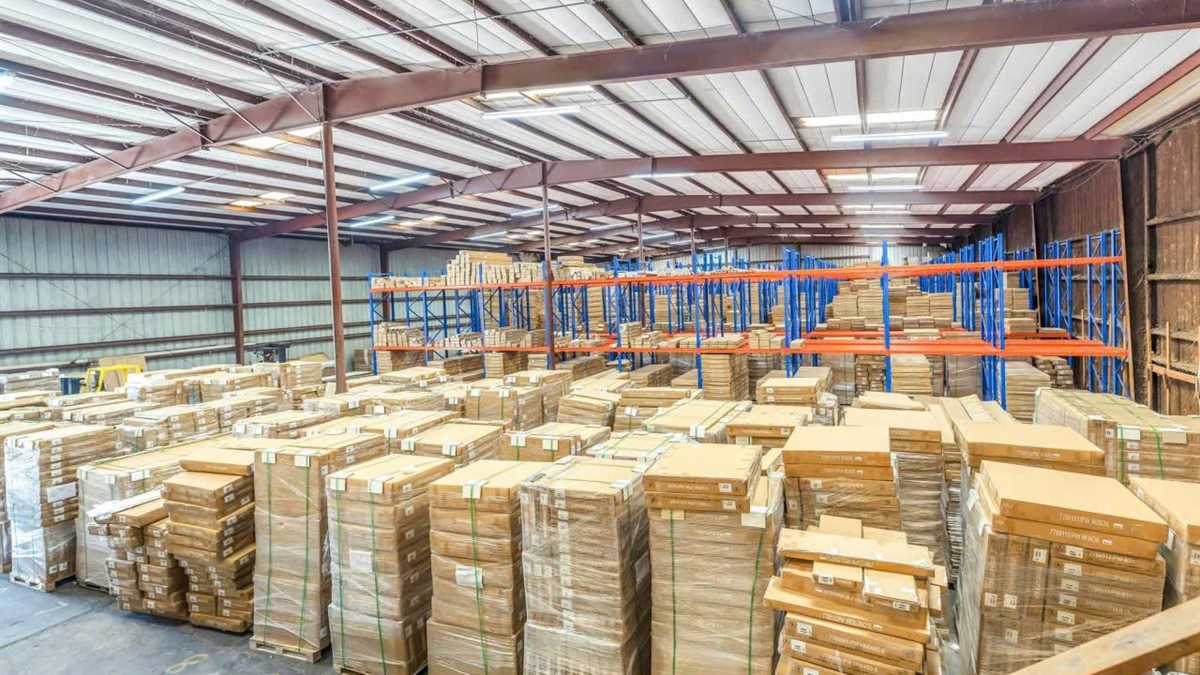
Plan roughly one-third of your kitchen remodel budget for cabinets and hardware. Industry breakdowns put cabinetry at about 29% of total cost (CliqStudios; NKBA-based guides), ahead of installation, appliances, and countertops. Use that share to size the cabinet line first, then fit everything else around it — details below.
What share of a kitchen remodel goes to cabinets?
Cabinets are the biggest single line in most kitchen remodels. CliqStudios' budget breakdown guide puts cabinets at 29% of total project cost, and HGTV's remodel cost guide lands in nearly the same place at about 25% — cabinets first, then labor and installation, then appliances. An NKBA-based breakdown published by KBE Build agrees at 29% for cabinetry and hardware, with installation at 17%, appliances and ventilation at 14%, countertops at 10%, and flooring at 7%. Different datasets, same message: expect roughly one dollar in three to end at the cabinets.
What is the one-third rule for cabinet budgets?
The one-third rule is a planning shortcut: reserve about a third of the total remodel budget for cabinets and hardware, then fit installation, appliances, counters, and finishes into the remaining two-thirds. It works because it mirrors the published splits above instead of fighting them. Two guardrails keep it honest. First, pair it with the NKBA's whole-project guidance — about 15–20% of home value for the full remodel (via KBE Build) — so the third is a third of a sensible total. Second, treat the rule as a ceiling during selections: when an upgrade pushes cabinetry past its share, something specific elsewhere gives way, by decision rather than surprise.
How should a remodel budget split across categories?
Use this published split as your starting template (NKBA-based breakdown via KBE Build; CliqStudios runs within a point or two on every shared line):
- Cabinetry and hardware — 29%. The anchor line. Price it first, because every other line is easier to flex than boxes screwed to the wall.
- Installation and labor — about 13–17%. Covers set, level, and trim of the boxes plus trade coordination; layout changes push this line before they push anything else.
- Appliances and ventilation — about 14–17%. Bundling purchases and staying mid-range here is one of the documented ways to protect the cabinet line (HGTV).
- Countertops — about 10–11%. Templated to the new boxes, so this line follows cabinet decisions rather than leading them.
- Flooring, lighting, plumbing, walls, design — single digits each. Flooring runs about 5–7%, lighting near 5%, and faucets, sinks, and plumbing near 4% — real money that never changes storage by an inch.
- Contingency — 10–20%, held back. Uncommitted until boxes are set; see the FAQ below for why the range exists.
Run the cabinet math first in our cabinet cost guide, then slot each quote you collect into the template above — any line drifting far from its share is either a deliberate scope decision or a quote worth questioning.
How do you protect the cabinet line item?
Cabinet budgets rarely blow on one big decision — they leak across a dozen small ones. Four habits hold the line:
- Freeze the layout before pricing boxes. Every moved wall, shifted sink, or relocated range redraws the box plan and the labor line with it. Measure twice using our cabinet sizes guide, then stop moving things.
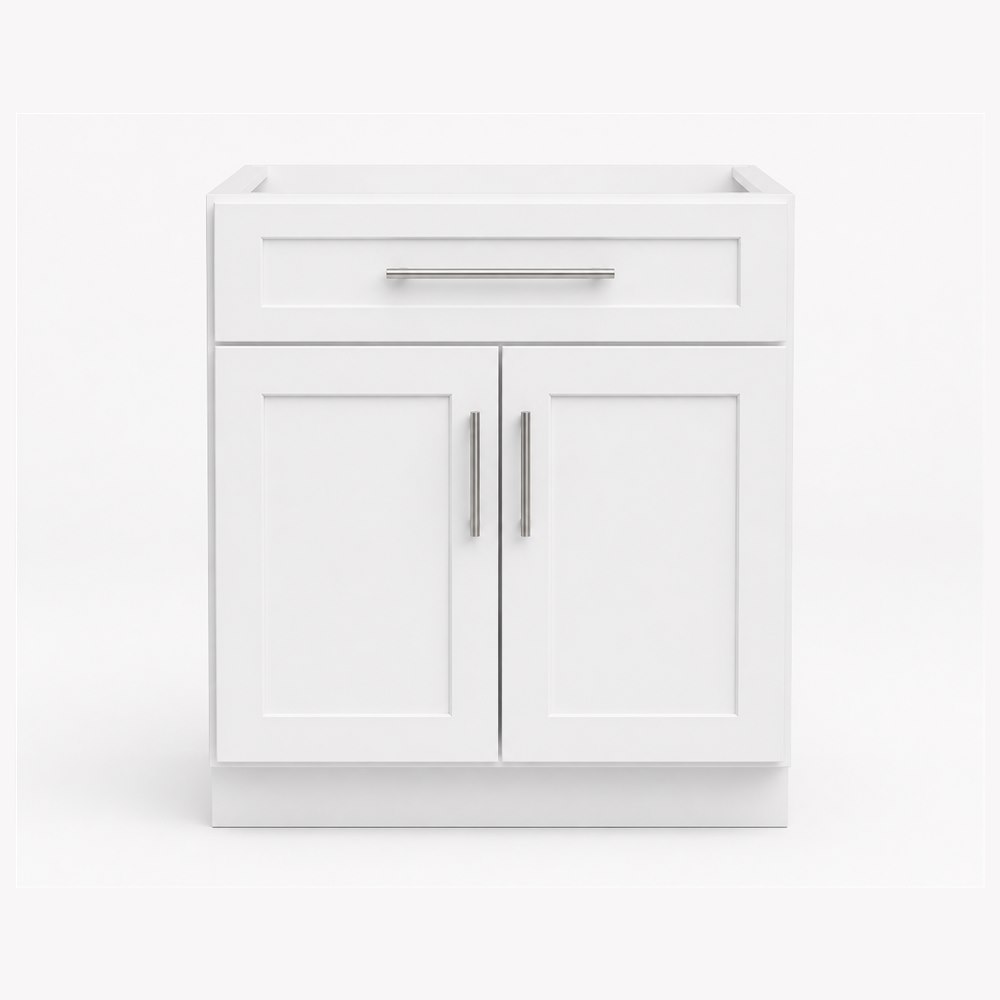
- Price real boxes per unit. Compare workhorse units like 30-inch base cabinets, sink base cabinets, and tall pantry cabinets in the cabinet catalog so upgrades are judged against a concrete baseline, not a vague allowance.
- Sequence the fun decisions last. Backsplash tile, statement lighting, and hardware finishes are the easiest lines to flex — decide them after boxes are ordered, and they become shock absorbers instead of budget creep.
- Turn the rule into a number early. A free quote on the actual box list converts "about a third" into dollars while there is still time to rebalance appliances, counters, or contingency around it.
Questions homeowners actually ask
Should cabinets really cost a third of the remodel?
Treat one-third as a planning anchor, not a law. Published breakdowns land cabinetry at 25–29% of total project cost (HGTV; CliqStudios; NKBA-based guides), with the rest split across installation, appliances, countertops, and finishes. If your cabinet quotes land near that share, the budget is balanced; far above it, something else must give.
Does the 15–20% home-value rule still work?
It works as a guardrail. NKBA guidance, cited by KBE Build, suggests budgeting about 15–20% of home value for the whole kitchen remodel — $60,000–$80,000 on a $400,000 home — before any contingency. Combine it with the cabinet share: roughly a third of that envelope belongs to cabinetry, which keeps both the total and the cabinet line honest.
What pushes a cabinet budget over its share?
Layout changes first: moving walls, plumbing, or gas lines adds labor and forces new box configurations, covered in our cabinet sizes guide. Then upgrades that multiply per box — organizers, specialty storage, premium hardware — plus filler-heavy runs in awkward corners. Each is defensible alone; together they quietly lift cabinetry past the one-third mark.
Where can you trim without touching the boxes?
Hold the cabinet line and flex the finishes around it. Published breakdowns show countertops near 10–11%, flooring around 5–7%, and lighting near 5% (CliqStudios; KBE Build) — real money that does not change storage one inch. Choosing mid-range appliances over status brands is another documented saver (HGTV). Cut surfaces and sparkle, not boxes and layout.
How much contingency should you hold?
Hold 10–20% of the total budget uncommitted (CliqStudios), and know some pros push that to 20% for surprises like water damage or wiring not up to code (HGTV; Fidelity via KBE Build suggests 15–25%). Demolition discoveries hit cabinets hardest when boxes must be reordered, so protect the contingency until boxes are set.
Do RTA cabinets change the budget split?
They move dollars, not the math. If flat-packed boxes lower the cabinet line, the savings can fund installation, counters, or contingency inside the same total — but the one-third planning share still applies. Read what affects an RTA cabinet quote before banking the savings, since finish, layout, and hardware move the number.
Shopping the cabinet third? The cabinet catalog lists all-plywood construction across every size, and a free quote turns the one-third rule into a real number for your kitchen. Pair it with the cost guide for tier math and what affects an RTA quote before you sign anything.
Every remodel budget is a set of trade-offs — request a free quote on all-plywood cabinets and make the cabinet third a decision, not a discovery.
Keep reading
- How Much Do Kitchen Cabinets Cost? RTA vs. Assembled vs. Custom
Kitchen cabinet cost comes down to three things — material, construction, and how you buy. An honest, no-sticker-shock breakdown of RTA, assembled, semi-custom, and custom pricing by the linear foot, plus the hidden costs of hardware, countertops, and installation.
- What Affects Your RTA Cabinet Quote? A Cost Guide
An RTA cabinet quote is a parts list with a price attached — boxes, doors, finish, hardware, accessories, and freight. Here is what each line means, what moves the total, and how to compare quotes fairly.
- Kitchen Cabinet Sizes & Dimensions: The Complete Guide
Base, wall, and tall cabinets follow a short menu of standard sizes. Here are the widths, heights, and depths that matter — in printable tables where every row maps to a cabinet you can order.
Ready to plan your kitchen?
Send us your layout for a free, no-obligation quote, or browse the full factory-direct catalog of all-plywood Shaker cabinets.