
Shaker Cabinet Colors: Gray, Cream, Espresso-Look & Wood
By TC Wholesale Cabinetry · Editorial team
September 8, 2026 · 8 min read
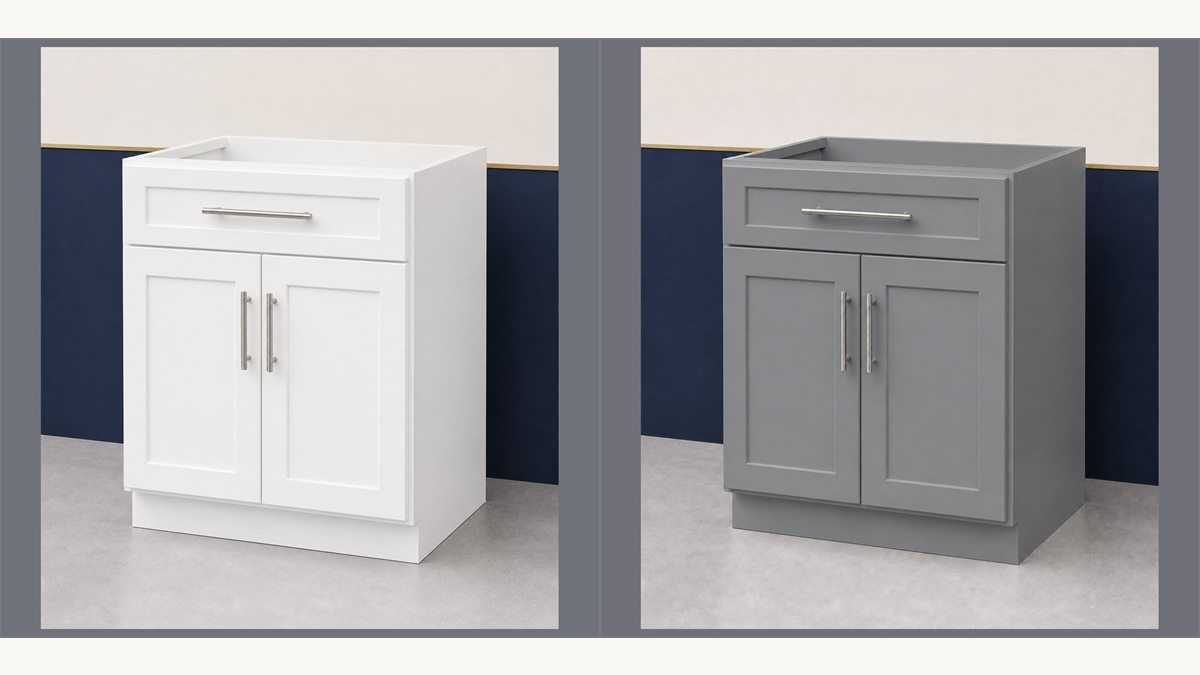
The short answer: pick gray for quiet depth, cream for warmth without brightness loss, an espresso-look stain for drama in a well-lit room, and a wood tone when you want the grain to show. Every one of them works on the same five-piece Shaker door — so the decision is about light, mood, and what sits next to the cabinets, not about door style.
Which Shaker cabinet colors are worth considering?
Most shoppers start at white and stop there — understandable, since white Shaker is the default neutral of the last decade. But the Shaker door takes color well precisely because its flat center panel and square frame stay quiet: the profile never fights the finish. The four directions worth knowing beyond white are gray (soft to mid-tone, modern and forgiving), cream (warm white for people who find pure white cold), espresso-look (deep brown stain for contrast and drama), and wood tone (a stained finish that lets grain read through). Our line carries these directions as Victory Gray, Modern Gray, Silver Gray, Seashell Cream, and Wood Color — browse any of them in the cabinet catalog.
One boundary for this guide: the white-versus-gray debate already has its own full comparison — white vs. gray Shaker cabinets — so gray gets a compact treatment here and the spotlight moves to cream, espresso-look, and wood.
When do gray Shaker cabinets work best?
Gray Shaker works best when an all-white kitchen feels too stark but you still want a neutral that gets along with everything. Mid-tone grays add visual weight, so they ground large or very bright rooms, and they show everyday smudges and scuffs less readily than a near-white door — a practical edge in a hard-working family kitchen. The trade-off runs the other way too: gray reflects less light, so a small or dim room can feel heavier in full gray than in a lighter finish.
Within the line you have three gray readings to compare: Victory Gray, a soft greige-leaning mid-tone; Modern Gray; and Silver Gray. They differ mainly in undertone and depth, which is exactly the kind of difference screens flatten — for the full white-versus-gray reasoning, pairings, and two-tone formulas, read the dedicated comparison first, then judge the three grays against each other with door samples in your own light.
Are cream Shaker cabinets better than white?
Cream is better than white in one specific situation: when you want a light, bright kitchen that still feels warm. Design coverage through 2025–2026 keeps pointing the same way — the shift is toward warmer whites like cream, bone, and linen rather than cool, blue-white finishes, according to recent 2026 kitchen trend coverage. Cream sits in that pocket: light enough to keep a modest kitchen open, warm enough to flatter wood floors, brass hardware, and creamy stone without the clinical edge a pure white can carry under cool bulbs.
Seashell Cream is the cream direction in our catalog. It behaves like white in layout terms — it reflects a good amount of light and keeps small rooms feeling open — but it changes the pairing logic: against cream, warm metals (brass, champagne bronze) and natural wood look settled rather than contrasty, while stark white countertops can read slightly cold next to it. If you are torn between a near-white and cream, that is precisely a decision to make with two samples held against your countertop and floor, not on a monitor — undertones that look identical online separate fast in daylight.
See the finish on a real box: the 30-inch Shaker base cabinet and the 30-inch Shaker wall cabinet both come in Seashell Cream, so you can picture the color at the two scales that dominate a kitchen — low runs and eye-level runs.
How do you pull off espresso Shaker cabinets?
Espresso shaker cabinets mean a deep, dark-brown stained Shaker door — near-black in dim light, warm brown where daylight hits it. The appeal is contrast: against light counters, light floors, and pale walls, espresso cabinetry reads tailored and deliberate, and it anchors an open plan the way a dark suit anchors a room. The classic, oft-pinned formula is exactly that — espresso doors, white or light-veined stone counters, brushed-nickel or stainless pulls, and a light floor or a substantial light island to keep the balance.
The rules that keep dark cabinets from closing a room in are simple and non-negotiable. Light needs to be present first: espresso earns its keep in kitchens with good daylight or a generous lighting plan; in a small, single-window galley it can feel heavy wall-to-wall. Contrast has to come from somewhere: light countertops, a pale backsplash, and lighter flooring or walls do the lifting — dark-on-dark (espresso plus black counters plus dark floor) suits only large, bright spaces. Consider confining the dark: espresso or dark-stained lowers with light uppers, or a dark island under a light perimeter, gets most of the drama at a fraction of the visual weight.
An honest catalog note, stated before you fall in love: we don't sell a finish called Espresso. If the dark-stained look is what you want, the way to shop it here is to compare our warmest and darkest directions in person — start with Wood Color, the wood-tone finish, against the gray depths like Modern Gray — and judge which reads closest to the espresso in your head under your lighting. Order samples of both, hold them against your countertop and floor at morning, afternoon, and evening light, and let the room vote. For construction details, box specs, and how the RTA format ships, see our ready-to-assemble Shaker guide.
Where does a wood-tone Shaker fit in?
A wood-tone Shaker fits where painted finishes feel too flat: it keeps the clean Shaker profile but lets grain, variation, and warmth back into the room. Wood tones bridge styles with unusual ease — next to matte-black hardware and simple stone they read current; next to brass, woven textures, and warm whites they read farmhouse or transitional. They also age gracefully in the visual sense: grain hides the small dings and wear that a flat painted door telegraphs.
Wood Color is the wood-tone finish in the line. Plan its surroundings the way you would any medium-depth finish: it wants contrast at the counter or the wall to avoid a monotone run, and it pairs naturally with the warm metals and creamy stones that 2026 kitchen coverage keeps recommending alongside wood. Picture it on the pieces that set the room's tone — a 24-inch Shaker tall pantry cabinet for the full-height grain read, or 24-inch Shaker vanity cabinet runs where wood warmth flatters bath-adjacent spaces too — then confirm with a sample, because stain depth can shift under different bulbs more than any painted color does.
How do light, countertops, and floors change a cabinet color?
The door color is only half the palette — light, stone, and flooring finish the job, and they can push the same finish warm or cool. Three principles cover most kitchens:
- Judge color in your light, at your hours. A cream can read warm under incandescent bulbs and neutral under daylight; a greige gray can lean beige in one room and gray in the next. North-facing rooms and evening lamplight both warm-shift a finish. No product photo survives this — which is why the samples step below is a procedure, not a suggestion.
- Countertops set the temperature. Cool, blue-white quartz pushes any cabinet color crisper and more contemporary; warm, creamy quartz or quartzite softens it toward traditional; butcher block or wood-look surfaces pull gray and cream both toward farmhouse. Current 2026 pairing coverage keeps landing on natural-look stone — quartz, quartzite, granite — beside Shaker doors, and that advice holds across all four color directions here.
- Floors decide the contrast budget. Dark cabinets plus dark floors plus dark counters spend the whole budget at once — fine in a big bright room, heavy elsewhere. The reliable pattern is opposition: dark doors with light floors or counters, light doors with the freedom to carry a dramatic veined stone or rich wood floor. Backsplash stays quiet either way so the cabinets remain the story.
Can you mix two Shaker colors in one kitchen?
Yes — and mixing is often how a strong color like espresso-look or a deep gray succeeds in an average-size room. The standard formula is light on top, deeper below: light wall cabinets keep the upper half open while the darker base cabinets and island absorb the wear from hands, feet, and mops. A dark or wood-tone island under a light perimeter is the same idea in miniature — a grounded focal point surrounded by brightness. Because every finish here shares the same Shaker door, two colors meet cleanly at every seam with no profile mismatch. Keep everything else calm when you go two-tone: one countertop, one hardware finish, one backsplash. The white-over-gray version of this formula is worked through in full in the white vs. gray comparison.
Questions homeowners actually ask
Are espresso cabinets too dark for a small kitchen?
Wall-to-wall, they can be — dark doors reflect less light, so a compact or dim kitchen feels smaller in full espresso-look than in cream or light gray. The workarounds are proven: confine the dark to base cabinets or the island, keep uppers light, and make sure counters, backsplash, and floors run light. If the room has one small window and modest lighting, test the idea with dark samples taped at eye level for a full day before committing.
What is the difference between cream and white cabinets?
Undertone and warmth. A near-white is a neutral backdrop that bounces maximum light and lets everything else lead; cream carries a warm cast that flatters wood, brass, and creamy stone but reflects slightly less light. In a side-by-side sample test the difference looks small — installed across twenty doors, it sets the whole room's temperature. Compare Seashell Cream against a near-white sample in your own kitchen before deciding.
Which Shaker color hides wear best?
Mid-tones, as a rule: grays and wood tones show fingerprints, crumbs, and light scuffs less readily than near-white, while very dark espresso-look doors trade fingerprint forgiveness for dust and lint visibility — dark shows light debris the way white shows dark debris. Grain in a wood-tone finish further breaks up small dings. Households with young kids and pets usually land happiest in the middle of the lightness scale.
Do cream or wood-tone cabinets look dated?
Neither reads dated on a Shaker door — the profile itself is the timeless part, and color trends cycle around it. If anything, the current direction favors both: recent kitchen coverage describes warm neutrals and natural wood as the leading edge, with cool all-white receding. What dates a kitchen is rarely the cabinet color; it is mismatched undertones between doors, counters, and floors — another problem samples prevent.
Where can I see these colors on real cabinets?
Two places. Browse each finish across every size in the cabinet catalog — Seashell Cream, Wood Color, Victory Gray, Modern Gray, Silver Gray — checking real configurations like the 30-inch Shaker base cabinet. Then order door samples of your shortlist and judge them against your countertop, floor, and hardware in your own light. That second step is the one that prevents wrong-kitchen mistakes.
Shortlist forming? Walk the full line in the cabinet catalog, compare finishes side by side on the finish pages, and before you commit a whole kitchen to any color, order door samples — it is the lowest-cost step in the project and the one that removes the guesswork screens can't resolve. For budget planning alongside color planning, our cabinet cost guide runs the per-tier math.
Know your color and your layout? Send your kitchen measurements and we will price it in the finish you picked — request a free quote and we will take it from there.
Keep reading
- White vs. Gray Shaker Cabinets: How to Choose
Same door, two moods: white Shaker brightens and opens a room, gray Shaker adds depth and forgives smudges. Here's how to choose — and how to see the real finish first.
- Ready-to-Assemble Shaker Cabinets: The Complete Guide
Why the five-piece Shaker door stays the safe, timeless choice — and how ready-to-assemble Shaker cabinets deliver it factory-direct, in white and gray.
- How Much Do Kitchen Cabinets Cost? RTA vs. Assembled vs. Custom
Kitchen cabinet cost comes down to three things — material, construction, and how you buy. An honest, no-sticker-shock breakdown of RTA, assembled, semi-custom, and custom pricing by the linear foot, plus the hidden costs of hardware, countertops, and installation.
- Cabinet Knobs vs Pulls: Sizes, Placement & Style Guide
Knobs, pulls, or both? Here is how to choose cabinet hardware by door and drawer, size it to the drawer width, place it consistently, and install it yourself with a simple jig.
- Under-Cabinet Lighting: Puck vs Strip and Placement
Under-cabinet lights erase countertop shadows and make a kitchen feel finished. Here is how to pick puck vs strip, temperature, placement, and controls.
- Wall Colors With White Shaker Cabinets: Pairing Rules
White cabinets take almost any wall color — which is exactly why walls go wrong. Match undertones, mind the light, and test big swatches before committing.
Ready to plan your kitchen?
Send us your layout for a free, no-obligation quote, or browse the full factory-direct catalog of all-plywood Shaker cabinets.