
Shaker Cabinet Doors: Profile, Panel, and What to Check
By TC Wholesale Cabinetry · Editorial team
September 8, 2026 · 7 min read
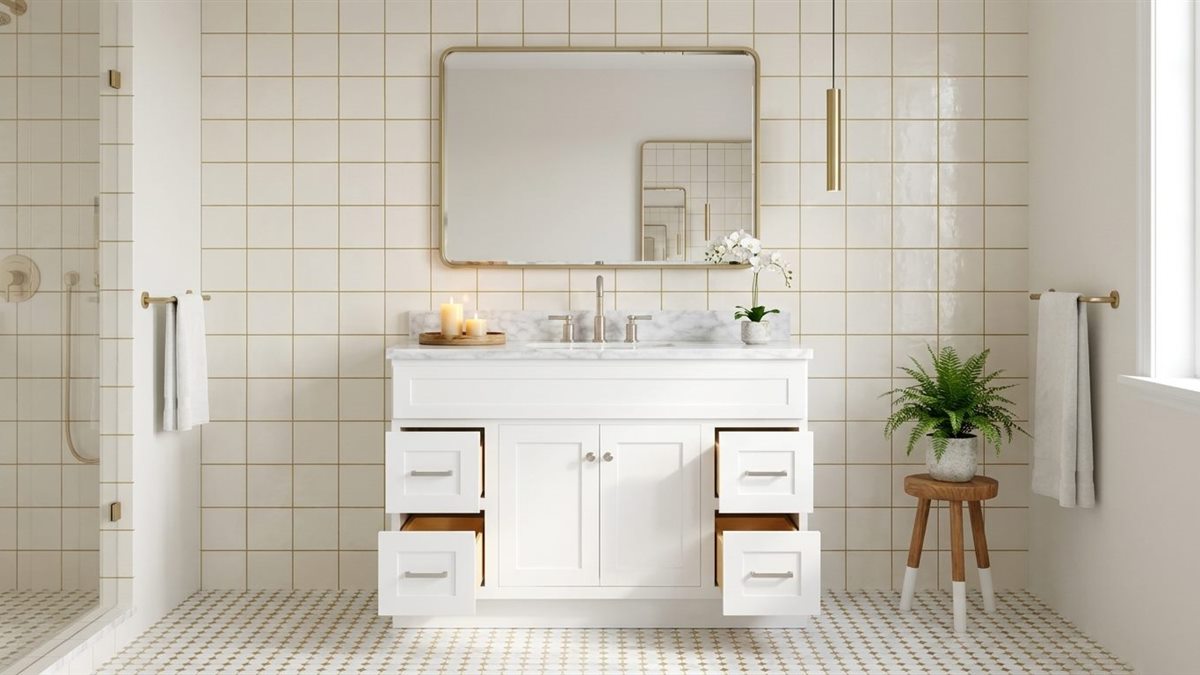
The short answer: a Shaker door is a flat center panel set inside a four-piece frame — and quality lives in the panel material and the tightness of the joints. Everything else — edge profiles, panel depth, finish — is variation on that five-piece theme.
What are the parts of a Shaker door?
- Stiles: the two vertical frame pieces. They carry the hinges on wall and base doors, so straight, stable stiles keep doors hanging true.
- Rails: the two horizontal frame pieces, top and bottom. Wider bottom rails are a traditional furniture detail you will see on higher-end lines.
- Center panel: the flat recessed middle — solid wood on better doors, veneered MDF or HDF on value lines. The panel floats inside grooves so it can expand and contract without cracking the frame.
- Inside edge profile: the small step or bevel where frame meets panel. A crisp, consistent step-down reads quality; a wavy or filler-covered transition reads rushed.
Solid panel or HDF center — does it matter?
For painted finishes, a dense engineered center (HDF/MDF) is arguably the better engineering: it does not expand, contract, or telegraph grain through paint the way solid wood can, so the finish stays glass-smooth across seasons. For stained finishes, solid wood centers show real grain that engineered panels imitate — judge stained doors in person via samples, because photography flatters both equally. Either way, the frame should be solid wood; an engineered frame with a solid panel is cost-cutting in the wrong place. Check the exact construction on each product's spec — for example the 30-inch Shaker base cabinet page lists door construction per finish.
What profile variations exist?
Classic flat-panel Shaker is the baseline, but lines vary the theme: stepped or beaded inside edges add shadow lines for traditional kitchens; thinner frames and larger panels read more contemporary; slab drawer fronts paired with Shaker doors split the difference many designers prefer. Finish changes the read as much as profile — the same door in Wood Color vs a painted gray are different design statements, as our colors guide shows. Pick profile for style, panel material for performance, finish for the room.
How do you judge door quality on arrival?
- Sight down the stiles: hold each door at eye level — warps and twists show immediately against a straight edge.
- Check the joints: rail-to-stile corners should be tight with no visible gaps or glue squeeze-out.
- Feel the panel: it should sit flat and float slightly — a panel glued rigid will eventually crack its frame with seasonal movement.
- Inspect the finish in daylight: runs, dry spray, and thin edges hide under warehouse light. Unbox and check the same day so any claim falls inside the delivery window.
Questions homeowners actually ask
Why do painted Shaker doors crack at the joints?
Wood moves with humidity and paint does not — hairline cracks at rail-stile joints are the finish losing that argument, usually in dry winter heating. Engineered center panels and stable shop conditions minimize it, but no painted wood door is entirely immune; touch-up beats replacement.
Are Shaker doors going out of style?
The profile has survived a century of trend cycles because it is proportion, not ornament — it takes any finish and any hardware. What dates is the combination around it (granite strangely, then gray, then white), not the five-piece door itself.
Can I mix Shaker doors with slab drawers?
Yes — slab drawer fronts under Shaker doors is a standard designer move that calms busy kitchens. Keep the finish identical across both so the mix reads intentional rather than leftover.
See the doors on real boxes in the cabinet catalog, compare finishes with samples, and price the kitchen with a free quote.
Doors are the face of the kitchen — request a free quote and judge ours in person with samples first.
Keep reading
- Ready-to-Assemble Shaker Cabinets: The Complete Guide
Why the five-piece Shaker door stays the safe, timeless choice — and how ready-to-assemble Shaker cabinets deliver it factory-direct, in white and gray.
- Shaker Cabinet Colors: Gray, Cream, Espresso-Look & Wood
White is only the starting point. Here is how gray, cream, espresso-look, and wood-tone Shaker cabinets each behave in a real kitchen — and how to confirm the color before you commit.
- White vs. Gray Shaker Cabinets: How to Choose
Same door, two moods: white Shaker brightens and opens a room, gray Shaker adds depth and forgives smudges. Here's how to choose — and how to see the real finish first.
Ready to plan your kitchen?
Send us your layout for a free, no-obligation quote, or browse the full factory-direct catalog of all-plywood Shaker cabinets.