
Unassembled Kitchen Cabinets: What to Know First
By TC Wholesale Cabinetry · Editorial team
September 9, 2026 · 8 min read
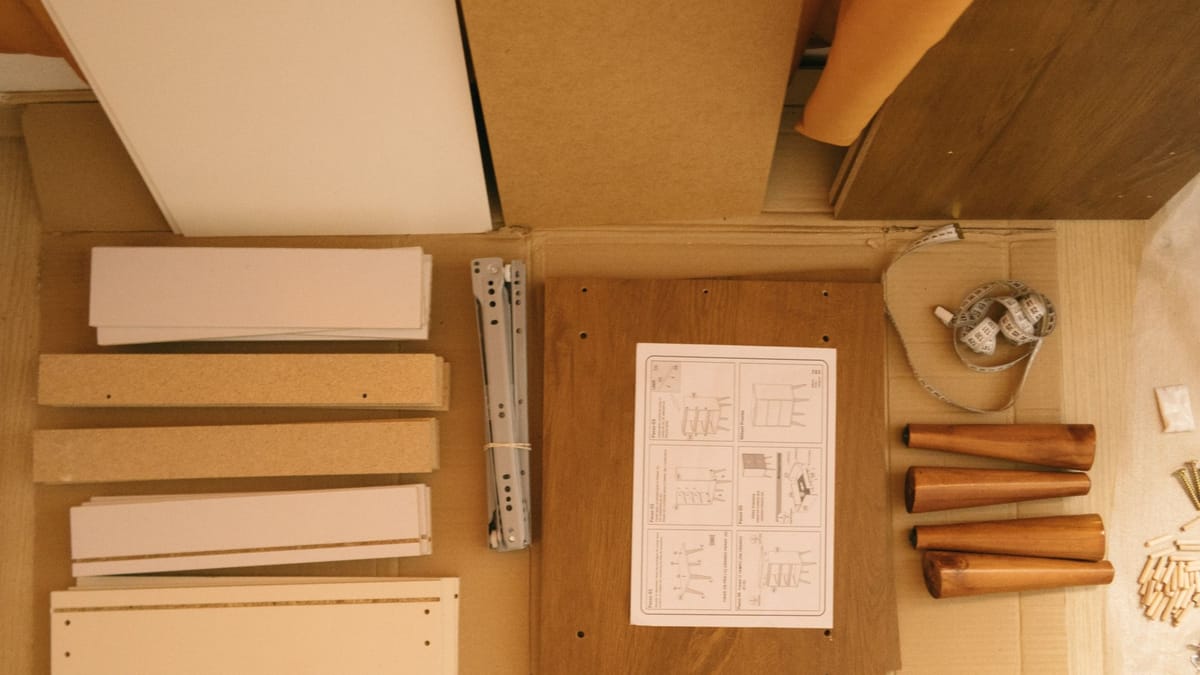
Unassembled kitchen cabinets — usually sold as ready-to-assemble or RTA cabinets — arrive as a flat carton of panels, shelves, doors, and hardware instead of a finished box. Nothing about the design is different: the same base, wall, and tall sizes, the same door styles, the same concealed hinges and drawer glides. The only difference is who puts the box together — you or the factory — and that single difference ripples through the price, the delivery, the schedule, and the skills your project needs.
This guide gives you the honest version of that trade. We will walk through what buying unassembled actually saves you, who it suits best and who should think twice, how flat-pack delivery and storage work in real life, how long assembly realistically takes, and when paying for assembled cabinets is the smarter call. No hype in either direction — just what to weigh before you order.
What exactly arrives in the box?
Open any carton and you will find the same kit: side panels, a bottom, a back panel, top stretchers or a full top depending on the unit, shelves, doors and drawer fronts packed separately for protection, drawer parts, hinges and glides, and a hardware bag of cam locks, dowels, and screws — plus an instruction sheet drawn for that exact cabinet. Nothing needs cutting, drilling, or finishing. Every hole is already bored, every edge already banded, and the finish already applied, so the work waiting for you is purely assembly.
Packaging is part of the product here. Doors and finished faces usually travel wrapped or interleaved so they cannot rub in transit, and hardware rides in its own sealed bag rather than loose in the carton. When you unpack, keep each cabinet's hardware with its own panels until you build it — mixing bags between units is the most common source of confusion on a big order, and a minute of organization per carton prevents it entirely.
- Panels and shelves — count them against the instruction sheet before you start; each one should be labeled or clearly identifiable from the diagram.
- Doors and drawer fronts — check every finished face in good light for scuffs or color mismatch while replacements are fastest to arrange.
- Hardware bag — confirm it is sealed and complete; cam locks, dowels, screws, and hinge plates should all be present per the parts list.
- Instruction sheet — keep it with the unit until the cabinet is fully built; it is written for your exact box and beats any generic video.
What do unassembled cabinets actually save you?
The savings are real, and they come from three places at once: labor you do not pay for, freight that costs less to move, and flexibility that saves money indirectly. Understanding each one helps you judge whether the discount you see is worth the weekends you will spend.
- The assembly labor stays in your pocket. Every assembled box carries the cost of someone else cutting, joining, checking, and packing a finished cube. With unassembled cabinets that work transfers to you, which is the single biggest reason the same kitchen costs noticeably less in flat-pack form.
- Flat cartons ship far more compactly. Finished boxes are mostly air, and carriers charge for that volume whether it is air or wood. Flat-packed panels stack tight on a pallet or truck, so freight runs cheaper per cabinet and the delivery is easier to receive — a meaningful advantage if your supplier ships nationwide.
- Damage in transit is easier to avoid and fix. A bulky assembled box has corners and faces exposed to every forklift and doorframe between the warehouse and your garage. Flat cartons are tougher to crush, and if one panel does arrive scuffed, replacing a single panel beats replacing a whole finished cabinet.
- You can store a whole kitchen in a corner. Assembled boxes claim floor space the day they arrive, which forces your schedule. Flat cartons stack neatly against a wall, so you can accept delivery early, catch a good lead time, and build cabinet by cabinet across evenings or weekends.
- The savings can fund better construction. Many buyers use the gap between flat-pack and assembled pricing to step up what is inside the box — an all-plywood case instead of particleboard, soft-close hinges and undermount glides throughout, or extra organizers — and still come in below the assembled quote.
- You keep control of the labor split. Assembling the boxes yourself and hiring a pro only for the hanging and leveling captures most of the flat-pack savings while leaving the structural work — mounting wall units, leveling runs, scribing to crooked walls — to qualified hands.
One caution belongs here: savings are only savings if the box itself is well made. A cheaply built cabinet is a bad deal at any price, assembled or not. Judge the construction first — panel material, joinery, hinge and glide quality — and treat the flat-pack discount as the reward for choosing a good box, not as a reason to accept a weak one. Our breakdown of whether RTA cabinets are worth it shows exactly what to check before you fall for a low number.
Who should buy unassembled kitchen cabinets?
Unassembled cabinets reward a particular kind of buyer: someone with more flexibility than budget, a place to work, and a willingness to learn one repeatable skill. If several of these describe you, flat-pack is probably your best value.
- Hands-on homeowners. If you have built flat-pack furniture, hung shelves, or done basic DIY without drama, cabinet assembly will feel familiar. Every panel is pre-cut and pre-drilled, and the job is alignment and fastening — not carpentry.
- Budget-driven remodels. When the cabinet line item decides whether the project happens at all, the flat-pack discount can be the difference between remodeling now and waiting another year.
- Remote or second-home projects. Delivering bulky assembled boxes to a rural address or up a tight staircase is expensive and sometimes impossible. Flat cartons fit through narrow halls, ride in a large SUV for last-mile trips, and wait patiently until you arrive.
- Landlords, flippers, and multi-unit owners. Anyone furnishing more than one kitchen multiplies every dollar saved per box — and a crew that assembles the first kitchen on autopilot gets faster on each one after.
- Phased remodels. Because cartons store compactly, you can order the whole kitchen at once for a consistent finish batch, install the must-haves now, and build the rest as time and budget allow.
- Contractors who want margin control. Builders who assemble in-house or with their crew turn the factory's labor charge into their own profit or pass the savings to win the bid — see our contractor guide to wholesale cabinets for how pros structure this.
And who should pause? If your renovation has a hard move-in date, if you have no flat workspace to build in, or if the thought of a weekend with a drill genuinely fills you with dread, be honest about it now. The discount is only worth it if the work actually gets done — the next section on timing will help you judge that realistically.
How does delivery and storage work?
Flat-pack delivery is one of the underrated perks of buying unassembled. Each cabinet ships as its own labeled carton holding every panel, shelf, door, drawer part, and hardware bag for that unit — plus an instruction sheet written for that exact box. Here is how receiving day usually goes and what to do with the stack afterward.
- Expect a freight or parcel delivery, not a box truck of furniture. Depending on order size, cartons arrive bundled on pallets or as individual parcels. Smaller orders often show up like any large delivery; full kitchens may come by scheduled freight with an appointment window.
- Check the count before the driver leaves. Match the carton labels against the packing list while the driver is there, and note any visible carton damage on the receipt. You do not need to open everything curbside — just confirm the right boxes arrived.
- Open and inspect within the first days. Work through one carton at a time: confirm every panel, shelf, door, and hardware bag against the instruction sheet, and look each finished face over in good light. Report anything missing or damaged promptly, while the order is fresh and replacements ship fastest.
- Store cartons flat, dry, and indoors. Keep boxes off concrete floors, away from exterior walls that sweat, and out of rain — unassembled panels are finished wood products, not job-site lumber. A spare room or a dry garage corner is ideal, stacked flat exactly as they shipped.
- Stage in build order. When you are ready, pull the base cabinets first since they install first, and leave wall and tall cartons stacked until their turn. Building in install order keeps finished boxes from sitting underfoot for weeks.
If you want the full picture of timing, tracking, and what to do when something arrives less than perfect, read our detailed walkthrough of how RTA cabinets ship before your order leaves the warehouse.
How long does assembly realistically take?
Once you find your rhythm, plan on roughly twenty to forty minutes per cabinet: a small wall box goes quickly, while a sink base with extra bracing or a tall pantry takes longer. The very first box is always the slowest as you learn the cam-lock sequence — most people report the second cabinet taking half the time of the first. One person can comfortably assemble base and wall units alone; tall and oversized boxes are easier and safer with a helper, mostly for lifting.
For a typical mid-size kitchen of around a dozen cabinets, a careful first-timer should budget a focused weekend, while a two-person team or anyone repeating the process can finish in a day. Four habits separate a smooth build from a frustrating one:
- Sort before you fasten. Lay every panel out and match it to the instruction sheet first. Five minutes of sorting prevents the classic mistake of fastening the wrong side panel and discovering it three steps later.
- Square the box before you tighten. Measure both diagonals and tap corners with a rubber mallet until they match, then lock everything down. An out-of-square box fights you at every later step, especially door alignment.
- Batch identical units. Build all the same-size bases in a row instead of switching between types. The repetition turns the third box into muscle memory and cuts per-cabinet time noticeably.
- Hang doors and drawer fronts last. Get every box in the kitchen built, square, and backed first, then mount all the fronts in one pass and adjust the soft-close hinges across the whole run for even gaps.
Treat these figures as planning guidance, not promises — your pace depends on the cabinet mix, your tools, and how much room you have to work. For the complete sequence with tool lists and the soft-close adjustment step, follow our step-by-step assembly guide alongside your first box.
When should you buy assembled cabinets instead?
Flat-pack is excellent value, but it is not the right answer for every project. Assembled cabinets cost more for honest reasons — factory labor, bulkier freight, careful handling — and sometimes those reasons match your situation exactly.
- You are racing a deadline. If installers are booked for a fixed date or you are without a kitchen and every day counts, factory-built boxes skip the entire assembly phase and go straight onto the wall.
- You have nowhere to build. Assembly needs a clean, flat, padded area roughly the size of a parking space. A small apartment mid-renovation with no spare room makes the work miserable — pre-built boxes arrive ready to set.
- Physical limits rule out the work. Panels are manageable but real: long tall-cabinet sides are awkward, and repeated lifting, kneeling, and mallet work across a dozen boxes is genuinely tiring. There is no shame in paying to skip it.
- Your installer bundles assembly cheaply. Some install crews assemble flat-pack so fast that their upcharge is small — and some quote assembled-only. Compare your installer's two prices before assuming DIY assembly saves you anything on their invoice.
- You simply value your weekends more. Time has a price only you can set. If the flat-pack savings buy back forty hours you would rather spend anywhere else, assembled cabinets are money well spent.
There is also a middle path most buyers overlook: assemble nothing yourself, but still buy flat-pack and pay your installer to build the boxes — many crews do it fast enough that the combined total still beats factory-assembled pricing. And whichever route you choose, assembling is only half the job — hanging, leveling, and securing cabinets is skilled, structural work. Our side-by-side of RTA vs. assembled vs. custom cabinets lays out the full three-way trade so you can place your project on the right square.
Unassembled cabinet questions, answered
Are unassembled cabinets weaker than assembled ones?
Not inherently. Strength comes from panel material, joinery design, and hardware — the same cam-lock and dowel joints hold the same panels whether a factory worker or you turn the cams. A well-built flat-pack box with a fully captured back panel is a solid cabinet; a flimsy assembled box is still flimsy. Judge the construction, not who tightened the fasteners.
What tools do I need to assemble kitchen cabinets?
A cordless drill or screwdriver, a rubber mallet, a carpenter's square, a tape measure, and a padded surface such as a moving blanket cover nearly every unit. A couple of clamps help when working solo. No saws, no routers, no workshop — if you own a basic toolbox, you already own the kit.
Can one person assemble a whole kitchen alone?
Yes for base and wall cabinets, which one person can build comfortably start to finish. Recruit a helper for tall pantry units and any oversized box — not because the joinery is harder, but because long panels are unwieldy and standing a tall cabinet upright is genuinely a two-person move.
What if a panel arrives damaged or a part is missing?
Inspect every carton against its instruction sheet within the first days after delivery, and contact the supplier promptly with the cabinet label, the part name, and a photo of the issue. Because each unit ships as separate panels, most problems are solved with a single replacement part rather than a whole new cabinet — one more quiet advantage of flat-pack.
How do I judge quality before ordering flat-pack?
Read the construction specs the way you would for assembled cabinets: panel material, back-panel thickness and how it is captured, whether hinges and glides are soft-close, and what the warranty covers. Then prove it physically — order a door sample so you can hold the finish, feel the weight of the door, and test the hardware with your own hands before committing to a full kitchen.
How do I get an exact price for my kitchen?
A cabinet list depends on your layout, sizes, door style, and accessories, so no article can price your kitchen honestly. Send your measurements or drawings for a free quote and you will get an itemized figure for your actual project — and before you commit, order a door sample to feel the finish and construction in person.
The short version: unassembled kitchen cabinets trade a weekend of straightforward, learnable work for lower cost, easier delivery, and flexible storage — a trade most handy buyers win. Start with our assembly walkthrough to see the actual process, browse the cabinet catalog for styles, and when you are ready for real numbers, request a free quote on your layout.
Keep reading
- How to Assemble RTA Cabinets: A Step-by-Step Guide
Ready-to-assemble cabinets arrive flat and go together with a handful of basic tools. A clear, step-by-step walkthrough of the cam-lock sequence, the back panel, mounting doors, and dialing in soft-close.
- Are RTA Cabinets Worth It? An Honest Buyer's Guide
Ready-to-assemble cabinets cut cost by shipping flat — but quality lives in the box material, not the assembly. An honest look at whether RTA is right for you.
- How RTA Cabinets Ship: Freight, Lead Times and Damage Claims
RTA cabinets ship flat-packed on freight, so a whole kitchen arrives compact and affordable. How the freight process, lead times, and damage claims really work.
- RTA vs. Assembled vs. Custom Cabinets: Which Should You Buy?
Four ways to buy kitchen cabinets — RTA, stock pre-assembled, semi-custom, and full custom — compared honestly on cost, lead time, quality, and flexibility, with a scenario-by-scenario guide to picking yours.
- Ready-to-Assemble Shaker Cabinets: The Complete Guide
Why the five-piece Shaker door stays the safe, timeless choice — and how ready-to-assemble Shaker cabinets deliver it factory-direct, in white and gray.
Ready to plan your kitchen?
Send us your layout for a free, no-obligation quote, or browse the full factory-direct catalog of all-plywood Shaker cabinets.