
Cabinet Refinishing Cost: 2026 Stain & Paint Guide
By TC Wholesale Cabinetry · Editorial team
September 9, 2026 · 8 min read
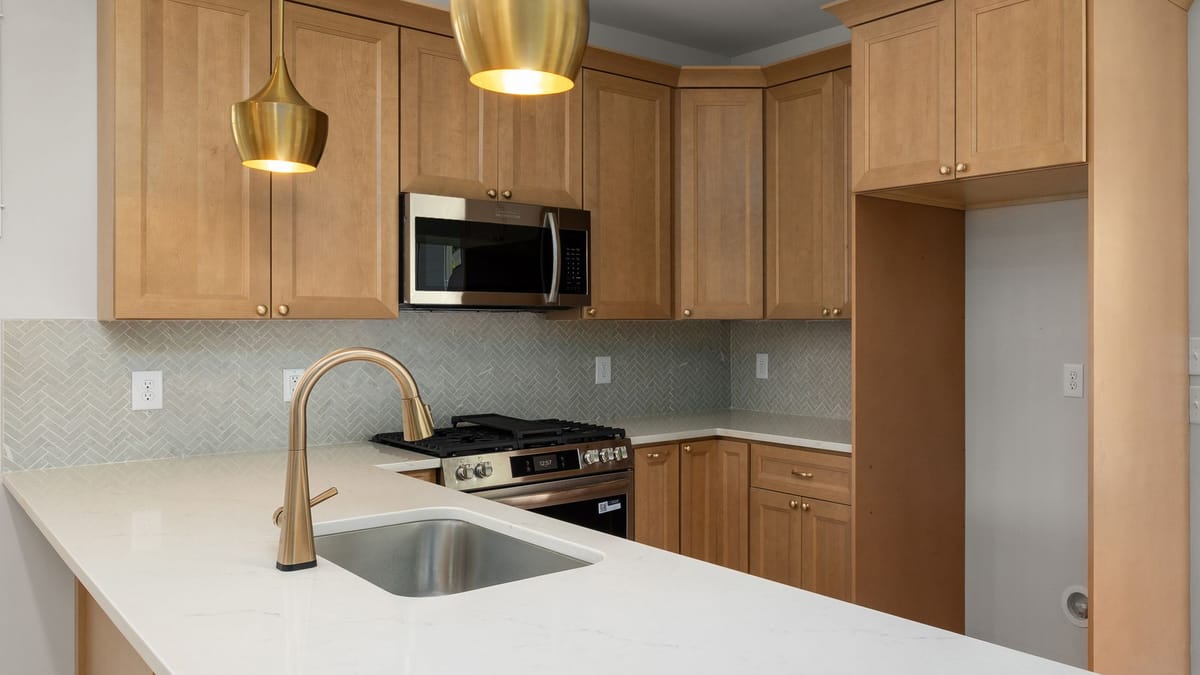
The short answer: expect $2,000–$4,500 for professional cabinet refinishing on a typical kitchen, averaging about $3,116 across 4,344 verified 2026 projects (Angi project data). The wide span is method, not noise — a repaint lands far lower than a full strip-and-restain, and glazing or varnish sits higher still. Smaller published ranges near $307–$1,359, averaging about $619 (Thumbtack cost data), describe a mix weighted toward smaller or simpler projects such as bathrooms and single vanities — not full-kitchen restains.
A note on us, stated plainly: TC Wholesale Cabinetry sells new all-plywood cabinets — we don't offer refinishing services, so this guide has no reason to push any method. Read it as a pricing reference, not a sales pitch. Every figure below is third-party US data, cited by name, never our pricing.
How much does cabinet refinishing cost in 2026?
Refinishing quotes cluster by method first and kitchen size second. Anchor on the method, then adjust for your wood's condition and material:
- Full professional refinish, typical kitchen: $1,992–$4,495, averaging about $3,116 (Angi project data, 4,344 verified projects). This is the band a full-kitchen strip, sand, and new finish lands in once prep, materials, and labor are all included.
- Smaller-scope pro work: roughly $307–$1,359, averaging about $619, with reported jobs spanning $112 at the low end to $4,334 at the high end (Thumbtack cost data). Expect the bottom of this band on bathrooms, single vanities, and touch-up-scale work — not on full-kitchen restains.
- Staining (strip, sand, restain): $4–$15 per square foot, or $1,500–$5,000 per kitchen in total (Angi 2026 data). The process means stripping, cleaning, and sanding doors and drawers to bare wood before the new stain goes on — the labor behind the price.
- Painting as a refinish method: $3–$10 per square foot, or $400–$1,500 in total (Angi 2026 data). Painting is the most popular refinishing project, chosen by 39% of homeowners, while another 24% opt to restore their existing cabinet color (Angi survey of 7,500 customers).
- Glazing, varnishing, shellacking: glazing runs $9–$25 per square foot ($1,200–$3,500 total); varnishing and shellacking each run $6–$16 per square foot (Angi 2026 data). These are layered or protective specialty finishes over paint or bare wood — priced as upgrades, not defaults.
- Per-linear-foot math: around $38 per linear foot of cabinetry in published contractor pricing, working out to roughly $1,800–$2,200 for the cabinets in a typical 2,000- to 2,500-square-foot home (Thumbtack, via an Arizona refinishing pro). Multiply your own linear footage to sanity-check any lump-sum bid.
Notice the pattern: the datasets agree once you sort by scope. The low averages describe small or paint-level projects; the high ranges describe full-kitchen strip-and-stain work. When two quotes for your kitchen differ by thousands, they are usually quoting different methods — ask each bidder to name the method, the product system, and whether the old finish comes fully off or just gets scuffed.
What does refinishing mean — and how is it different from painting?
In trade usage, "refinishing" is the umbrella and painting is one option under it — but homeowners usually mean something specific by "refinish": stripping the old finish, sanding to bare wood, and applying new stain plus a clear topcoat so the grain shows through. Painting, by contrast, lays an opaque coating over degreased, scuff-sanded, primed surfaces and hides the grain entirely. Same kitchen, genuinely different jobs:
- Surface prep. A restain demands full removal of the old finish — stripping, cleaning, sanding to bare wood. A repaint needs degreasing, scuff-sanding, and bonding primer, but not bare wood. Removal hours are why staining costs more than painting at the same kitchen size.
- Wood requirement. Stain only works on solid wood (and shops warn against staining veneer). Paint works on wood, veneer, laminate, and well-adhered thermofoil with the right primer. Your material can decide the method before price ever enters the conversation.
- The look. Stain plus clear coat keeps the grain visible and the kitchen reading as wood; paint delivers uniform opaque color and hides grain, repairs, and species variation. Neither is better in the abstract — they answer different design complaints.
- Color changes cost more. Keeping the same color is cheaper than changing it, because the old stain must come completely off and more coats of the new finish may be needed to cover (Thumbtack cost data). Budget the top of the stain range whenever you are going darker, lighter, or crossing from warm to cool tones.
If your question is really "what does paint alone cost," our cabinet painting cost guide runs the per-tier paint math in full. What follows here is the restain-centered picture: when the wood is worth showing off, and what that costs.
When is refinishing worth it?
Refinishing changes the skin, never the structure, the storage, or the layout. It pays off when the wood is the asset and everything else already works — and it wastes money whenever the real complaint sits underneath the finish:
- Worth it: solid-wood doors and face frames in sound shape. Worn sheen, sun-faded stain, dated color on hardwood that is otherwise flat, firmly joined, and firmly hung — this is refinishing's home turf. The grain you are paying to reveal actually exists.
- Worth it: a style that only needs color. Good bones, good layout, door profile you still like, finish you don't. A restain or repaint buys the visual reset at a fraction of replacement — compare against new-box numbers in our replacement cost guide to see the gap.
- Skip it: veneer you hoped to stain. Staining is not recommended on veneer cabinets — the thin face layer sands through fast and takes stain unevenly (Angi 2026 data). Paint over sound veneer, yes; strip-and-stain, no.
- Skip it: swollen, delaminating, or moldy boxes. A new finish bonds to the old skin and fails exactly where the substrate fails. See plywood vs particleboard for why box material decides everything downstream.
- Skip it: the layout is the complaint. Dead corners, too few drawers, failing hinges that strip out of soft frames — no stain fixes joinery or floor plans. Price the real fix instead, and run both numbers in our paint vs replace comparison.
What does wood condition and material add to the bill?
Two kitchens with identical door counts can price a thousand apart on condition alone. Shops charge for the hours the wood demands before any finish goes on:
- Finish condition. Intact finish with light wear needs degreasing and sanding only. Grease-caked zones near the range, chipped edges, water damage at the sink base, or smoke residue add stripping, repair, and re-sanding hours. Poor condition routinely adds a low-double-digit percentage to the job — and cabinet repairs alone average about $300 on top of the refinishing quote (Angi 2026 data).
- Material rates per square foot: plywood and MDF $6–$14, hardwood $4–$25, laminate $6–$14, melamine $6–$14 (Angi 2026 data). Hardwood's wide band reflects everything from simple oak refreshes to difficult species and detailed profiles that slow every sanding pass.
- Detail level. Flat-slab fronts strip and sand fast; raised panels, routed profiles, and glazing-ready detail multiply handwork. Ornate doors cost more to restain than to repaint for the same reason — every profile must be taken fully back to wood.
- Room size. Kitchens run $1,500–$5,000; bathrooms $200–$2,000; home offices $500–$2,000, labor included (Angi 2026 data). A bathroom vanity is the cheapest way to test-drive a refinisher before handing over the kitchen.
- Add-ons. Under-cabinet lighting runs $230–$300 per light (Angi 2026 data), and new knobs, pulls, or soft-close hinges are commonly paired with a refinish. Price them as separate lines so they never camouflage the finishing quote.
Practical move: photograph the worst wear spots — the doors nearest the range, the sink base, the trash pull-out — and send the same photos to every bidder. Condition is the variable honest quotes itemize and vague quotes absorb into a lump sum; identical photos force identical scopes. Our cabinet lifespan guide covers what the boxes underneath need to survive a fresh finish.
How do you get an apples-to-apples refinish quote?
Because "refinishing" covers everything from a scuff-and-repaint to a full strip-and-restain, the burden of comparison falls on you. Hand every bidder the same brief — your door and drawer count, photos of the worst wear, the species if you know it, and the exact method you want — then require each written bid to answer the same five questions. Bids that cannot answer them are not cheaper; they are vaguer:
- Strip, scuff, or paint over — stated exactly? A restain bid must say the old finish comes fully off to bare wood; a repaint bid must name the degreaser, bonding primer, and topcoat by product. "Prep and refinish" without verbs is a quote you cannot compare.
- How are doors finished, and where? Doors stripped, stained, and topcoated off-site on racks with boxes masked and finished in place is the pro standard. Work done entirely in place saves the shop handling time — legitimate, but it must be priced below rack work, not above it.
- What does the stain specification include? Require the stain brand and tone, whether a wood conditioner or sealer is included for blotch-prone species, and how many clear topcoats go over it. Single-coat clear over fresh stain is the corner most often cut.
- What is the cure and rehang schedule? Doors harden on racks and should not return to heavy service immediately; any bidder promising full kitchen use the morning after rehang is rushing the chemistry. Ask when you can hang, clean, and cook normally.
- What is excluded? Hinge and hardware replacement, soft-close upgrades, interior refinishing, and repairs beyond the ~$300 average are common add-ons. Convert every bid to an installed, usable total — including rehanging and hardware reinstallation — before ranking.
Collect at least three bids built on that identical brief and the spread will collapse from thousands to hundreds — the residue is real competition, not scope confusion. Treat any bid more than 30% below the pack as a scope gap (skipped stripping, single topcoat, no cure management) rather than a bargain, and ask the bidder to reconcile the difference line by line. Our contractor hiring guide runs the vetting checklist — licensing, references, and finish samples — that applies equally to restain crews.
DIY vs hiring a pro: the real cost comparison
DIY refinishing saves the labor slice — the majority of any pro bill — but a restain punishes skipped steps harder than a repaint does. Uneven stripping telegraphs through every coat of stain, and there is no primer hiding your sanding. Run the comparison honestly:
- DIY true cost: materials-only outlay around $200–$400 for stripper, sandpaper and abrasives, stain, and topcoat (contractor-published materials estimates), plus several weekends of ventilation-sensitive labor: chemical or heat stripping, progressive sanding through the grits, tack-cloth cleaning, stain application, and multiple clear coats with cure time between them. The materials are cheap; the dust control and patience are not.
- Pro true cost: $1,992–$4,495 for a typical kitchen (Angi project data), covering dust-controlled sanding or spray equipment, drying racks, and a crew that lays stain evenly across species with different absorption rates. Small-scope pro work can land near $307–$1,359 (Thumbtack cost data) — the right benchmark for vanities, not kitchens.
- The failure math: a blotchy DIY stain that needs chemical stripping and a pro redo costs more than hiring once. Honest self-test — if your doors are detailed profiles, your household cannot lose its kitchen for two-plus weeks, or you have never raised grain, conditioned blotch-prone wood, and topcoated without witness marks, price the pro tier first.
- The middle path: some homeowners split the job — DIY the degreasing, hardware removal, and labeling (unglamorous hours any careful person can do well) while paying a pro for stripping, staining, and topcoating. Confirm the arrangement in writing, including who owns defects found after your prep.
Whichever route you take, budget ventilation and protection both sides forget: respirators rated for stripping solvents and oil-based finishes, tack cloths, quality brushes or applicators for stain, and clearly labeled hardware bags per door. And keep the kitchen usable — a pro crew sprays and racks doors off-site while boxes stay masked in place, which is refinishing's real scheduling advantage over replacement. For the daily upkeep afterward, our cabinet cleaning guide covers stained, painted, and laminate fronts alike.
Questions homeowners actually ask
Can you stain over paint or existing stain?
Not directly — stain needs bare wood to penetrate, so the old paint or stain must be stripped and sanded off first. That removal step is exactly why changing color costs more than refreshing the same one. If full stripping sounds like too much, switching to opaque paint (which bonds over a primed, scuffed surface) is the legitimate shortcut — just price it as paint, not as a restain.
Can veneer, laminate, or thermofoil be refinished?
Painted, yes, with the right bonding primer over firmly adhered surfaces; stripped-and-stained, no. Veneer faces are too thin to sand to bare wood evenly, and laminate and thermofoil have no wood to reveal at all. Peeling thermofoil anywhere means new doors or new boxes — a fresh finish bonds to the old skin and lets go with it, usually within a season or two near heat and steam.
How long does cabinet refinishing take?
A pro restain typically runs one to two-plus weeks from door removal to rehang, with cure time before heavy use — longer than a repaint because stripping and progressive sanding precede every coat. DIY stretches across several weekends plus curing days. Either way the kitchen stays mostly usable throughout, since boxes remain in place while doors cure on racks.
Is refinishing cheaper than refacing or replacing?
Usually yes against refacing, and often against replacing. Refinishing runs $2,000–$4,500 on typical kitchens, refacing $4,300–$10,000, and replacement $2,000–$11,000 on average (Angi 2026 data). The difference is scope — refinishing keeps your doors, refacing swaps them, replacement swaps everything. Our refacing vs replacing guide and refacing cost guide run the higher-scope math when new door styles are on the table.
Should you keep the same stain color or change it?
Keeping the same color is the budget play: less removal, fewer coats, lower labor. Changing color — especially going darker over light wood or crossing warm-to-cool — pushes you to the top of the $1,500–$5,000 stain band because every trace of the old tone must come off first. If you love the current color and only the wear bothers you, a same-color restore (the choice of 24% of refinishing homeowners) is the best value in the category.
Should you replace hardware during refinishing?
Almost always worth pricing. Doors are already off and holes are accessible, so hinge and pull upgrades cost less in labor than any standalone swap. At minimum, replace worn hinges that no longer hold adjustment — a flawless restain on a sagging door still reads as a tired kitchen. Decide before finishing starts, since new pulls with different hole spacing need drilling and filling ahead of the topcoat.
Weighing a fresh finish against fresh boxes? The cabinet catalog lists all-plywood construction across every size, and our cabinet cost guide runs the per-tier math for new cabinetry. Price both sides — a refinish quote means nothing without a replacement number beside it.
Still deciding between a fresh finish and fresh boxes? Request a free quote on new all-plywood cabinets — one replacement number turns any refinish bid into an informed decision.
Keep reading
- Cost to Paint Kitchen Cabinets: 2026 Price Guide
Professional cabinet painting runs $425–$6,500 depending on finish type — sprayed enamel at the top, brush work at the bottom. Here is the per-door, per-foot math behind every quote, plus when paint stops being worth it.
- Cost to Paint vs Replace Cabinets: Which Saves More?
A pro spray-enamel paint job typically runs $3,000–$9,000 — 60–70% less than new boxes. But paint only rescues kitchens whose boxes and layout deserve rescuing. Here is the box test that decides.
- Cabinet Refacing Cost: 2026 Prices and What Drives Them
Cabinet refacing runs $4,234 to $10,226 on average and $150 to $450 per linear foot — but kitchen size, materials, and box condition decide where your quote lands. Here is how to read any estimate.
- Cabinet Refacing vs Replacing: Cost and When Each Wins
Refacing runs $4,234 to $10,226 on average and saves 30–50% over replacing — but only when the boxes underneath are sound. Here is how to tell which side your kitchen falls on.
- Cost to Replace Kitchen Cabinets: Full 2026 Breakdown
A full cabinet replacement typically runs $4,500 to $15,000 installed — boxes plus demolition, disposal, and labor. Here is what each line of that total actually buys.
- How Long Do Kitchen Cabinets Last? Lifespan by Material
A kitchen cabinet's life runs 20 to 50 years, and the spread is decided by five things: box material, hardware, install quality, moisture, and care. Here is how each one moves the number.
Ready to plan your kitchen?
Send us your layout for a free, no-obligation quote, or browse the full factory-direct catalog of all-plywood Shaker cabinets.