
Kitchen Cabinet Buying Guide (2026): Construction, Cost, and How to Order
By TC Wholesale Cabinetry · Editorial team
July 9, 2026 · 8 min read
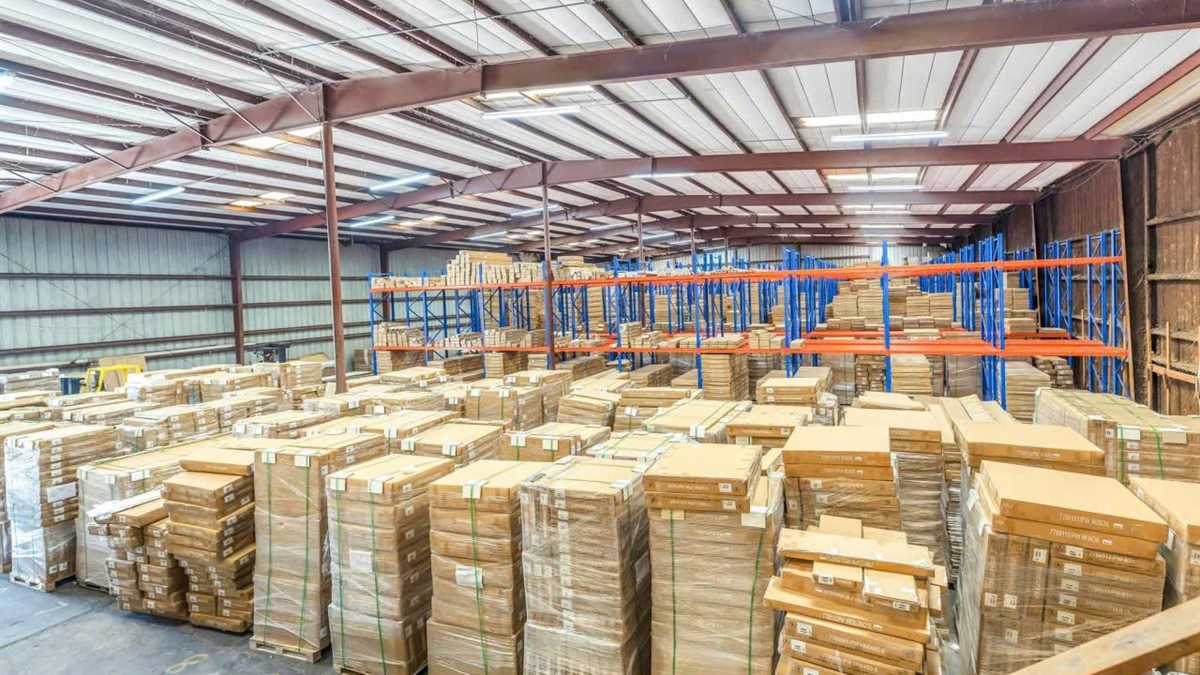
Cabinets are the largest single line on most kitchen remodel budgets — industry groups like NKBA and Angi put them at roughly 30–40% of total project cost. Yet most of us only buy them once or twice in a lifetime, so the learning curve is steep and the mistakes are expensive. This guide walks the whole decision in order: how cabinet boxes are built, which door styles hold up, what RTA, assembled, and custom actually mean, and how ordering factory-direct works, step by step.
What should you look for when buying kitchen cabinets?
Check three things before you fall in love with a color: what the box is made of (plywood or particleboard), whether the line is certified for low formaldehyde emissions (CARB Phase 2 / TSCA Title VI), and how it is sold (RTA, pre-assembled, or custom). Door style and finish matter — but they sit on top of those three.
- Box material — plywood boxes hold screws and shrug off moisture better than particleboard.
- Emissions certification — CARB P2 / TSCA Title VI compliance means the panels meet U.S. formaldehyde limits.
- Format — RTA (you assemble), pre-assembled, or custom each trade money for time in a different way.
- Sizes — cabinets come in standard widths, so plan the layout before you order.
- Finish — judge it from a physical door sample in your own lighting, never from a screen.
Step 1: Check the box construction first
The box — the case behind the door — decides how a cabinet handles water, weight, and twenty years of daily use. The two common box materials are plywood and particleboard (including MDF variants). Plywood costs more to produce, but it holds screws better, carries more shelf weight, and survives the kind of moisture a kitchen throws at it. Our full plywood vs. particleboard breakdown covers the details; the short version is that an all-plywood box is the safer long-term buy. It is also how we build every box in our own factory.
Second, ask about emissions paperwork. Composite wood sold in the U.S. must meet CARB Phase 2 and TSCA Title VI formaldehyde limits, and a supplier should be able to show compliance rather than just claim it. Here is what CARB P2 actually certifies and what to check before buying imported cabinets.
Step 2: Pick a door style and finish
Shaker is the default for a reason: Houzz's 2026 kitchen study found 58% of renovated kitchens chose Shaker doors. The five-piece flat-panel design works in traditional and modern rooms alike, and it is easy to match years later if you add or replace cabinets. Our RTA Shaker cabinets guide goes deep on the style.
On color, 2026 marked a real shift: wood tones (29%) edged past white (28%) for the first time in Houzz's annual study. White and gray are still the safe long-term picks for resale, and they remain what most kitchens actually order. If you are stuck between the two neutrals, see white vs. gray Shaker cabinets.
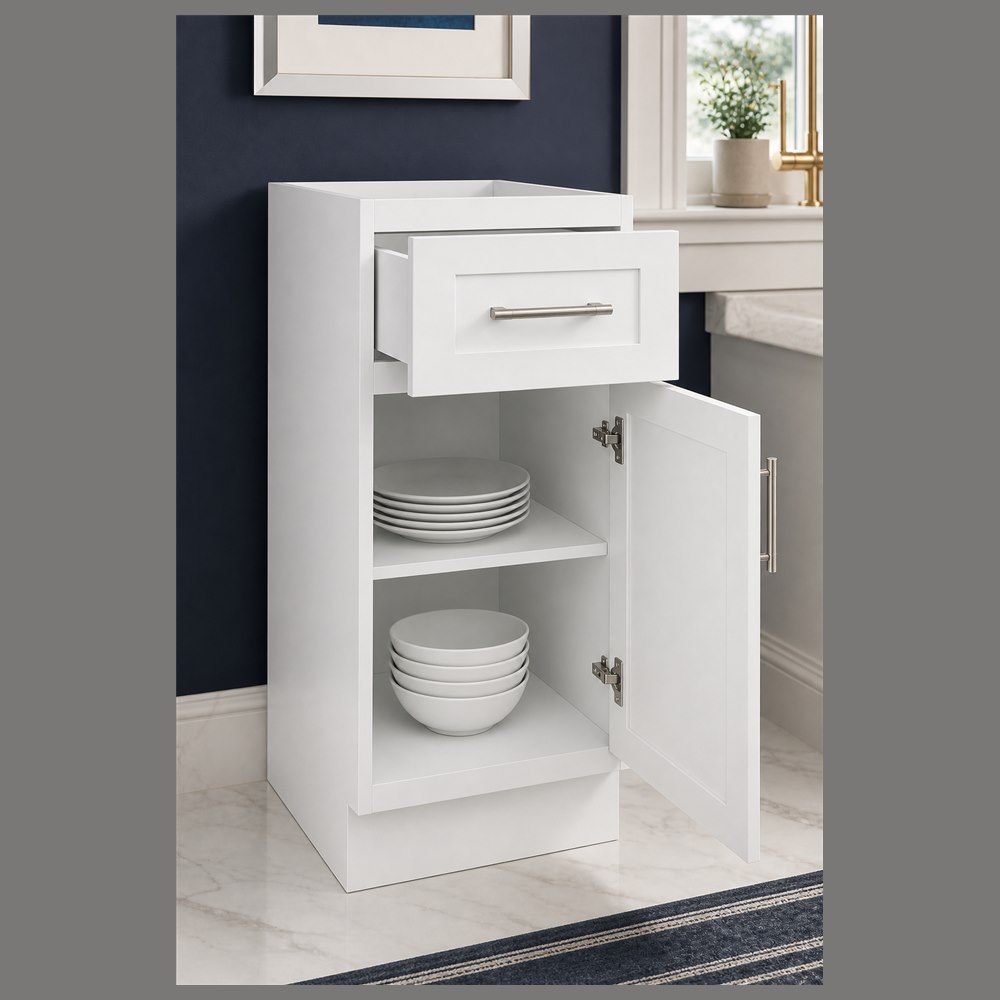
Whatever you choose, confirm it with a physical sample. Finishes read differently under warm bulbs than under showroom LEDs. We ship door samples so you can check the color in your own kitchen before spending real money.
Step 3: RTA, assembled, or custom
The same cabinet quality can be sold three ways. RTA (ready to assemble) ships flat-packed and you put the boxes together. Pre-assembled arrives built, at a higher price and higher freight cost. Custom is built to order for your exact space, at the highest price and the longest wait.
- RTA: the lowest price of the three formats. Industry data (Mordor Intelligence) shows RTA orders typically ship in about 4–7 days. You assemble each box with basic tools, and flat-pack freight costs less because the boxes ship dense.
- Pre-assembled: the same or similar boxes at a higher price — you are paying for assembly labor, and assembled boxes ship mostly air, so freight costs more too.
- Custom: built to your exact dimensions, at the highest price. Made-to-order cabinetry averages roughly 25 days to ship (same industry data), and often longer through a dealer.
For a deeper comparison, read RTA vs. assembled vs. custom — and if you are wondering whether the flat-pack format cuts corners, here is an honest look at RTA quality.
Step 4: Measure and plan your layout
Cabinets come in standard sizes — base cabinets in set widths and one standard height, wall cabinets in a few heights and depths — so a layout is really a puzzle of standard boxes plus filler strips. Start with our cabinet sizes and dimensions guide to learn the vocabulary, then follow the measuring walkthrough before you request pricing.
- Sketch the room and measure each wall at counter height.
- Mark windows, doors, outlets, plumbing, and vents with distances from the nearest corner.
- Note appliance sizes — the fridge, range, and dishwasher fix several cabinet positions.
- Double-check every measurement before you order; fixing a plan on paper is free.
Step 5: How factory-direct ordering works
Factory-direct ordering skips the dealer markup, but it also means you manage a few steps yourself. Here is the whole path:
- Request door samples with your free quote and confirm the finish at home.
- Measure, build your cabinet list, then request a quote with your layout attached.
- Review the quote line by line against your drawing — widths, heights, hinge sides, fillers, and toe kicks.
- Your order ships flat-packed by freight. Read how RTA cabinets ship so you know what to inspect (and photograph) at delivery.
- Assemble the boxes with basic tools — a screwdriver and a rubber mallet cover most designs. Our step-by-step assembly guide shows the process.
We build every cabinet in our own factory and stock finished SKUs in two U.S. warehouses, in Tampa, Florida and Buford, Georgia.
Ordering for clients or for multiple jobs? Our contractor guide covers bulk orders, spec sheets, and how trade ordering differs.
How much do kitchen cabinets cost in 2026?
Plan around three anchors. Houzz's 2026 study puts the median major kitchen remodel at $55,000, and industry groups (NKBA, Angi) put cabinets at roughly 30–40% of a remodel budget — about $16,500–22,000 at that median. Buying RTA factory-direct moves that number down, because you are not paying for assembly labor or a dealer layer. For real ranges by format and kitchen size, see the full kitchen cabinet cost guide.
Frequently asked questions
Are RTA cabinets lower quality than assembled cabinets?
No — the format tells you how a cabinet ships, not how it is built. The same plywood box can ship flat-packed or assembled. Judge quality by box material, drawer construction, hinges, and emissions certification, not by whether you turned the cam locks yourself.
How much should I budget for kitchen cabinets?
Industry groups put cabinets at roughly 30–40% of a total remodel budget. Against Houzz's 2026 median of $55,000 for a major kitchen remodel, that is about $16,500–22,000 — though RTA factory-direct pricing usually lands under a dealer quote for the same footage.
How fast do RTA cabinets ship?
Industry-wide, RTA orders typically ship in about 4–7 days, versus roughly 25 days for made-to-order cabinetry (Mordor Intelligence industry data — not a delivery promise from any one supplier). Freight transit time is separate, and worth understanding before delivery day.
What does CARB P2 compliant mean?
CARB Phase 2 is California's formaldehyde emissions limit for composite wood panels; TSCA Title VI makes an equivalent limit federal law. Compliant cabinets are built from panels tested under those rules. Ask a supplier to show compliance documentation — it is a paperwork question, not a marketing slogan.
Can I assemble RTA cabinets myself?
Yes. Most RTA cabinets go together with cam locks, dowels, and screws, using tools you already own. The first box takes the longest — after one or two, the rest go noticeably faster. Set aside a weekend for a full kitchen and follow the assembly guide above.
Keep reading
- RTA vs. Assembled vs. Custom Cabinets: Which Should You Buy?
Four ways to buy kitchen cabinets — RTA, stock pre-assembled, semi-custom, and full custom — compared honestly on cost, lead time, quality, and flexibility, with a scenario-by-scenario guide to picking yours.
- How Much Do Kitchen Cabinets Cost? RTA vs. Assembled vs. Custom
Kitchen cabinet cost comes down to three things — material, construction, and how you buy. An honest, no-sticker-shock breakdown of RTA, assembled, semi-custom, and custom pricing by the linear foot, plus the hidden costs of hardware, countertops, and installation.
- Plywood vs. Particleboard Cabinets: Which Lasts Longer?
The box material decides how long a cabinet survives sink leaks, humidity, and years of door slams. Here's the honest plywood-vs-particleboard breakdown.
- Kitchen Cabinet Sizes & Dimensions: The Complete Guide
Base, wall, and tall cabinets follow a short menu of standard sizes. Here are the widths, heights, and depths that matter — in printable tables where every row maps to a cabinet you can order.
- Cabinet Warranties: What Coverage Really Means
Every cabinet line promises a warranty — few buyers read what it covers. Limited lifetime vs year terms, the standard exclusions, and how to compare two warranties honestly.
Ready to plan your kitchen?
Send us your layout for a free, no-obligation quote, or browse the full factory-direct catalog of all-plywood Shaker cabinets.